Books like A course in behavioral economics by Erik Angner
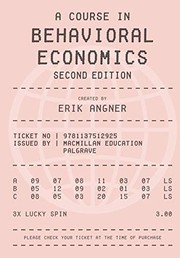

A Course in Behavioral Economics is a concise and reader-friendly introduction to the influential field of behavioral economics. Covering all core areas of the subject, the book requires no advanced mathematics and is full of examples, exercises, and problems drawn from various fields. It is an ideal first textbook for students and would appeal to the general reader looking for a thorough and readable introduction to the subject. Available for lecturers: access to an Instructor's Manual with a sample syllabus, instructor guide, handouts, and PowerPoint slides.
First publish date: 2012
Genre: Business & Economics/Finance
Authors: Erik Angner
★ ★ ★ ★ ★ 0.0 (0 community ratings)

A course in behavioral economics by Erik Angner

How are these books recommended?

The books recommended for A course in behavioral economics by Erik Angner are shaped by reader interaction. Votes on how closely books relate, user ratings, and community comments all help refine these recommendations and highlight books readers genuinely find similar in theme, ideas, and overall reading experience.


Have you read any of these books?
Your votes, ratings, and comments help improve recommendations and make it easier for other readers to discover books they’ll enjoy.

Books similar to A course in behavioral economics (10 similar books)

Thinking, fast and slow by 6390436|Daniel Kahneman book cover

πŸ“˜ Thinking, fast and slow

Daniel Kahneman's "Thinking, Fast and Slow" explains how two distinct mental systems shape our judgments and decisions, offering insights into the biases that influence everyday choices.

β˜…β˜…β˜…β˜…β˜…β˜…β˜…β˜…β˜…β˜… 4.1 (189 ratings)
Similar? ✓ Yes 0 ✗ No 0
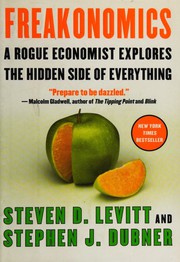
Freakonomics by 4913557|Steven D. Levitt book cover

πŸ“˜ Freakonomics

Freakonomics reveals how hidden incentives shape everyday life, from crime to education, using data-driven insights that challenge conventional wisdom.

β˜…β˜…β˜…β˜…β˜…β˜…β˜…β˜…β˜…β˜… 3.9 (165 ratings)
Similar? ✓ Yes 0 ✗ No 0
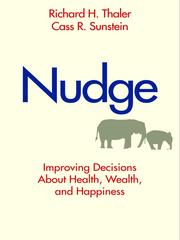
Nudge by 11561596|Richard H. Thaler book cover

πŸ“˜ Nudge

Nudge offers a practical guide to libertarian paternalism, showing how subtle design changes can help people make wiser decisions without restricting freedom.

β˜…β˜…β˜…β˜…β˜…β˜…β˜…β˜…β˜…β˜… 3.7 (22 ratings)
Similar? ✓ Yes 0 ✗ No 0
The Undercover Economist by 9670116|Tim Harford book cover

πŸ“˜ The Undercover Economist

A must-read for anyone wanting to understand the economy without the jargon of academia, Tim Harford's 'The Undercover Economist' offers practical insights into everyday economics in a relatable and accessible way.

β˜…β˜…β˜…β˜…β˜…β˜…β˜…β˜…β˜…β˜… 4.1 (14 ratings)
Similar? ✓ Yes 0 ✗ No 0
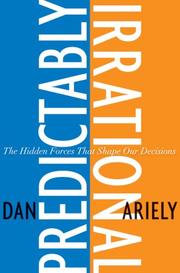
Predictably Irrational by 7667646|Dan Ariely book cover

πŸ“˜ Predictably Irrational
 by Dan Ariely

Explore how hidden psychological forces shape our economic decisions, from personal finance to the 2008 crisis, with Dan Ariely’s behavioral economics insights.

β˜…β˜…β˜…β˜…β˜…β˜…β˜…β˜…β˜…β˜… 4.3 (10 ratings)
Similar? ✓ Yes 0 ✗ No 0
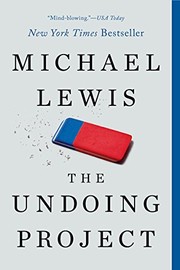
The Undoing Project: A Friendship That Changed Our Minds by 11744904|Michael Lewis book cover

πŸ“˜ The Undoing Project: A Friendship That Changed Our Minds


β˜…β˜…β˜…β˜…β˜…β˜…β˜…β˜…β˜…β˜… 4.5 (2 ratings)
Similar? ✓ Yes 0 ✗ No 0
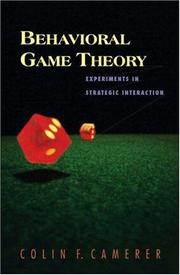
Behavioral Game Theory by 7060862|Colin F. Camerer book cover

πŸ“˜ Behavioral Game Theory

Game theory, the formalized study of strategy, began in the 1940s by asking how emotionless geniuses should play games, but ignored until recently how average people with emotions and limited foresight actually play games. This book marks the first substantial and authoritative effort to close this gap. Colin Camerer, one of the field's leading figures, uses psychological principles and hundreds of experiments to develop mathematical theories of reciprocity, limited strategizing, and learning, which help predict what real people and companies do in strategic situations. Unifying a wealth of information from ongoing studies in strategic behavior, he takes the experimental science of behavioral economics a major step forward. He does so in lucid, friendly prose. Behavioral game theory has three ingredients that come clearly into focus in this book: mathematical theories of how moral obligation and vengeance affect the way people bargain and trust each other a theory of how limits in the brain constrain the number of steps of "I think he thinks . . ." reasoning people naturally do and a theory of how people learn from experience to make better strategic decisions. Strategic interactions that can be explained by behavioral game theory include bargaining, games of bluffing as in sports and poker, strikes, how conventions help coordinate a joint activity, price competition and patent races, and building up reputations for trustworthiness or ruthlessness in business or life. While there are many books on standard game theory that address the way ideally rational actors operate, Behavioral Game Theory stands alone in blending experimental evidence and psychology in a mathematical theory of normal strategic behavior. It is must reading for anyone who seeks a more complete understanding of strategic thinking, from professional economists to scholars and students of economics, management studies, psychology, political science, anthropology, and biology.

β˜…β˜…β˜…β˜…β˜…β˜…β˜…β˜…β˜…β˜… 4.0 (1 rating)
Similar? ✓ Yes 0 ✗ No 0
The broken ladder by 11964158|Payne, Keith (Social scientist) book cover

πŸ“˜ The broken ladder

"A timely examination by a leading scientist of the physical, psychological, and moral effects of inequality Today's inequality is on a scale that none of us has seen in our lifetimes, yet this disparity between rich and poor has ramifications that extend far beyond mere financial means. InThe Broken Ladderpsychologist Keith Payne examines how inequality divides us not just economically, but also has profound consequences for how we think, how our cardiovascular systems respond to stress, how our immune systems function, and how we view moral ideas such as justice and fairness. Experiments in psychology, neuroscience, and behavioral economics have not only revealed important new insights on how inequality changes people in predictable ways, but have also provided a corrective to our flawed way of viewing poverty as the result of individual character failings. Among modern developed societies, economic inequality is not primarily about money, but rather about relative status: where we stand in relation to other people. Regardless of their average income, countries or states with greater levels of income inequality have much higher rates of all the social problems we associate with poverty, including lower average life expectancies, serious health issues, mental illness, and crime. The Broken Ladderexplores such issues as why women in poor societies often have more children, and have them younger; why there is little trust among the working class that investing for the future will pay off; why people's perception of their relative social status affects their political beliefs, and why growing inequality leads to greater political divisions; how poverty raises stress levels in the same way as a physical threat; inequality in the workplace and how it affects performance; why unequal societies become more religious; and finally offers measures people can take to lessen the harm done by inequality in their own lives and the lives of their children"-- "A timely examination by a leading social scientist of the physical, psychological, and moral effects of inequality. Today's inequality is on a scale that none of us has seen in our lifetimes, yet this disparity between rich and poor has ramifications that extend far beyond mere financial means. While conservatives look at poverty and see its roots in personal failures and liberals attribute it to a lack of opportunity, what both sides miss is that the psychology of inequality causes both poor opportunities and personal failures. Understanding how and why this occurs is our best chance at addressing it effectively. In The Broken Ladder psychologist Keith Payne examines for how inequality influences us as individuals, affecting our brains, our bodies, and our values. Inequality divides us not just economically, but has profound consequences on how we think, how our cardiovascular systems respond to stress, how our immune systems function, and how we view moral ideas like justice and fairness. Experiments in psychology, neuroscience, and behavioral economics have not only revealed important new insights on how inequality changes people in predictable ways, but have provided a corrective to our flawed way of viewing poverty as the result of individual character failings. The central argument of this book is that among modern, developed societies, economic inequality is not primarily about money, but rather about relative status: where we stand in relation to other people. Regardless of their average income, countries or states with greater levels of income inequality have much higher rates of all the social problems we associate with poverty, including lower average life expectancies, serious health issues, mental illness, and crime"--

β˜…β˜…β˜…β˜…β˜…β˜…β˜…β˜…β˜…β˜… 4.0 (1 rating)
Similar? ✓ Yes 0 ✗ No 0
An introduction to behavioral economics by 9684639|Nick Wilkinson book cover

πŸ“˜ An introduction to behavioral economics


β˜…β˜…β˜…β˜…β˜…β˜…β˜…β˜…β˜…β˜… 0.0 (0 ratings)
Similar? ✓ Yes 0 ✗ No 0
Behavioral Economics by 12467114|Philip Corr book cover

πŸ“˜ Behavioral Economics


β˜…β˜…β˜…β˜…β˜…β˜…β˜…β˜…β˜…β˜… 0.0 (0 ratings)
Similar? ✓ Yes 0 ✗ No 0

Some Other Similar Books

Behavioral Economics: Toward a New Economics by Integration of Psychological Research by Richard H. Thaler
Nudge: Improving Decisions About Health, Wealth, and Happiness by Richard H. Thaler and Cass R. Sunstein
Misbehaving: The Making of Behavioral Economics by Richard H. Thaler
Predictably Irrational: The Hidden Forces That Shape Our Decisions by Dan Ariely
Behavioral Economics and Its Applications by Eric J. Johnson
The Behavioral Economics Guide 2020 by Alfie Bown
The Evolution of Understanding Money: A History of Behavioral Economics by George A. Akerlof and Robert J. Shiller
Behavioral Economics: A Very Short Introduction by Singh, Shailendra
Nudge: Improving Decisions About Health, Wealth, and Happiness by Richard H. Thaler and Cass R. Sunstein
Misbehaving: The Making of Behavioral Economics by Richard H. Thaler
Predictably Irrational: The Hidden Forces That Shape Our Decisions by Dan Ariely
Behavioral Economics and Its Applications by Peter Diamond and Hannu Vartiainen
The Behavioral Economics Guide 2021 by Joachim Breuer, Christina Fong, and Stefano Fischbacher
Inside the Brain of the Investor: How Emotions Affect Decision-Making by Barbara A. Mellers and Robert R. Johnson
Decisions, Games, and Economics by Chongwon Kim and Byung-ki Kim

Have a similar book in mind? Let others know!

Please login to submit books!