Books like The Beginning of Infinity by David Deutsch

First publish date: 2009
Genre: Philosophy/Epistemology
Authors: David Deutsch
★ ★ ★ ★ ★ 4.0 (1 community ratings)

The Beginning of Infinity by David Deutsch

How are these books recommended?

The books recommended for The Beginning of Infinity by David Deutsch are shaped by reader interaction. Votes on how closely books relate, user ratings, and community comments all help refine these recommendations and highlight books readers genuinely find similar in theme, ideas, and overall reading experience.


Have you read any of these books?
Your votes, ratings, and comments help improve recommendations and make it easier for other readers to discover books they’ll enjoy.

Books similar to The Beginning of Infinity (16 similar books)
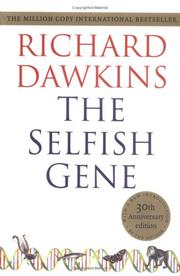
The selfish gene by 6696980|Richard Dawkins book cover

πŸ“˜ The selfish gene

Richard Dawkins’ classic, The Selfish Gene reexamines evolution from the perspective of genes as primary agents, arguing that organisms serve as vehicles for gene replication.

β˜…β˜…β˜…β˜…β˜…β˜…β˜…β˜…β˜…β˜… 4.4 (64 ratings)
Similar? ✓ Yes 0 ✗ No 0
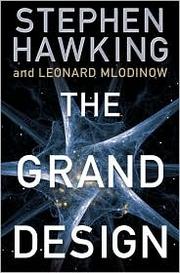
The Grand Design by 6965847|Stephen Hawking book cover

πŸ“˜ The Grand Design

Stephen Hawking’s β€˜The Grand Design’ offers a clear, up‑to‑date explanation of modern cosmology, including the multiverse, top‑down theory, and M‑theory, challenging traditional ideas about the universe’s origin and reality.

β˜…β˜…β˜…β˜…β˜…β˜…β˜…β˜…β˜…β˜… 3.6 (22 ratings)
Similar? ✓ Yes 0 ✗ No 0
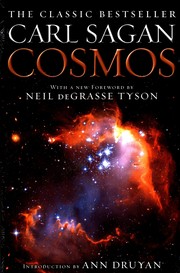
Cosmos by 8799977|Carl Sagan book cover

πŸ“˜ Cosmos
 by Carl Sagan

Carl Sagan’s Cosmos traces the history of science and the universe’s evolution, from ancient philosophers to modern discoveries, and explores the quest to understand life beyond Earth.

β˜…β˜…β˜…β˜…β˜…β˜…β˜…β˜…β˜…β˜… 4.6 (12 ratings)
Similar? ✓ Yes 0 ✗ No 0
The making of the atomic bomb by 8155484|Richard Rhodes book cover

πŸ“˜ The making of the atomic bomb

An exhaustive account of the discovery, design, and deployment of the atomic bomb, tracing its rapid development from early nuclear science to the Manhattan Project and the first bombings of Japan.

β˜…β˜…β˜…β˜…β˜…β˜…β˜…β˜…β˜…β˜… 4.5 (11 ratings)
Similar? ✓ Yes 0 ✗ No 0
The Emperor of All Maladies by 11769082|Siddhartha Mukherjee book cover

πŸ“˜ The Emperor of All Maladies

A sweeping, nonfiction biography of cancer that traces the disease’s discovery, the development of therapies, and the lives of patients and scientists who shaped its history, earning a Pulitzer Prize and New York Times bestseller status.

β˜…β˜…β˜…β˜…β˜…β˜…β˜…β˜…β˜…β˜… 4.0 (10 ratings)
Similar? ✓ Yes 0 ✗ No 0
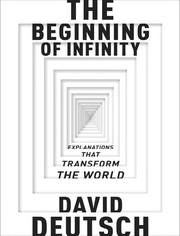
The beginning of infinity by 8184149|Deutsch, David book cover

πŸ“˜ The beginning of infinity

David Deutsch argues that explanations are limitless, shaping science, culture, and human progress beyond any physical constraints.

β˜…β˜…β˜…β˜…β˜…β˜…β˜…β˜…β˜…β˜… 4.2 (5 ratings)
Similar? ✓ Yes 0 ✗ No 0
The society of mind by 834497|Marvin Minsky book cover

πŸ“˜ The society of mind

Marvin Minsky presents an interconnected framework that explains human cognition and its implications for artificial intelligence.

β˜…β˜…β˜…β˜…β˜…β˜…β˜…β˜…β˜…β˜… 3.8 (5 ratings)
Similar? ✓ Yes 0 ✗ No 0
A Brief History of Infinity by 8800014|Brian Clegg book cover

πŸ“˜ A Brief History of Infinity


β˜…β˜…β˜…β˜…β˜…β˜…β˜…β˜…β˜…β˜… 3.0 (1 rating)
Similar? ✓ Yes 0 ✗ No 0
Quantum computation and quantum information by 12027057|Michael Nielsen book cover

πŸ“˜ Quantum computation and quantum information


β˜…β˜…β˜…β˜…β˜…β˜…β˜…β˜…β˜…β˜… 5.0 (1 rating)
Similar? ✓ Yes 0 ✗ No 0
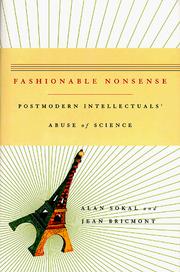
Fashionable nonsense by 6351181|Alan D. Sokal book cover

πŸ“˜ Fashionable nonsense

"In 1996, Alan Sokal Published an Essay in the hip intellectual magazine Social Text parodying the scientific but impenetrable lingo of contemporary theorists. On the heels of the fierce academic debate that followed the hoax, Sokal teams up with Jean Bricmont to expose the abuse of scientific concepts in the writings of today's most fashionable postmodern thinkers. From Jacques Lacan and Julia Kristeva to Luce Irigaray and Jean Baudrillard, the authors document the errors made by some postmodernists using science to bolster their arguments and theories. Witty and closely reasoned, Fashionable Nonsense dispels the notion that scientific theories are mere "narratives" or social constructions, and explores the abilities and the limits of science to describe the conditions of existence. Book jacket."--BOOK JACKET.

β˜…β˜…β˜…β˜…β˜…β˜…β˜…β˜…β˜…β˜… 3.0 (1 rating)
Similar? ✓ Yes 0 ✗ No 0
The anthropic cosmological principle by 11887598|John D. Barrow book cover

πŸ“˜ The anthropic cosmological principle


β˜…β˜…β˜…β˜…β˜…β˜…β˜…β˜…β˜…β˜… 4.0 (1 rating)
Similar? ✓ Yes 0 ✗ No 0
The Fabric of Reality by 12740101|David Deutsch book cover

πŸ“˜ The Fabric of Reality


β˜…β˜…β˜…β˜…β˜…β˜…β˜…β˜…β˜…β˜… 4.0 (1 rating)
Similar? ✓ Yes 0 ✗ No 0
The evolution of everything by 11604782|Matt Ridley book cover

πŸ“˜ The evolution of everything

"The New York Times bestselling author of The Rational Optimist and Genome returns with a fascinating, brilliant argument for evolution that definitively dispels a dangerous, widespread myth: that we can command and control our world.The Evolution of Everything is about bottom-up order and its enemy, the top-down twitch--the endless fascination human beings have for design rather than evolution, for direction rather than emergence. Drawing on anecdotes from science, economics, history, politics and philosophy, Matt Ridley's wide-ranging, highly opinionated opus demolishes conventional assumptions that major scientific and social imperatives are dictated by those on high, whether in government, business, academia, or morality. On the contrary, our most important achievements develop from the bottom up. Patterns emerge, trends evolve. Just as skeins of geese form Vs in the sky without meaning to, and termites build mud cathedrals without architects, so brains take shape without brain-makers, learning can happen without teaching and morality changes without a plan.Although we neglect, defy and ignore them, bottom-up trends shape the world. The growth of technology, the sanitation-driven health revolution, the quadrupling of farm yields so that more land can be released for nature--these were largely emergent phenomena, as were the Internet, the mobile phone revolution, and the rise of Asia. Ridley demolishes the arguments for design and effectively makes the case for evolution in the universe, morality, genes, the economy, culture, technology, the mind, personality, population, education, history, government, God, money, and the future.As compelling as it is controversial, authoritative as it is ambitious, Ridley's stunning perspective will revolutionize the way we think about our world and how it works"-- "A book that makes the case for evolution over design and skewers a widespread but dangerous myth: that we have ultimate control over our world"--

β˜…β˜…β˜…β˜…β˜…β˜…β˜…β˜…β˜…β˜… 3.0 (1 rating)
Similar? ✓ Yes 0 ✗ No 0
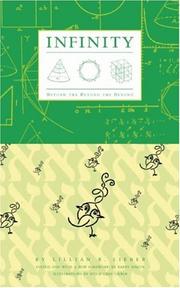
Infinity by 6497039|Lillian Rosanoff Lieber book cover

πŸ“˜ Infinity


β˜…β˜…β˜…β˜…β˜…β˜…β˜…β˜…β˜…β˜… 0.0 (0 ratings)
Similar? ✓ Yes 0 ✗ No 0
The end of science by 8159996|Horgan, John book cover

πŸ“˜ The end of science

As a staff writer for Scientific American, John Horgan has a window on contemporary science unsurpassed in all the world. Who else routinely interviews the likes of Lynn Margulis, Roger Penrose, Francis Crick, Richard Dawkins, Freeman Dyson, Murray Gell-Mann, Stephen Jay Gould, Stephen Hawking, Thomas Kuhn, Chris Langton, Karl Popper, Steven Weinberg, and E. O. Wilson, with the freedom to probe their innermost thoughts? This is the secret fear that Horgan pursues throughout this remarkable book: Have the big questions all been answered? Has all the knowledge worth pursuing become known? Will there be a final "theory of everything" that signals the end? Is the age of great discoveries behind us? Is science today reduced to mere puzzle solving and adding details to existing theories? Scientists have always set themselves apart from other scholars in the belief that they do not construct the truth, they discover it. Their work is not interpretation but simple revelation of what exists in the empirical universe. But science itself keeps imposing limits on its own power. Special relativity prohibits the transmission of matter or information at speeds faster than that of light; quantum mechanics dictates uncertainty; and chaos theory confirms the impossibility of complete prediction. Meanwhile, the very idea of scientific rationality is under fire from Neo-Luddites, animal-rights activists, religious fundamentalists, and New Agers alike. As Horgan makes clear, perhaps the greatest threat to science may come from losing its special place in the hierarchy of disciplines, being reduced to something more akin to literary criticism as more and more theoreticians engage in the theory twiddling he calls "ironic science." Still, while Horgan offers his critique, grounded in the thinking of the world's leading researchers, he offers homage, too. If science is ending, he maintains, it is only because it has done its work so well.

β˜…β˜…β˜…β˜…β˜…β˜…β˜…β˜…β˜…β˜… 0.0 (0 ratings)
Similar? ✓ Yes 0 ✗ No 0
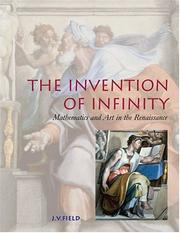
The invention of infinity by 9635891|Judith Veronica Field book cover

πŸ“˜ The invention of infinity

From Giotto to Michelangelo and beyond, the period from about 1300 to 1650 saw an extraordinary flowering in the visual arts in Western Europe. The works produced were sometimes of astonishing quality and their history has been well documented and much discussed. The scientific endeavour of the time has received considerably less attention. The history of science is a newer discipline than history of art, and no topic is newer than the history of mathematics in the period that saw the beginning of the Renaissance in the arts. This book tells us about the everyday worlds of art and mathematics in a time when artists were merely 'craftsmen' and their practical mathematics was separate from the mathematics of scholars. The story brings together the histories of art and mathematics and shows how the craftsmen's discoveries changed learned mathematics, taking it beyond the admired achievements of the Ancient Greeks. Infinity at last acquired a precise mathematical meaning. The journey takes us through consideration of some of the world's most renowned paintings, and lively accounts of the mathematical techniques and discoveries of the time. We are in a world where art and the sciences have not yet pulled apart from one another, and it becomes clear that the mathematical nature of what we now call Science may well owe something to the tradition of what is now called Art.

β˜…β˜…β˜…β˜…β˜…β˜…β˜…β˜…β˜…β˜… 0.0 (0 ratings)
Similar? ✓ Yes 0 ✗ No 0

Some Other Similar Books

A Universe from Nothing by Lawrence M. Krauss
The Gene: An Intimate History by Siddhartha Mukherjee

Have a similar book in mind? Let others know!

Please login to submit books!