"The New York Times bestselling author of The Rational Optimist and Genome returns with a fascinating, brilliant argument for evolution that definitively dispels a dangerous, widespread myth: that we can command and control our world.The Evolution of Everything is about bottom-up order and its enemy, the top-down twitch--the endless fascination human beings have for design rather than evolution, for direction rather than emergence. Drawing on anecdotes from science, economics, history, politics and philosophy, Matt Ridley's wide-ranging, highly opinionated opus demolishes conventional assumptions that major scientific and social imperatives are dictated by those on high, whether in government, business, academia, or morality. On the contrary, our most important achievements develop from the bottom up. Patterns emerge, trends evolve. Just as skeins of geese form Vs in the sky without meaning to, and termites build mud cathedrals without architects, so brains take shape without brain-makers, learning can happen without teaching and morality changes without a plan.Although we neglect, defy and ignore them, bottom-up trends shape the world. The growth of technology, the sanitation-driven health revolution, the quadrupling of farm yields so that more land can be released for nature--these were largely emergent phenomena, as were the Internet, the mobile phone revolution, and the rise of Asia. Ridley demolishes the arguments for design and effectively makes the case for evolution in the universe, morality, genes, the economy, culture, technology, the mind, personality, population, education, history, government, God, money, and the future.As compelling as it is controversial, authoritative as it is ambitious, Ridley's stunning perspective will revolutionize the way we think about our world and how it works"--
"A book that makes the case for evolution over design and skewers a widespread but dangerous myth: that we have ultimate control over our world"--
The books recommended for The evolution of everything by
Matt Ridley are shaped by reader interaction.

Votes on how closely books relate, user ratings, and community comments all help
refine these recommendations and highlight books readers genuinely find similar
in theme, ideas, and overall reading experience.
Have you read any of these books?
Your votes, ratings, and comments help improve recommendations and make it easier
for other readers to discover books theyβll enjoy.
Books similar to The evolution of everything (6 similar books)
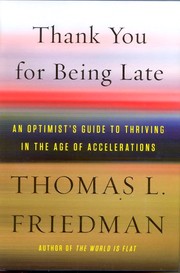
Thomas Friedman argues that the 21st century is shaped by the accelerating forces of technology, globalization, and climate change, urging readers to pause and consider their profound impact on work, politics, geopolitics, ethics, and community.
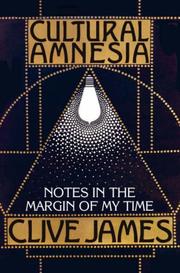
Clive James compiles over a hundred essays, arranged alphabetically, that examine the lives and ideas of twentiethβcentury intellectuals, artists, musicians and philosophers, urging the preservation of Western humanism.
Author Klaus Schwab explores how the fourth industrial revolutionβa convergence of AI, biotechnology, nanotechnology and digital networksβwill reshape society, economy and identity, urging a future where technology serves humanity within ethical bounds.
The Rational Optimist: How Prosperity Evolves by Matt Ridley Sapiens: A Brief History of Humankind by Yuval Noah Harari The Innovators: How a Group of Hackers, Geniuses, and Geeks Created the Digital Revolution by Walter Isaacson Bold: How to Go Big, Create Wealth, and Impact the World by Peter H. Diamandis & Steven Kotler The Code Breaker: Jennifer Doudna, Gene Editing, and the Future of the Human Race by Walter Isaacson Humankind: A Hopeful History by Rutger Bregman The Rise of the Robots: Technology and the Threat of Mass Unemployment by Martin Ford The Future of Humanity: Our Destiny in the Universe by Michio Kaku The End of Work: The Decline of the Global Labor Force and the Dawn of the Post-Market Era by Jeremy Rifkin
Have a similar book in mind? Let others know!
Please login to submit books!
Is it a similar book?
Thank you for sharing your feedback. Please also let us know why you're thinking this is a similar (or not similar) book.