Books like How to Hide an Empire by Daniel Immerwahr
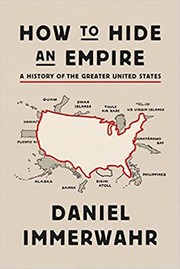

We are familiar with maps that outline all fifty states. And we are also familiar with the idea that the United States is an “empire,” exercising power around the world. But what about the actual territories―the islands, atolls, and archipelagos―this country has governed and inhabited? In How to Hide an Empire, Daniel Immerwahr tells the fascinating story of the United States outside the United States. In crackling, fast-paced prose, he reveals forgotten episodes that cast American history in a new light. We travel to the Guano Islands, where prospectors collected one of the nineteenth century’s most valuable commodities, and the Philippines, site of the most destructive event on U.S. soil. In Puerto Rico, Immerwahr shows how U.S. doctors conducted grisly experiments they would never have conducted on the mainland and charts the emergence of independence fighters who would shoot up the U.S. Congress. In the years after World War II, Immerwahr notes, the United States moved away from colonialism. Instead, it put innovations in electronics, transportation, and culture to use, devising a new sort of influence that did not require the control of colonies. Rich with absorbing vignettes, full of surprises, and driven by an original conception of what empire and globalization mean today, How to Hide an Empire is a major and compulsively readable work of history.
First publish date: 2019
Subjects: History, New York Times reviewed, Territorial expansion, Imperialism, United States History
Authors: Daniel Immerwahr
5.0 (4 community ratings)

How to Hide an Empire by Daniel Immerwahr

How are these books recommended?

The books recommended for How to Hide an Empire by Daniel Immerwahr are shaped by reader interaction. Votes on how closely books relate, user ratings, and community comments all help refine these recommendations and highlight books readers genuinely find similar in theme, ideas, and overall reading experience.


Have you read any of these books?
Your votes, ratings, and comments help improve recommendations and make it easier for other readers to discover books they’ll enjoy.

Books similar to How to Hide an Empire (8 similar books)
Guns, germs, and steel by 6922525|Jared Diamond book cover

📘 Guns, germs, and steel

An epic detective story that offers a gripping expose on why the world is so unequal. Professor Jared Diamond traveled the globe for over 30 years trying to answer this question. Based on the Pulitzer Prize-winning book.

4.2 (137 ratings)
Similar? ✓ Yes 0 ✗ No 0
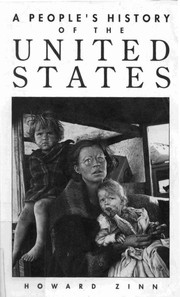
A People's History of the United States by 6974933|Howard Zinn book cover

📘 A People's History of the United States

Known for its lively, clear prose as well as its scholarly research, *A People's History of the United States* is the only volume to tell America's story from the point of view of -- and in the words of -- America's women, factory workers, African Americans, Native Americans, working poor, and immigrant laborers.

4.0 (36 ratings)
Similar? ✓ Yes 0 ✗ No 0
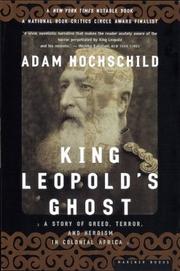
King Leopold's ghost by 6568844|Adam Hochschild book cover

📘 King Leopold's ghost

In the 1880s, as the European powers were carving up Africa, King Leopold II of Belgium seized for himself the vast and mostly unexplored territory surrounding the Congo River. Carrying out a genocidal plundering of the Congo, he looted its rubber, brutalized its people, and ultimately slashed its population by ten million--all the while shrewdly cultivating his reputation as a great humanitarian. Heroic efforts to expose these crimes eventually led to the first great human rights movement of the twentieth century, in which everyone from Mark Twain to the Archbishop of Canterbury participated. King Leopold's Ghost is the haunting account of a megalomaniac of monstrous proportions, a man as cunning, charming, and cruel as any of the great Shakespearean villains. It is also the deeply moving portrait of those who fought Leopold: a brave handful of missionaries, travelers, and young idealists who went to Africa for work or adventure and unexpectedly found themselves witnesses to a holocaust. Adam Hochschild brings this largely untold story alive with the wit and skill of a Barbara Tuchman. Like her, he knows that history often provides a far richer cast of characters than any novelist could invent. Chief among them is Edmund Morel, a young British shipping agent who went on to lead the international crusade against Leopold. Another hero of this tale, the Irish patriot Roger Casement, ended his life on a London gallows. Two courageous black Americans, George Washington Williams and William Sheppard, risked much to bring evidence of the Congo atrocities to the outside world. Sailing into the middle of the story was a young Congo River steamboat officer named Joseph Conrad. And looming above them all, the duplicitous billionaire King Leopold II. With great power and compassion, King Leopold's Ghost will brand the tragedy of the Congo--too long forgotten--onto the conscience of the West.

4.0 (4 ratings)
Similar? ✓ Yes 0 ✗ No 0
American empire by 6325450|A. G. Hopkins book cover

📘 American empire

A new history of the United States that turns American exceptionalism on its head. American Empire is a panoramic work of scholarship that presents a bold new global perspective on the history of the United States. Drawing on his expertise in economic history and the imperial histories of Britain and Europe, A. G. Hopkins takes readers from the colonial era to today to show how, far from diverging, the United States and Western Europe followed similar trajectories throughout this long period, and how America's dependency on Britain and Europe extended much later into the nineteenth century than previously understood. In a sweeping narrative spanning three centuries, Hopkins describes how the revolt of the mainland colonies was the product of a crisis that afflicted the imperial states of Europe generally, and how the history of the American republic between 1783 and 1865 was a response not to the termination of British influence but to its continued expansion. He traces how the creation of a U.S. industrial nation-state after the Civil War paralleled developments in Western Europe, fostered similar destabilizing influences, and found an outlet in imperialism through the acquisition of an insular empire in the Caribbean and Pacific. The period of colonial rule that followed reflected the history of the European empires in its ideological justifications, economic relations, and administrative principles. After 1945, a profound shift in the character of globalization brought the age of the great territorial empires to an end.

0.0 (0 ratings)
Similar? ✓ Yes 0 ✗ No 0
Cultures of United States imperialism by 3376441|Amy Kaplan book cover

📘 Cultures of United States imperialism
 by Amy Kaplan


0.0 (0 ratings)
Similar? ✓ Yes 0 ✗ No 0
Pillaging the empire by 8312666|Kris E. Lane book cover

📘 Pillaging the empire


0.0 (0 ratings)
Similar? ✓ Yes 0 ✗ No 0
Empire by 7351876|Howe, Stephen book cover

📘 Empire

"The history of the world is the history of empires - a history that has not come to an end. Not only are we living with the legacies of the great colonial empires of the past, but also with the new economic-based imperial systems of the modern world. There are those who think that the Internet is a new kind of 'global empire', that the idea of 'international law' is a gigantic fraud, and even that Britain is itself the last colony of the British Empire." "This book achieves what others on this subject have failed to do: it looks at what the 'idea of empire' has meant throughout history - from the ancient Roman Empire, through the reign of Genghis Khan, the British Raj, the colonization of the Americas by the seafaring Spanish, the Atlantic Slave Trade, and the Soviet Empire, to the present day - disentangling the multiple uses and abuses of such labels as 'empire' and 'colonial', and offering a compelling look at the profound changes in the modern world."--Jacket.

0.0 (0 ratings)
Similar? ✓ Yes 0 ✗ No 0
The Wretched of the Earth by 3785548|Frantz Fanon book cover

📘 The Wretched of the Earth

"Written at the height of the Algerian war for independence, Frantz Fanon's classic text has provided inspiration for anti-colonial movements ever since. With power and anger, Fanon makes clear the economic and psychological degradation inflicted by imperialism. It was Fanon, himself a psychotherapist, who exposed the connection between colonial war and mental disease, who showed how the fight for freedom must be combined with building a national culture, and who showed the way ahead, through revolutionary violence, to socialism. Many of the great calls to arms from the era of decolonization are now purely of historical interest, yet this passionate analysis of the relations between the great powers and the Third World is just as illuminating about the world we live in today." -- Publisher description.

0.0 (0 ratings)
Similar? ✓ Yes 0 ✗ No 0

Some Other Similar Books

Imperial Reckoning: The Untold Story of Britain's Gulag in Kenya by Caroline Elkins
The Postcolonial World by Shalini Puri
The Looting of Asia by Michael Meyer
The Origins of the British Empire by Richard Gott
Open Veins of Latin America by Eduardo Galeano
Senghor: A Biography by David P. Chandler

Have a similar book in mind? Let others know!

Please login to submit books!