Books like From Bacteria to Bach and Back: The Evolution of Minds by Daniel C. Dennett


xviii, 476 pages, 2 unnumbered pages of plates : 25 cm
First publish date: 2017
Authors: Daniel C. Dennett
★ ★ ★ ★ ★ 0.0 (0 community ratings)

From Bacteria to Bach and Back: The Evolution of Minds by Daniel C. Dennett

How are these books recommended?

The books recommended for From Bacteria to Bach and Back: The Evolution of Minds by Daniel C. Dennett are shaped by reader interaction. Votes on how closely books relate, user ratings, and community comments all help refine these recommendations and highlight books readers genuinely find similar in theme, ideas, and overall reading experience.


Have you read any of these books?
Your votes, ratings, and comments help improve recommendations and make it easier for other readers to discover books they’ll enjoy.

Books similar to From Bacteria to Bach and Back: The Evolution of Minds (7 similar books)
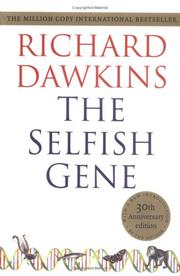
The selfish gene by 6696980|Richard Dawkins book cover

πŸ“˜ The selfish gene

Richard Dawkins’ classic, The Selfish Gene reexamines evolution from the perspective of genes as primary agents, arguing that organisms serve as vehicles for gene replication.

β˜…β˜…β˜…β˜…β˜…β˜…β˜…β˜…β˜…β˜… 4.4 (64 ratings)
Similar? ✓ Yes 0 ✗ No 0
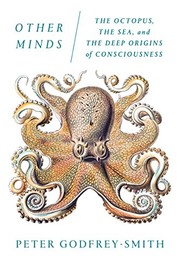
Other Minds by 8746406|Peter Godfrey-Smith book cover

πŸ“˜ Other Minds

Philosopher Peter Godfrey‑Smith blends science, philosophy and his own sightings of octopuses to explore how two separate lineages – mammals and cephalopods – independently evolved intelligence and consciousness.

β˜…β˜…β˜…β˜…β˜…β˜…β˜…β˜…β˜…β˜… 3.5 (6 ratings)
Similar? ✓ Yes 0 ✗ No 0
Idiot brain by 11886636|Dean Burnett book cover

πŸ“˜ Idiot brain

Dean Burnett, a neuroscientist and Guardian blogger, guides readers through the surprising and playful world of the brain, exploring memory, consciousness, and the mechanics of our gray matter in an engaging, accessible style.

β˜…β˜…β˜…β˜…β˜…β˜…β˜…β˜…β˜…β˜… 4.0 (5 ratings)
Similar? ✓ Yes 0 ✗ No 0
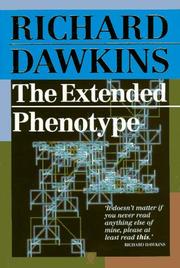
The Extended Phenotype by 6696980|Richard Dawkins book cover

πŸ“˜ The Extended Phenotype


β˜…β˜…β˜…β˜…β˜…β˜…β˜…β˜…β˜…β˜… 4.4 (5 ratings)
Similar? ✓ Yes 0 ✗ No 0
How the Mind Works by 7291571|Steven Pinker book cover

πŸ“˜ How the Mind Works

Steven Pinker’s acclaimed book offers an erudite exploration of the human mind, tracing its computational and evolutionary roots while examining how we see, think, feel, interact, and pursue art, religion, and philosophy.

β˜…β˜…β˜…β˜…β˜…β˜…β˜…β˜…β˜…β˜… 4.0 (2 ratings)
Similar? ✓ Yes 0 ✗ No 0
From Bacteria to Bach and Back by 7745734|Daniel C. Dennett book cover

πŸ“˜ From Bacteria to Bach and Back


β˜…β˜…β˜…β˜…β˜…β˜…β˜…β˜…β˜…β˜… 2.5 (2 ratings)
Similar? ✓ Yes 0 ✗ No 0
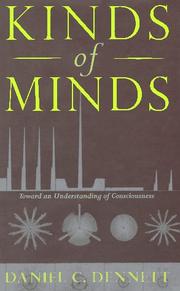
Kinds of minds by 7745734|Daniel C. Dennett book cover

πŸ“˜ Kinds of minds

In Kinds of Minds, Dennett asks the ultimate metaphysical questions: What is a mind and who else (besides the questioner) has one? Combining ideas from philosophy, artificial intelligence, and neurobiology, Dennett leads the reader on a fascinating journey of inquiry, exploring such intriguing possibilities as: Can any of us really know what is going on in someone else's mind? What distinguishes the human mind from the minds of animals, especially those capable of complex behavior? If such animals, for instance, were magically given the power of language, would their communities evolve an intelligence as subtly discriminating as ours? Would they be capable of developing the uniquely human ability to theorize about the world they inhabit? Will robots, once they have been endowed with sensory systems like those that provide us with experience, ever exhibit the particular traits long thought to distinguish the human mind, including the ability to think about thinking? . Dennett address these questions from an evolutionary perspective. Beginning with the macromolecules of DNA and RNA, whose evolution was determined by Darwinian natural selection, Dennett shows how, step by step, animal life moved from a simple ability to respond to frequently recurring environmental conditions to much more powerful ways of beating the odds, ways of using patterns of past experience to predict the future in never-before-encountered situations. He argues that a series of small but revolutionary steps moved us from there to the unique human capability to frame and execute specific long-range intentions. These changes included first the emergence of speech, then, because of situations in which the ability to keep secrets conferred an evolutionary advantage, a skill in conversing with ourselves, and finally, the creation of artifacts that permit us to expand our minds into the surrounding environment.

β˜…β˜…β˜…β˜…β˜…β˜…β˜…β˜…β˜…β˜… 4.0 (1 rating)
Similar? ✓ Yes 0 ✗ No 0

Some Other Similar Books

Sapiens: A Brief History of Humankind by Yuval Noah Harari
The Mind's I: Fantasies and Reflections on Self and Soul by Douglas Hofstadter and Daniel C. Dennett
The Blank Slate: The Modern Denial of Human Nature by Steven Pinker
The-Evolution of Cooperation by Robert Axelrod
Conscious: A Brief Guide to the Fundamental Mystery of the Mind by Annaka Harris
Evolutionary Psychology: The New Science of the Mind by David M. Buss

Have a similar book in mind? Let others know!

Please login to submit books!