Books like The First Word by Christine Kenneally
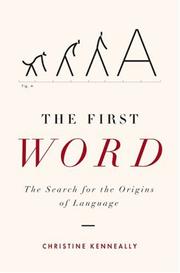

The First Word presents a detailed, evidence‑based exploration of how language emerged as a human trait. Drawing on linguistics, genetics, evolutionary biology, and cognitive science, Christine Kenneally explains the entangled processes that led to speech. The book also traces how advancements in science have made this once‑taboo field accessible, featuring insights from thinkers such as Noam Chomsky and Steven Pinker. Designed for a general audience, it offers a clear narrative of the origins of language and its evolution. This nonfiction work is geared toward readers who enjoy popular science accounts of human history, blending rigorous scholarship with engaging storytelling.
First publish date: 2007
Genre: Education & Language/Linguistics
Authors: Christine Kenneally
★ ★ ★ ★ ★ 0.0 (0 community ratings)

The First Word by Christine Kenneally

How are these books recommended?

The books recommended for The First Word by Christine Kenneally are shaped by reader interaction. Votes on how closely books relate, user ratings, and community comments all help refine these recommendations and highlight books readers genuinely find similar in theme, ideas, and overall reading experience.


Have you read any of these books?
Your votes, ratings, and comments help improve recommendations and make it easier for other readers to discover books they’ll enjoy.

Books similar to The First Word (12 similar books)
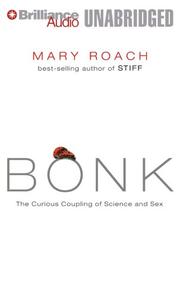
Bonk by 6950381|Mary Roach book cover

📘 Bonk
 by Mary Roach

Exploring the science of sex through candid interviews and groundbreaking research

★★★★★★★★★★ 3.8 (9 ratings)
Similar? ✓ Yes 0 ✗ No 0
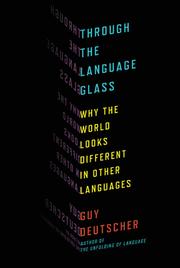
Through the language glass by 11934455|Guy Deutscher book cover

📘 Through the language glass

Guy Deutscher explores how culture and language influence each other, arguing that linguistic structures shape thought and that our experience of the world depends on words—and that words are shaped by cultural practices.

★★★★★★★★★★ 3.9 (8 ratings)
Similar? ✓ Yes 0 ✗ No 0
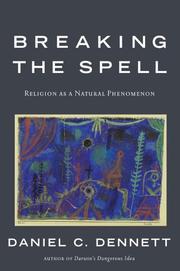
Breaking the spell by 7745734|Daniel C. Dennett book cover

📘 Breaking the spell

Daniel Dennett examines religion through science and philosophy, questioning whether it is a product of evolution or rational choice and exploring its impact on morality.

★★★★★★★★★★ 3.7 (6 ratings)
Similar? ✓ Yes 0 ✗ No 0
The Stuff of Thought by 7291571|Steven Pinker book cover

📘 The Stuff of Thought

In The Stuff of Thought, Steven Pinker explores how language shapes our cognition and society, revealing the hidden links between words, emotions, and culture.

★★★★★★★★★★ 4.7 (3 ratings)
Similar? ✓ Yes 0 ✗ No 0
Faust in Copenhagen by 6949399|Gino Segre book cover

📘 Faust in Copenhagen
 by Gino Segre

A fascinating look at the historic gathering of the world's leading physicists in Copenhagen, 1932, where the future of science was about to be altered by the Faustian bargains of the era.

★★★★★★★★★★ 4.0 (2 ratings)
Similar? ✓ Yes 0 ✗ No 0
The World in Six Songs by 6945063|Daniel J. Levitin book cover

📘 The World in Six Songs

The author of 'This Is Your Brain on Music' unveils six evolutionary musical forms that shaped human culture and society, combining science and art to reveal the neurological basis of our emotional history.

★★★★★★★★★★ 3.0 (1 rating)
Similar? ✓ Yes 0 ✗ No 0
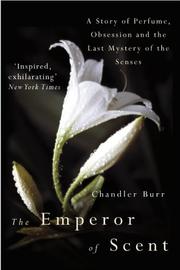
The Emperor of Scent by 8865733|Chandler Burr book cover

📘 The Emperor of Scent

A captivating memoir about Luca Turin's lifelong quest to understand and decode the sense of smell, leading to a Nobel Prize-winning breakthrough.

★★★★★★★★★★ 4.0 (1 rating)
Similar? ✓ Yes 0 ✗ No 0
The brain's way of healing by 7038154|Norman Doidge book cover

📘 The brain's way of healing

"The New York Times bestselling author of The Brain That Changes Itself presents astounding advances in the treatment of brain injury and illness. In The Brain That Changes Itself, Norman Doidge described the most important breakthrough in our understanding of the brain in four hundred years: the discovery that the brain can change its own structure and function in response to mental experience-what we call neuroplasticity. His revolutionary new book shows, for the first time, how the amazing process of neuroplastic healing really works. It describes natural, non-invasive avenues into the brain provided by the forms of energy around us-light, sound, vibration, movement-which pass through our senses and our bodies to awaken the brain's own healing capacities without producing unpleasant side effects. Doidge explores cases where patients alleviated years of chronic pain or recovered from debilitating strokes or accidents; children on the autistic spectrum or with learning disorders normalizing; symptoms of multiple sclerosis, Parkinson's disease, and cerebral palsy radically improved, and other near-miracle recoveries. And we learn how to vastly reduce the risk of dementia with simple approaches anyone can use. For centuries it was believed that the brain's complexity prevented recovery from damage or disease. The Brain's Way of Healing shows that this very sophistication is the source of a unique kind of healing. As he did so lucidly in The Brain That Changes Itself, Doidge uses stories to present cutting-edge science with practical real-world applications, and principles that everyone can apply to improve their brain's performance and health"-- "Norman Doidge's revolutionary new book shows, for the first time, how the amazing process of neuroplastic healing really works. It describes natural, non-invasive avenues into the brain provided by the forms of energy around us--light, sound, vibration, movement--which pass through our senses and our bodies to awaken the brain's own healing capacities without producing unpleasant side effects. Doidge explores cases where patients alleviated years of chronic pain or recovered from debilitating strokes or accidents; children on the autistic spectrum or with learning disorders normalizing; symptoms of multiple sclerosis, Parkinson's disease, and cerebral palsy radically improved, and other near-miracle recoveries. And we learn how to vastly reduce the risk of dementia with simple approaches anyone can use. For centuries it was believed that the brain's complexity prevented recovery from damage or disease. The Brain's Way of Healing shows that this very sophistication is the source of a unique kind of healing"--

★★★★★★★★★★ 3.0 (1 rating)
Similar? ✓ Yes 0 ✗ No 0
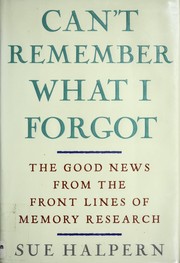
Can't Remember What I Forgot by 12021716|Sue Halpern book cover

📘 Can't Remember What I Forgot

Sue Halpern explores the cutting‑edge science of memory and Alzheimer’s disease, blending personal experience with research from psychologists, neuroscientists, and pharmacologists to illuminate current treatments, diagnostics, and hope for the future.

★★★★★★★★★★ 0.0 (0 ratings)
Similar? ✓ Yes 0 ✗ No 0
The Rule of Metaphor by 6959967|Paul Ricœur book cover

📘 The Rule of Metaphor

Paul Ricoeur is widely regarded as one of the most distinguished philosophers of our time. In The Rule of Metaphor this intellectual giant of our age seeks 'to show how language can extend itself to its very limits, forever discovering new resonances within itself'. Recognizing the fundamental power of language in constructing the world we perceive, Ricoeur reveals the processes by which linguistic imagination creates and recreates meaning through metaphor. Taking further his acclaimed analysis of the power of myth and symbol, Ricoeur invites us to explore the many layers of language in order to rediscover what that meaning might be. A fruitful and insightful study of how language affects how we understand the world, this book is also an indispensable work for all those seeking to retrieve some kind of meaning in uncertain times.

★★★★★★★★★★ 0.0 (0 ratings)
Similar? ✓ Yes 0 ✗ No 0
The power of Babel by 7263667|John H. McWhorter book cover

📘 The power of Babel

"There are approximately six thousand languages on Earth today, each a descendant of the tongue first spoken by Homo sapiens some 150,000 years ago. How did they all develop? What happened to the first language?". "In this tour of territory too often claimed by stodgy grammarians, linguistics professor John McWhorter ranges across linguistic theory, geography, history, and pop culture to tell the fascinating story of how thousands of very different languages have evolved from a single, original source in a natural process similar to biological evolution. While laying out how languages mix and mutate over time, he reminds us of the variety within the species that speaks them, and argues that, contrary to popular perception, language is not immutable and hidebound, but a living, dynamic entity that adapts itself to an ever-changing human environment.". "Full of humor and imaginative insight, The Power of Babel draws its illustrative examples from languages around the world, including pidgins, creoles, and nonstandard dialects. McWhorter also discusses current theories on what the first language might have been like, why dialects should not be considered "bad speech," and why most of today's languages will be extinct within one hundred years.". "The first book written for the layperson about the natural history of language, The Power of Babel is a dazzling tour de force that will leave readers anything but speechless."--BOOK JACKET.

★★★★★★★★★★ 0.0 (0 ratings)
Similar? ✓ Yes 0 ✗ No 0

Some Other Similar Books

The Language Instinct by Steven Pinker
The Evolving Language by David Crystal
The Meaning of Meaning by Charles Kay Ogden and Ivor Armstrong Richards
The Language Demystified by David Crystal

Have a similar book in mind? Let others know!

Please login to submit books!