"Hayes's history of the illustrated medical text "Gray's Anatomy" coincides with the hundred-and-fiftieth anniversary of its first publication. Fascinated by the fact that little was known about the famous book's genesis, Hayes combed through nineteenth-century letters and medical-school records, learning that, besides Henry Gray, the brilliant scholar and surgeon who wrote the text, another anatomist was crucial to the book's popularity: Henry Vandyke Carter, who provided its painstaking drawings. Hayes moves nimbly between the dour streets of Victorian London, where Gray and Carter trained at St. George's Hospital, and the sunnier classrooms of a West Coast university filled with athletic physical therapists in training, where he enrolls in anatomy classes and discovers that "when done well, dissection is very pleasing aesthetically." - The New Yorker"All laud and honor to Hayes....In perusing the body's 650 muscles and 206 bones, he has made the case that we are, as the psalmist wrote, "fearfully and wonderfully made" and that dissection has an aesthetic all its own. The act of carving open a body becomes, in this context, a perverse act of love, a desecration that consecrates "the extraordinary, the inner architecture of the human form." - The Washington Post"How do you write a book about someone about whom next to nothing is known? For most writers, the answer would be move on to the next subject. But Bill Hayes has an unusual set of skills. The author of previous books on insomnia and blood, he is part science writer, part memoirist, part culture explainer. "The Anatomist," his appealing new book about the man behind Gray's Anatomy, combines his search for the remaining traces of Henry Gray with a memoir of his own experience as a dissection student and a scalpel's-eye tour of the body." - The New York Times"Some of [Hayes's] most memorable writing describes the dissection classes he attended in San Francisco. We are treated to a selection of fascinating anatomical snippets about, for example, how to trace evidence of the sealed hole in the fetal heart through which the mother's blood enters; or how to find the kidney in a cadaver; or that blood flowing out of the heart is first used to feed the heart itself; or, best of all, a structural analysis of how the Queen manages to deliver such a uniquely restrained wave." - Nature: The International Weekly Journal of ScienceThe classic medical text known as Gray's Anatomy is one of the most famous books ever written. Now, on the 150th anniversary of its publication, acclaimed science writer and master of narrative nonfiction Bill Hayes has written the fascinating, never-before-told true story of how this seminal volume came to be. A blend of history, science, culture, and Hayes's own personal experiences, The Anatomist is this author's most accomplished and affecting work to date.With passion and wit, Hayes explores the significance of Gray's Anatomy and explains why it came to symbolize a turning point in medical history. But he does much, much more. Uncovering a treasure trove of forgotten letters and diaries, he illuminates the astonishing relationship between the fiercely gifted young anatomist Henry Gray and his younger collaborator H. V. Carter, whose exquisite anatomical illustrations are masterpieces of art and close observation. Tracing the triumphs and tragedies of these two extraordinary men, Hayes brings an equally extraordinary era--the mid-1800s--unforgettably to life.But the journey Hayes takes us on is not only outward but inward--through the blood and tissue and organs of the human...
The books recommended for The anatomist by
Bill Hayes are shaped by reader interaction.
Votes on how closely books relate, user ratings, and community comments all help
refine these recommendations and highlight books readers genuinely find similar
in theme, ideas, and overall reading experience.
Have you read any of these books?
Your votes, ratings, and comments help improve recommendations and make it easier
for other readers to discover books they’ll enjoy.
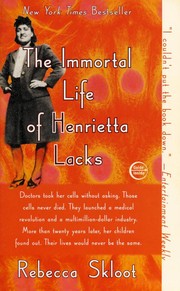
The Immortal Life of Henrietta Lacks follows the story of Henrietta Lacks, a poor black tobacco farmer whose cancer cells were taken in 1951 without her consent and later became the first immortal human cell line, HeLa, driving major scientific breakthroughs while raising questions of ethics, race, and medical exploitation.
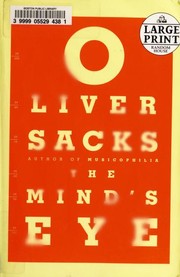
Oliver Sacks weaves intimate case studies and personal anecdotes to explore how the brain perceives, interprets, and adapts to the world of sight, revealing the astonishing resilience of human cognition.
Ulysses S. Grant’s personal memoirs chronicle his military career from West Point cadet to Union general‑in‑chief, offering clear, direct accounts of the Mexican War and the Civil War.
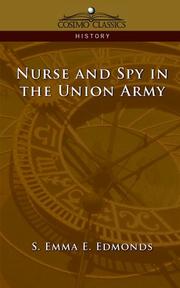
First‑hand account of a Union Army nurse who secretly served as a spy, detailing patient care, battlefield dynamics, and court procedures during the American Civil War.
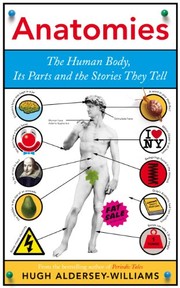
In *Anatomies*, bestselling author Hugh Aldersey-Williams investigates that marvellous, mysterious form: the human body. Providing a treasure trove of surprising facts, remarkable stories and startling information drawn from across history, science, art and literature--from fingerprints to angel physiology, from Isaac Newton's death-mask to the afterlife of Einstein's brain--he charts our ever-changing understanding of the extraordinary physical shell we inhabit.
Martha Raddatz chronicles the First Cavalry Division’s harrowing experiences during the 2004 Sadr City attack, while recounting the long wait of families eight thousand miles away. Her narrative blends valor, sorrow, and resilience.
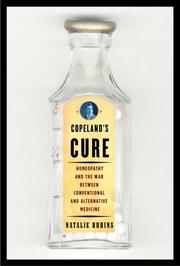
Today, one out of every three Americans uses some form of alternative medicine, either along with their conventional ("standard," "traditional") medications or in place of them. One of the most controversial--as well as one of the most popular--alternatives is homeopathy, a wholly Western invention brought to America from Germany in 1827, nearly forty years before the discovery that germs cause disease. Homeopathy is a therapy that uses minute doses of natural substances--minerals, such as mercury or phosphorus; various plants, mushrooms, or bark; and insect, shellfish, and other animal products, such as Oscillococcinum. These remedies mimic the symptoms of the sick person and are said to bring about relief by "entering" the body's "vital force." Many homeopaths believe that the greater the dilution, the greater the medical benefit, even though often not a single molecule of the original substance remains in the solution.In Copeland's Cure, Natalie Robins tells the fascinating story of homeopathy in this country; how it came to be accepted because of the gentleness of its approach--Nathaniel Hawthorne and Henry Wadsworth Longfellow were outspoken advocates, as were Louisa May Alcott, Harriet Beecher Stowe, and Daniel Webster. We find out about the unusual war between alternative and conventional medicine that began in 1847, after the AMA banned homeopaths from membership even though their medical training was identical to that of doctors practicing traditional medicine. We learn how homeopaths were increasingly considered not to be "real" doctors, and how "real" doctors risked expulsion from the AMA if they even consulted with a homeopath.At the center of Copeland's Cure is Royal Samuel Copeland, the now-forgotten maverick senator from New York who served from 1923 to 1938. Copeland was a student of both conventional and homeopathic medicine, an eye surgeon who became president of the American Institute of Homeopathy, dean of the New York Homeopathic Medical College, and health commissioner of New York City from 1918 to 1923 (he instituted unique approaches to the deadly flu pandemic). We see how Copeland straddled the worlds of politics (he befriended Calvin Coolidge, Herbert Hoover, and Franklin and Eleanor Roosevelt, among others) and medicine (as senator, he helped get rid of medical "diploma mills"). His crowning achievement was to give homeopathy lasting legitimacy by including all its remedies in the Federal Food, Drug, and Cosmetic Act of 1938.Finally, the author brings the story of clashing medical beliefs into the present, and describes the role of homeopathy today and how some of its practitioners are now adhering to the strictest standards of scientific research--controlled, randomized, double-blind clinical studies.From the Hardcover edition.
Two volumes of Ulysses S. Grant’s firsthand account of his life and the military campaigns that defined his career, offering insight into his rise from a modest upbringing to the presidency of the United States.
War Doctor: Surgery on the Front Lines by David Nott The Body: A Guide for Occupants by Bill bryson Complications: A Surgeon's Notes on an Imperfect Science by Atul Gawande The Gene: An Intimate History by Siddhartha Mukherjee Anatomy of a Spirit: The Seven Stages of Power and Ecstasy by Caroline Myss The Invisible Palate: A Doctor's Journey Through the Brain, the Body, and the Mind by Michael S. Gazzaniga The Man Who Tamed the Wind by Odysseas G. Elytis The Paleobiological Revolution: Avant-Garde Paleontology and the Politics of Scientific Knowledge by Alison P. Koenig
Have a similar book in mind? Let others know!
Please login to submit books!
Is it a similar book?
Thank you for sharing your feedback. Please also let us know why you're thinking this is a similar (or not similar) book.