Books like Life As We Made It by Beth Shapiro


First publish date: 2021
Authors: Beth Shapiro
★ ★ ★ ★ ★ 0.0 (0 community ratings)

Life As We Made It by Beth Shapiro

How are these books recommended?

The books recommended for Life As We Made It by Beth Shapiro are shaped by reader interaction. Votes on how closely books relate, user ratings, and community comments all help refine these recommendations and highlight books readers genuinely find similar in theme, ideas, and overall reading experience.


Have you read any of these books?
Your votes, ratings, and comments help improve recommendations and make it easier for other readers to discover books they’ll enjoy.

Books similar to Life As We Made It (3 similar books)
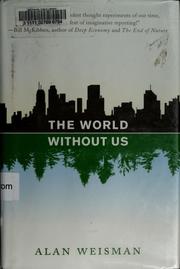
The World Without Us by 8370179|Alan Weisman book cover

πŸ“˜ The World Without Us

Explore how human activity reshapes Earth’s ecosystems, leaving a legacy of environmental change and potential decline.

β˜…β˜…β˜…β˜…β˜…β˜…β˜…β˜…β˜…β˜… 4.3 (7 ratings)
Similar? ✓ Yes 0 ✗ No 0
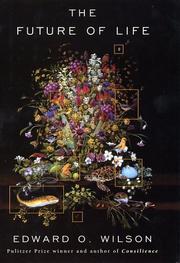
The Future of Life by 4462033|Edward Osborne Wilson book cover

πŸ“˜ The Future of Life

A call to action: The Future of Life is a call to protect our natural world, including animals, insects, and plants that hold the key to our future health.

β˜…β˜…β˜…β˜…β˜…β˜…β˜…β˜…β˜…β˜… 4.0 (2 ratings)
Similar? ✓ Yes 0 ✗ No 0
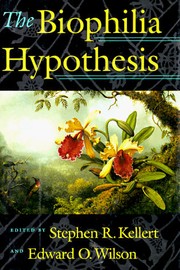
The Biophilia Hypothesis by 8792782|Stephen R. Kellert book cover

πŸ“˜ The Biophilia Hypothesis

"Biophilia" is the term coined by Edward O. Wilson to describe what he believes is humanity's innate affinity for the natural world. In his landmark book Biophilia, he examined how our tendency to focus on life and lifelike processes might be a biologically based need, integral to our development as individuals and as a species. That idea has caught the imagination of diverse thinkers.The Biophilia Hypothesis brings together the views of some of the most creative scientists of our time, each attempting to amplify and refine the concept of biophilia. The variety of perspectives -- psychological, biological, cultural, symbolic, and aesthetic -- frame the theoretical issues by presenting empirical evidence that supports or refutes the hypothesis. Numerous examples illustrate the idea that biophilia and its converse, biophobia, have a genetic component: fear, and even full-blown phobias of snakes and spiders are quick to develop with very little negative reinforcement, while more threatening modern artifacts -- knives, guns, automobiles -- rarely elicit such a response people find trees that are climbable and have a broad, umbrella-like canopy more attractive than trees without these characteristics people would rather look at water, green vegetation, or flowers than built structures of glass and concrete The biophilia hypothesis, if substantiated, provides a powerful argument for the conservation of biological diversity. More important, it implies serious consequences for our well-being as society becomes further estranged from the natural world. Relentless environmental destruction could have a significant impact on our quality of life, not just materially but psychologically and even spiritually.

β˜…β˜…β˜…β˜…β˜…β˜…β˜…β˜…β˜…β˜… 0.0 (0 ratings)
Similar? ✓ Yes 0 ✗ No 0

Some Other Similar Books

The Song of the Dodo: Island Biogeography in an Age of Extinction by David Quammen
The Evolving God by Philipe de La Croix
End of the Wild: Why Certain Species Matter by Stewart L. Pimm
The Plant Messiah: A Journey into the Unexpected Ideas of Plants by Carlos Magdalena
The Human Planet: How We Created the Anthropocene by Simon L. Lewis & Mark A. Maslin
Field Notes on Science & Nature by Tim Flannery
The Third Chimpanzee: The Evolution and Future of the Human Animal by Jared Diamond
The Last of the Plains Indians by Rosalie Sexton Redfield
Rewilding: The Radical New Science of Ecological Recovery by Caroline Fraser

Have a similar book in mind? Let others know!

Please login to submit books!