Books like A hermit's cookbook by Andrew Jotischky


A Hermit's Cookbook explores how medieval hermits and monks survived on minimal, self-denying diets. The book opens with portraits of the Desert Fathers—ascetic solitaries, hermits, and pillar‑dwellers—and examines how their ideals were revived in Byzantine and Western monasticism. It then turns to the practicalities of monastic life: harvesting food in monasteries, the rules against hunting, and the preparation of simple dishes like monk’s stew and bread soup. Rich anecdotes and historical context illuminate the moral and ethical dimensions of medieval fasting and the role of food in monastic and religious life.
First publish date: 2011
Genre: History/Medieval History
Authors: Andrew Jotischky
★ ★ ★ ★ ★ 0.0 (0 community ratings)

A hermit's cookbook by Andrew Jotischky

How are these books recommended?

The books recommended for A hermit's cookbook by Andrew Jotischky are shaped by reader interaction. Votes on how closely books relate, user ratings, and community comments all help refine these recommendations and highlight books readers genuinely find similar in theme, ideas, and overall reading experience.


Have you read any of these books?
Your votes, ratings, and comments help improve recommendations and make it easier for other readers to discover books they’ll enjoy.

Books similar to A hermit's cookbook (13 similar books)

The Art of Fermentation by 7407323|Sandor Ellix Katz book cover

📘 The Art of Fermentation

The Art of Fermentation is a definitive guide that translates the science, history, and practical techniques of fermentation into clear, step‑by‑step instructions for beginners and experts alike.

★★★★★★★★★★ 4.4 (7 ratings)
Similar? ✓ Yes 0 ✗ No 0
Wild Fermentation by 7407323|Sandor Ellix Katz book cover

📘 Wild Fermentation


★★★★★★★★★★ 3.8 (4 ratings)
Similar? ✓ Yes 0 ✗ No 0
How to Cook Your Life by 7072999|Dōgen Zenji book cover

📘 How to Cook Your Life


★★★★★★★★★★ 5.0 (1 rating)
Similar? ✓ Yes 0 ✗ No 0
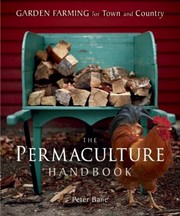
The Permaculture Handbook by 11700584|Peter Bane book cover

📘 The Permaculture Handbook
 by Peter Bane


★★★★★★★★★★ 4.0 (1 rating)
Similar? ✓ Yes 0 ✗ No 0
Root cellaring by 12102081|Mike Bubel book cover

📘 Root cellaring
 by Mike Bubel


★★★★★★★★★★ 3.0 (1 rating)
Similar? ✓ Yes 0 ✗ No 0
Life in the medieval cloister by 8117846|Julie Kerr book cover

📘 Life in the medieval cloister
 by Julie Kerr


★★★★★★★★★★ 4.0 (1 rating)
Similar? ✓ Yes 0 ✗ No 0
Holy feast and holy fast by 10129139|Caroline Walker Bynum book cover

📘 Holy feast and holy fast


★★★★★★★★★★ 0.0 (0 ratings)
Similar? ✓ Yes 0 ✗ No 0
The Self-Sufficient Life and How to Live It by 6963778|John Seymour book cover

📘 The Self-Sufficient Life and How to Live It


★★★★★★★★★★ 0.0 (0 ratings)
Similar? ✓ Yes 0 ✗ No 0
The Forager's Harvest by 7333168|Samuel Thayer book cover

📘 The Forager's Harvest


★★★★★★★★★★ 0.0 (0 ratings)
Similar? ✓ Yes 0 ✗ No 0
Simplicity from a Monastery Kitchen by 6968057|Victor D'Avila-Latourrette book cover

📘 Simplicity from a Monastery Kitchen


★★★★★★★★★★ 0.0 (0 ratings)
Similar? ✓ Yes 0 ✗ No 0
From a monastery kitchen by 7525378|Victor-Antoine D'Avila-Latourrette book cover

📘 From a monastery kitchen


★★★★★★★★★★ 0.0 (0 ratings)
Similar? ✓ Yes 0 ✗ No 0
From a Monastery Kitchen by 6968057|Victor D'Avila-Latourrette book cover

📘 From a Monastery Kitchen


★★★★★★★★★★ 0.0 (0 ratings)
Similar? ✓ Yes 0 ✗ No 0
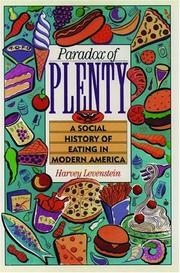
Paradox of Plenty by 8370725|Harvey A. Levenstein book cover

📘 Paradox of Plenty

This remarkable book, the sequel to the author's Revolution at the Table (1988), analyses changes in the American diet and nutritional ideas from 1930 to the present. Much more than a study of eating habits, Paradox of Plenty is a sophisticated analysis of the dynamics of cultural change that deserves a wide audience among economic historians, political historians, women's historians, medical historians, and social historians. One of Levenstein's many perceptive insights is that the history of eating is inextricably tied up with a broader political economy and culture. With admirable balance, he carefully disentangles the roles of food producers and processors, home economists, faddists, nutritionists, and political pressure groups in shaping broader cultural ideas of nutrition and taste. As in his earlier book, the author shows how food experts repeatedly recommended major changes in diet on the basis of flimsy evidence. The book will prove to be a valuable source of information on regulation of the food industry; changes in food distribution, processing, packaging, and preservation; and consumption patterns and food budgets among various ethnic and socio-economic groups. Carefully attentive to social class, Paradox of Plenty shows how food became a less important marker of social distinction between the 1930s and the 1960s, only to assume renewed symbolic importance in the 1970s and 1980s. Similarly sensitive to gender issues, the book charts the changing the role of food preparation in assessments of women's success as wives and mothers, the growing mania for slimness, and the impact of the increasing number of working mothers on American dining habits. The book's title, a variant on David Potter's People of Plenty, underscores two of Levenstein's central themes: persistent public concern over the extent of hunger and malnutrition in the midst of agricultural abundance and periodic American obsessions with dieting and obesity. The Depression highlighted both of these themes: the 1930s not only witnessed a growing political debate about the causes of and cures for malnutrition; it also saw a growing cultural obsession among the middle class with weight loss and vitamins. The book's core is a systematic examination of how major events of the twentieth century intersected with changing eating habits and ideas about food. The Depression, for example, encouraged a renewed emphasis on home cooking and an uncomplicated, straightforward cuisine. World War II spurred a heightened concern with poor nutrition. The early post-war era witnessed heightened fears of additives, pesticides, cholesterol, and saturated fats. Especially enlightening is Levenstein's, discussion of the growing cultural interest in health and organic foods during the 1960s and 1970s and the ways this was linked to broader countercultural values.

★★★★★★★★★★ 0.0 (0 ratings)
Similar? ✓ Yes 0 ✗ No 0

Some Other Similar Books

The Vegetable Satisfaction by Rebecca Wood
The Herbal Medicine-Maker's Handbook by James Green
Basic Cooking Skills by Sophie Grigson

Have a similar book in mind? Let others know!

Please login to submit books!