Books like Unfair by Adam Benforado


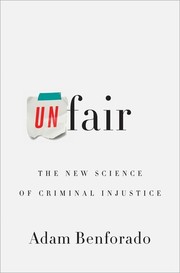
In Unfair, law professor Adam Benforado explores the hidden psychological forces that distort justice. Drawing on psychology, neuroscience, and court cases, he shows how implicit bias can influence police conduct, prosecutorial choices, jury verdicts, sentencing, and parole. The book argues that even a flawlessly constructed legal system can still deliver injustice, because the roots lie in the minds of all participants rather than in individual misconduct. Benforado uses empirical research and examples such as facial‑feature‑based sentencing disparities and early‑morning parole decisions to illustrate the scope of bias. He outlines practical reforms to counter these unconscious influences and to move toward true fairness and equality before the law.
First publish date: 2015
Genre: Psychology/Cognitive Psychology
Authors: Adam Benforado
★ ★ ★ ★ ★ 5.0 (1 community ratings)

Unfair by Adam Benforado

How are these books recommended?

The books recommended for Unfair by Adam Benforado are shaped by reader interaction. Votes on how closely books relate, user ratings, and community comments all help refine these recommendations and highlight books readers genuinely find similar in theme, ideas, and overall reading experience.


Have you read any of these books?
Your votes, ratings, and comments help improve recommendations and make it easier for other readers to discover books they’ll enjoy.

Books similar to Unfair (12 similar books)

Thinking, fast and slow by 6390436|Daniel Kahneman book cover

📘 Thinking, fast and slow

Daniel Kahneman's "Thinking, Fast and Slow" explains how two distinct mental systems shape our judgments and decisions, offering insights into the biases that influence everyday choices.

★★★★★★★★★★ 4.1 (189 ratings)
Similar? ✓ Yes 0 ✗ No 0
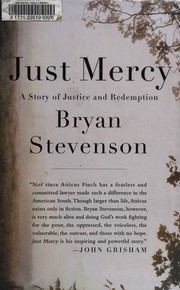
Just Mercy by 11772924|Bryan Stevenson book cover

📘 Just Mercy

Justice lawyer Bryan Stevenson recounts his battle against wrongful convictions, life‑sentence juvenile cases, and systemic bias while seeking reform of America’s criminal justice system.

★★★★★★★★★★ 4.2 (24 ratings)
Similar? ✓ Yes 0 ✗ No 0
The art of thinking clearly by 9275146|Rolf Dobelli book cover

📘 The art of thinking clearly

Rolf Dobelli presents 99 concise chapters that explain everyday cognitive biases, showing how awareness can sharpen decision‑making at work and in life.

★★★★★★★★★★ 4.2 (18 ratings)
Similar? ✓ Yes 0 ✗ No 0
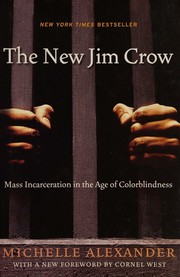
The New Jim Crow by 11061674|Michelle Alexander book cover

📘 The New Jim Crow

Michelle Alexander argues that mass incarceration has become a contemporary system of racial control, striking disproportionately at African‑American men and other disadvantaged groups while perpetuating a new form of Jim Crow.

★★★★★★★★★★ 3.4 (14 ratings)
Similar? ✓ Yes 0 ✗ No 0
The End of Policing by 9294918|Alex S. Vitale book cover

📘 The End of Policing

A critique of policing that examines its historical expansion and proposes alternatives such as drug legalization and harm reduction to reduce crime and injustice.

★★★★★★★★★★ 4.5 (4 ratings)
Similar? ✓ Yes 0 ✗ No 0
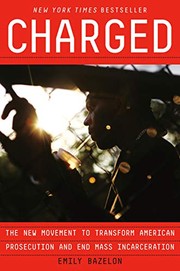
Charged by 11530657|Emily Bazelon book cover

📘 Charged


★★★★★★★★★★ 4.0 (1 rating)
Similar? ✓ Yes 0 ✗ No 0
Locked in by 11961347|John F. Pfaff book cover

📘 Locked in

John F. Pfaff examines the roots of mass incarceration in the United States, challenging conventional narratives and spotlighting shifts in prosecutorial behavior during the 1990s.

★★★★★★★★★★ 3.0 (1 rating)
Similar? ✓ Yes 0 ✗ No 0
From the war on poverty to the war on crime by 11956250|Elizabeth Kai Hinton book cover

📘 From the war on poverty to the war on crime

"In the United States today, one in every 31 adults is under some form of penal control, including one in eleven African American men. How did the "land of the free" become the home of the world's largest prison system? Challenging the belief that America's prison problem originated with the Reagan administration's War on Drugs, Elizabeth Hinton traces the rise of mass incarceration to an ironic source: the social welfare programs of Lyndon Johnson's Great Society at the height of the civil rights era. Johnson's War on Poverty policies sought to foster equality and economic opportunity. But these initiatives were also rooted in widely shared assumptions about African Americans' role in urban disorder, which prompted Johnson to call for a simultaneous War on Crime. The 1965 Law Enforcement Assistance Act empowered the national government to take a direct role in militarizing local police. Federal anticrime funding soon incentivized social service providers to ally with police departments, courts, and prisons. Under Richard Nixon and his successors, welfare programs fell by the wayside while investment in policing and punishment expanded. Anticipating future crime, policy makers urged states to build new prisons and introduced law enforcement measures into urban schools and public housing, turning neighborhoods into targets of police surveillance. By the 1980s, crime control and incarceration dominated national responses to poverty and inequality. The initiatives of that decade were less a sharp departure than the full realization of the punitive transformation of urban policy implemented by Republicans and Democrats alike since the 1960s."--Provided by publisher.

★★★★★★★★★★ 0.0 (0 ratings)
Similar? ✓ Yes 0 ✗ No 0
International Library of Psychology by 6984093|Routledge book cover

📘 International Library of Psychology
 by Routledge


★★★★★★★★★★ 0.0 (0 ratings)
Similar? ✓ Yes 0 ✗ No 0
Death and ethnicity by 2562970|Richard A. Kalish book cover

📘 Death and ethnicity


★★★★★★★★★★ 0.0 (0 ratings)
Similar? ✓ Yes 0 ✗ No 0
Caught by 4680774|Marie Gottschalk book cover

📘 Caught

Marie Gottschalk explores why the expanding carceral state in the United States endures, critiquing prevailing penal reforms and proposing a constructive alternative pathway.

★★★★★★★★★★ 0.0 (0 ratings)
Similar? ✓ Yes 0 ✗ No 0

Some Other Similar Books

The Conscious Mind: In Search of a Fundamental Theory by David J. Chalmers
Nudge: Improving Decisions About Health, Wealth, and Happiness by Richard H. Thaler and Cass R. Sunstein
The Honest Truth About Dishonesty: How We Lie to Everyone—Especially Ourselves by Dan Ariely
Blindspot: Hidden Biases of Good People by Mahzarin R. Banaji and Anthony G. Greenwald
The Power of Habit: Why We Do What We Do in Life and Business by Charles Duhigg
Predictably Irrational: The Hidden Forces That Shape Our Decisions by Dan Ariely
Misbehaving: The Making of Behavioral Economics by Richard H. Thaler

Have a similar book in mind? Let others know!

Please login to submit books!