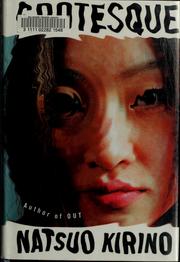
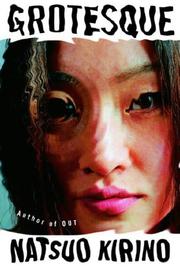
It concerns the relationship between three girls, how they grow up, the pressures they are subject to, and how they turn out. They are all three more or less desperate and unpleasant, in different ways. They all three turn in the end to prostitution, two of them being murdered.
It is not so much a crime novel, though it is positioned and marketed as that, as a very dark view of the role of women in relation to men and to men's sexual desire. All the men in the book treat the women purely as objects of sexual gratification. The men are seen entirely from outside, they are strange driven creatures, with little or no humanity. The women, from girlhood onwards, are defined by their response to desire and by their power to evoke it. Which fades with the years, of course.
The view of men is not simply of Japanese men in Japanese society - the main protagonists in the early part of the book are European, and this account of men as aliens characterises them whether in Europe or in Japan.
Japanese society is seen also from the point of view of the women - its oppressive, arbitrary, and places them in a powerless and importunate position. They don't seem to form friendships or relations of affection, they are in continual relations of competition and dislike for each other. The men in the workplace are not simply sexually driven in this incomprehensible way, but are also totally powerful authority figures.
One of the girls characterises herself as a nymphomaniac, is possessed by desire too and gratifies with anyone on any occasion.
All the characters are unpleasant and unfeeling - there is a sort of universal casual cruelty about all interactions, a complete lack of any human feeling or affection. It is very consistent with the prevailing tone that there are suicides and murders, and that the characters react to these with a complete lack either of shock or feeling. It is as if these are simply the expression of what is going on every day at a less violent level.
Its a view of a society in which personal alienation is total. The characters are so far removed from what we would consider normal human feelings for each other that the possibility of such feelings does not even occur to them. It is a world in which one makes ones own way with everyone's hand against one. In the school, which occupies quite a large part of the narrative, there are cliques and rituals of belonging and discrimination. The prestigious clique is seen from the outside as forming a unit with its own rules. There is however no analysis of it. It is entirely done from the point of view of those outside it.
It is a striking account, though not very pleasant reading, and after about a third of it, and you realise this is how it is going to be all the way through, it ceases to interest. In the end the author fails in the way that James notes Flaubert's failure. If you are going to tell a story from the point of view of, and through the eyes of, a character, then that character has to have a level of understanding which will illuminate events. They don't have to be sympathetic, but they do have to shed some light. Otherwise it simply turns into a very restricted view of the world through an uninteresting consciousness, and one ends up just wanting it to stop. It is like a long visit with someone whose view of the world, endlessly repeated, is petty and malicious and paranoid.
You can probably tell I am not going to finish this, or to try to read anything more by this writer. The subject, the way in which social convention and structure affects personal relations, particular men and women's relations, and the different role of sexual passion in the sexes, is important and interesting. But the author, though capable of seeing the theme and attempting to write about it, in the end proves incapable of even portraying it in the round, let alone illuminating it in any humanly interesting way.
The books recommended for Grotesque by
桐野夏生 are shaped by reader interaction.
Votes on how closely books relate, user ratings, and community comments all help
refine these recommendations and highlight books readers genuinely find similar
in theme, ideas, and overall reading experience.
Have you read any of these books?
Your votes, ratings, and comments help improve recommendations and make it easier
for other readers to discover books they’ll enjoy.
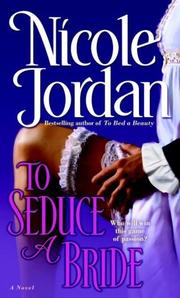
A seductive romance set in Britain where a 21‑year‑old young woman defends her heart against a Marquess who seeks her in the most unlikely of places—a brothel—turning deceptions into passion.
Written in debtor's prison in 1784, Memoirs of Fanny Hill is the first modern English erotic novel that follows a young woman forced into prostitution by poverty, who navigates love, betrayal, and personal growth to find her own ending.
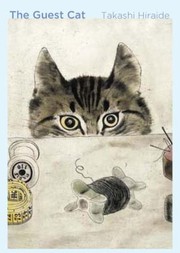
Two editors living quietly in a leafy Tokyo cottage are visited by a beautiful cat who returns repeatedly, bringing new joys and subtle lightening to their everyday life.
A provocative urban fantasy that blends satire and supernatural romance in modern Moscow, featuring a 15‑year‑old prostitute who is a centuries‑old were‑fox and a Russian intelligence officer who is a werewolf.
Belle Cora follows an orphaned New York merchant’s daughter as she survives a cousin’s betrayal, a life as a prostitute, and multiple reinventions to win love and independence.
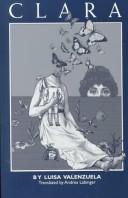
"Clara is a free spirited young woman, a prostitute in Buenos Aires. She is full of vague plans and dreams, and tries to shield herself from an ominous world. Clara is brought to life by Latin American master novelist Luisa Valenzuela, who has created her as a flesh-and-blood character. Clara, answering to her own laws, reacts with inner strength and autonomy. And she may even save herself from certain death.".
"Clara mixes social commentary with tender humor. Its lively spontaneity captures a certain segment of humanity in Buenos Aires, Argentina, during the turbulent 1950's."--BOOK JACKET.
The Little House by Kyoko Mori Convenience Store Woman by Sayaka Murata Indignation by Shusaku Endo The Lake by Banana Yoshimoto The Housekeeper and the Professor by Yoko Ogawa
Have a similar book in mind? Let others know!
Please login to submit books!
Is it a similar book?
Thank you for sharing your feedback. Please also let us know why you're thinking this is a similar (or not similar) book.