Books like A history of computing technology by Williams, Michael R.
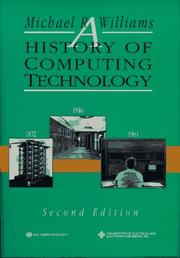

This work presents a detailed history of computing technology, focusing on the development and use of physical devices that aided the automation of arithmetic. It covers major milestones in the computer industry and the evolution of mathematical instruments.
First publish date: 1985
Genre: Technology & Computing/Computer Science
Authors: Williams, Michael R.
★ ★ ★ ★ ★ 0.0 (0 community ratings)

A history of computing technology by Williams, Michael R.

How are these books recommended?

The books recommended for A history of computing technology by Williams, Michael R. are shaped by reader interaction. Votes on how closely books relate, user ratings, and community comments all help refine these recommendations and highlight books readers genuinely find similar in theme, ideas, and overall reading experience.


Have you read any of these books?
Your votes, ratings, and comments help improve recommendations and make it easier for other readers to discover books they’ll enjoy.

Books similar to A history of computing technology (12 similar books)
The Soul of a New Machine by 6337648|Tracy Kidder book cover

πŸ“˜ The Soul of a New Machine

A 1981 nonfiction work by Tracy Kidder that follows a computer‑engineering team building the Data General Eclipse MV/8000β€”a high‑speed minicomputerβ€”under intense deadline pressure.

β˜…β˜…β˜…β˜…β˜…β˜…β˜…β˜…β˜…β˜… 4.1 (15 ratings)
Similar? ✓ Yes 0 ✗ No 0
Programmed inequality by 11964067|Mar Hicks book cover

πŸ“˜ Programmed inequality
 by Mar Hicks


β˜…β˜…β˜…β˜…β˜…β˜…β˜…β˜…β˜…β˜… 4.0 (1 rating)
Similar? ✓ Yes 0 ✗ No 0
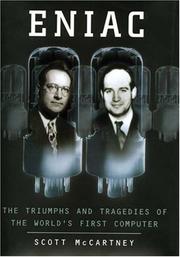
ENIAC by 11596844|Scott McCartney book cover

πŸ“˜ ENIAC

John Mauchly and Presper Eckert designed and built the first digital, electronic computer. The story of their three-year race to create the legendary ENIAC and their three-decade struggle to gain credit for it has never been told and is a compelling tale of brilliance and misfortune. Mauchly and Eckert met by chance in 1941 at the University of Pennsylvania's Moore School of Engineering. They soon developed a revolutionary vision: to use electricity as a means of computing - in other words, to make electricity "think." Ignored by their colleagues, in early 1943 they were fortuitously discovered and funded by the U.S. Army, itself in urgent need of a machine that could quickly calculate ballistic missile trajectories in wartime Europe and Africa. In the wake of their triumph, Mauchly and Eckert would be shadowed by personal tragedies and professional setbacks that are as absorbing as their invention is fascinating. They built the famous UNIVAC machine and formed the world's first computer company, only to be outflanked and outfinanced by IBM and other emerging competitors. They filed a patent on ENIAC and would spend the next twenty-five years defending their inventions against a host of claims. Based on original interviews with surviving participants and the first study of Mauchly's and Eckert's personal papers, ENIAC is a vital contribution to the history of technology.

β˜…β˜…β˜…β˜…β˜…β˜…β˜…β˜…β˜…β˜… 3.0 (1 rating)
Similar? ✓ Yes 0 ✗ No 0
Computing before computers by 10143379|William Aspray book cover

πŸ“˜ Computing before computers


β˜…β˜…β˜…β˜…β˜…β˜…β˜…β˜…β˜…β˜… 0.0 (0 ratings)
Similar? ✓ Yes 0 ✗ No 0
Geeks bearing gifts by 803401|Theodor H. Nelson book cover

πŸ“˜ Geeks bearing gifts


β˜…β˜…β˜…β˜…β˜…β˜…β˜…β˜…β˜…β˜… 0.0 (0 ratings)
Similar? ✓ Yes 0 ✗ No 0
A history of modern computing by 6602995|Paul E. Ceruzzi book cover

πŸ“˜ A history of modern computing

This engaging history covers modern computing from the development of the first electronic digital computer through the advent of the World Wide Web. The author concentrates on four key moments of transition: the transformation of the computer in the late 1940s from a specialized scientific instrument to a commercial product; the emergence of small systems in the late 1960s; the beginnings of personal computing in the 1970s; and the spread of networking after 1985.

β˜…β˜…β˜…β˜…β˜…β˜…β˜…β˜…β˜…β˜… 0.0 (0 ratings)
Similar? ✓ Yes 0 ✗ No 0
The history of computers by 9204536|Les Freed book cover

πŸ“˜ The history of computers
 by Les Freed


β˜…β˜…β˜…β˜…β˜…β˜…β˜…β˜…β˜…β˜… 0.0 (0 ratings)
Similar? ✓ Yes 0 ✗ No 0
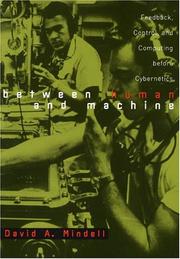
Between Human and Machine by 7090448|David A. Mindell book cover

πŸ“˜ Between Human and Machine

Mindell ponders the orgin of cybernetics beyond Norbert Wiener's 1948 hypothesis. Mindell returns to the time between the World Wars, when four disparate computing research cultures thrived in the United States: the U.S. Navy, the Sperry Gyroscope Company, the Bell Telephone Laboratories, and Vannevar Bush's laboratory at MIT. In each culture, different technical problems, organizational imperatives, and working evironment existed, but they were all researching control, communications, and computing. When President Roosevelt synthesized the four engineering cultures into a representative government committee, they suffused engineering research with good principles and later made it possible for Norbert Wiener's 1948 formulation of cybernetics.

β˜…β˜…β˜…β˜…β˜…β˜…β˜…β˜…β˜…β˜… 0.0 (0 ratings)
Similar? ✓ Yes 0 ✗ No 0
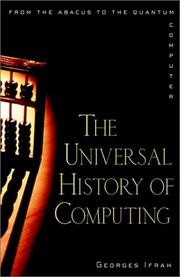
The universal history of computing by 9086720|Georges Ifrah book cover

πŸ“˜ The universal history of computing


β˜…β˜…β˜…β˜…β˜…β˜…β˜…β˜…β˜…β˜… 0.0 (0 ratings)
Similar? ✓ Yes 0 ✗ No 0
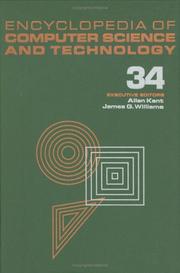
Encyclopedia of Computer Science and Technology by 5937078|Allen Kent book cover

πŸ“˜ Encyclopedia of Computer Science and Technology
 by Allen Kent


β˜…β˜…β˜…β˜…β˜…β˜…β˜…β˜…β˜…β˜… 0.0 (0 ratings)
Similar? ✓ Yes 0 ✗ No 0
Ada's algorithm by 11381419|James Essinger book cover

πŸ“˜ Ada's algorithm

Behind every great man, there's a great woman; no other adage more aptly describes the relationship between Charles Babbage, the man credited with thinking up the concept of the programmable computer, and mathematician Ada Lovelace, whose contributions, according to Essinger, proved indispensable to Babbage's invention. The Analytical Engine was a series of cogwheels, gear-shafts, camshafts, and power transmission rods controlled by a punch-card system based on the Jacquard loom. Lovelace, the only legitimate child of English poet Lord Byron, wrote extensive notes about the machine, including an algorithm to compute a long sequence of Bernoulli numbers, which some observers now consider to be the world's first computer program.

β˜…β˜…β˜…β˜…β˜…β˜…β˜…β˜…β˜…β˜… 0.0 (0 ratings)
Similar? ✓ Yes 0 ✗ No 0

Some Other Similar Books

The Innovators: How a Group of Hackers, Geniuses, and Geeks Created the Digital Revolution by Walter Isaacson
Code: The Hidden Language of Computer Hardware and Software by Charles Petzold
The Computer Revolution in France, 1940-195Potion by F. P. Gasquet
ENIAC: The Triumphs and struggles of the World's First Computer by Scott McCartney
The Mythical Man-Month: Essays on Software Engineering by Frederick P. Brooks Jr.
The Information: A History, a Theory, a Flood by James Gleick
Computer Science: An Overview by J. Glenn Brookshear
Turing's Cathedral: The Origins of the Digital Universe by George Dyson
Revolution in the Valley: The Insanely Great Story of How the Mac Was Made by Andy Hertzfeld

Have a similar book in mind? Let others know!

Please login to submit books!