Books like Automating Inequality by Virginia Eubanks
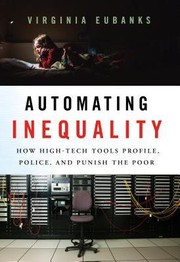

Virginia Eubanks’ *Automating Inequality* traces the rise of automated decision‑making in finance, health, and social services, showing how algorithms determine who receives food stamps, housing, or child‑welfare support. The book details real stories—from an Indiana woman denied healthcare due to a computer’s misreading, to Los Angeles homeless individuals triaged by an algorithm—to illustrate how such systems disproportionately disadvantage the poor. Eubanks argues that these technologically‑based regimes not only sustain inequality but also erode democratic transparency, turning poverty into a measurable, manageable risk rather than a social issue. Her analysis connects historical policing of the destitute with contemporary data surveillance, highlighting the ethical distance created by automation.
First publish date: 2018
Genre: Technology & Computing/Artificial Intelligence
Authors: Virginia Eubanks
★ ★ ★ ★ ★ 5.0 (1 community ratings)

Automating Inequality by Virginia Eubanks

How are these books recommended?

The books recommended for Automating Inequality by Virginia Eubanks are shaped by reader interaction. Votes on how closely books relate, user ratings, and community comments all help refine these recommendations and highlight books readers genuinely find similar in theme, ideas, and overall reading experience.


Have you read any of these books?
Your votes, ratings, and comments help improve recommendations and make it easier for other readers to discover books they’ll enjoy.

Books similar to Automating Inequality (7 similar books)

The Glass Castle by 7747663|Jeannette Walls book cover

📘 The Glass Castle

Jeannette Walls' memoir chronicles her turbulent childhood in a dysfunctional, itinerant family, detailing poverty, alcoholism, and homelessness across the United States as she seeks stability and personal growth.

★★★★★★★★★★ 4.4 (45 ratings)
Similar? ✓ Yes 0 ✗ No 0
Nickel and Dimed by 7877513|Barbara Ehrenreich book cover

📘 Nickel and Dimed

Barbara Ehrenreich explores the realities of low‑wage work by living in sweatshops, hostels, and retail in three U.S. cities during the late 1990s.

★★★★★★★★★★ 3.6 (24 ratings)
Similar? ✓ Yes 0 ✗ No 0
Hand to Mouth by 11944336|Linda Tirado book cover

📘 Hand to Mouth

Linda Tirado’s memoir chronicles her journey from middle‑class comfort to the working poor, offering a candid, humorous look at poverty and social class in America.

★★★★★★★★★★ 4.3 (3 ratings)
Similar? ✓ Yes 0 ✗ No 0
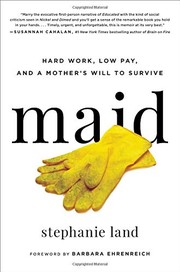
Maid by 11815487|Stephanie Land book cover

📘 Maid

Stephanie Land’s memoir chronicles her descent into poverty and her determined climb back, offering a candid view of the hardships faced by single mothers in modern America.

★★★★★★★★★★ 3.0 (2 ratings)
Similar? ✓ Yes 0 ✗ No 0
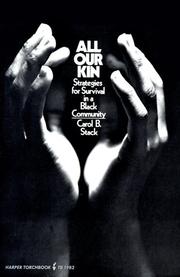
All our kin: strategies for survival in a Black community by 8841110|Carol B. Stack book cover

📘 All our kin: strategies for survival in a Black community

A young white woman's journey into a black community to study the family support systems coping with poverty, debunking the misconception that poor families were unstable and disorganized.

★★★★★★★★★★ 4.0 (1 rating)
Similar? ✓ Yes 0 ✗ No 0
Waste by 12694787|Catherine Coleman Flowers book cover

📘 Waste


★★★★★★★★★★ 5.0 (1 rating)
Similar? ✓ Yes 0 ✗ No 0
$2.00 a day by 6786574|Kathryn Edin book cover

📘 $2.00 a day

"A revelatory account of poverty in America so deep that we, as a country, don't think it exists Jessica Compton's family of four would have no cash income unless she donated plasma twice a week at her local donation center in Tennessee. Modonna Harris and her teenage daughter Brianna in Chicago often have no food but spoiled milk on weekends. After two decades of brilliant research on American poverty, Kathryn Edin noticed something she hadn't seen since the mid-1990s -- households surviving on virtually no income. Edin teamed with Luke Shaefer, an expert on calculating incomes of the poor, to discover that the number of American families living on $2.00 per person, per day, has skyrocketed to 1.5 million American households, including about 3 million children. Where do these families live? How did they get so desperately poor? Edin has "turned sociology upside down" (Mother Jones) with her procurement of rich -- and truthful -- interviews. Through the book's many compelling profiles, moving and startling answers emerge. The authors illuminate a troubling trend: a low-wage labor market that increasingly fails to deliver a living wage, and a growing but hidden landscape of survival strategies among America's extreme poor. More than a powerful expose, $2.00 a Day delivers new evidence and new ideas to our national debate on income inequality. "--

★★★★★★★★★★ 0.0 (0 ratings)
Similar? ✓ Yes 0 ✗ No 0

Some Other Similar Books

The New Jim Crow: Mass Incarceration in the Age of Colorblindness by Michelle Alexander
Invisible No More: Police Violence Against Black Women and Women of Color by Andrea Ritchie
Technically Wrong: Sexist Apps, Biased Algorithms, and Other Threats of Toxic Tech by Sara Wachter-Boettcher
Algorithms of Oppression: How Search Engines Reinforce Racism by Safiya Umoja Noble
The Age of Surveillance Capitalism: The Fight for a Human Future at the New Frontier of Power by Shoshana Zuboff
Weapons of Math Destruction: How Big Data Increases Inequality and Threatens Democracy by Cathy O'Neil
Automating Inequality: How High-Tech Tools Profile, Police, and Punish the Poor by Virginia Eubanks
Programming the Future: AI and Society by Katherine Hayles
Race After Technology: A Critical Exploration by Ruha Benjamin
Data and Goliath: The Hidden Battles to Collect Your Data and Control Your World by Bruce Schneier

Have a similar book in mind? Let others know!

Please login to submit books!