
A Brief History of Time
Stephen Hawking explains the fundamental physics of the universe—space, time, cosmology, black holes, and the Big Bang—in clear, accessible langu...
Is this book similar?

Books like this one
"Dive into a mind-bending exploration of the physics of black holes. Black holes, predicted by Albert Einstein?s general theory of relativity more than a century ago, have long intrigued scientists and the public with their bizarre and fantastical properties. Although Einstein understood that black holes were mathematical solutions to his equations, he never accepted their physical reality?a viewpoint many shared. This all changed in the 1960s and 1970s, when a deeper conceptual understanding of black holes developed just as new observations revealed the existence of quasars and X-ray binary star systems, whose mysterious properties could be explained by the presence of black holes. Black holes have since been the subject of intense research?and the physics governing how they behave and affect their surroundings is stranger and more mind-bending than any fiction. After introducing the basics of the special and general theories of relativity, this book describes black holes both as astrophysical objects and theoretical "laboratories" in which physicists can test their understanding of gravitational, quantum, and thermal physics. From Schwarzschild black holes to rotating and colliding black holes, and from gravitational radiation to Hawking radiation and information loss, Steven Gubser and Frans Pretorius use creative thought experiments and analogies to explain their subject accessibly. They also describe the decades-long quest to observe the universe in gravitational waves, which recently resulted in the LIGO observatories? detection of the distinctive gravitational wave "chirp" of two colliding black holes?the first direct observation of black holes? existence. The Little Book of Black Holes takes readers deep into the mysterious heart of the subject, offering rare clarity of insight into the physics that makes black holes simple yet destructive manifestations of geometric destiny."--Amazon.com.
Discover your next read
Compare books other readers have recommended. Vote to help improve these suggestions.
Looking for more books like The little book of black holes by Steven Scott Gubser? This list brings together suggested alternatives and feedback from SimilarBooks readers. Ratings reflect what readers think of each individual book, while the Yes and No votes show whether visitors consider it a good match for this title. Compare the recommendations below and suggest another book to help fellow readers discover their next read.
Stephen Hawking explains the fundamental physics of the universe—space, time, cosmology, black holes, and the Big Bang—in clear, accessible langu...
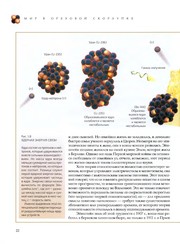
Stephen Hawking explores the cutting edge of theoretical physics in layman’s terms, guiding readers through the mysteries that shape our universe.

In *Lost in Math*, Sabine Hossenfelder critiques the blind faith in elegance that has stalled progress in physics, urging a return to empirical r...
physics
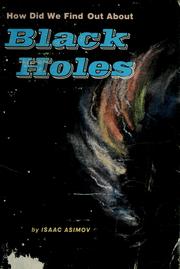
An accessible exploration of black holes for young readers, explaining why scientists trust their existence, how they form, and the methods used ...


Science, Astronomy, Physics, Astrophysics, Black holes (Astronomy)
Community ratings describe each book independently. Similarity votes measure whether readers consider a recommendation a good match for this particular title; results can change as more visitors share feedback.
Suggest another book below, or vote Yes or No on any existing recommendation.
Share your suggestion →Readers make discovery better
Share a recommendation and help other readers discover their next great read.