Books like Aix-la-Chapelle in the age of Charlemagne by Richard E. Sullivan


First publish date: 1963
Authors: Richard E. Sullivan
0.0 (0 community ratings)

Aix-la-Chapelle in the age of Charlemagne by Richard E. Sullivan

How are these books recommended?

The books recommended for Aix-la-Chapelle in the age of Charlemagne by Richard E. Sullivan are shaped by reader interaction. Votes on how closely books relate, user ratings, and community comments all help refine these recommendations and highlight books readers genuinely find similar in theme, ideas, and overall reading experience.


Have you read any of these books?
Your votes, ratings, and comments help improve recommendations and make it easier for other readers to discover books they’ll enjoy.

Books similar to Aix-la-Chapelle in the age of Charlemagne (6 similar books)

Europe in the High Middle Ages by 7052637|William Chester Jordan book cover

πŸ“˜ Europe in the High Middle Ages


β˜…β˜…β˜…β˜…β˜…β˜…β˜…β˜…β˜…β˜… 2.0 (1 rating)
Similar? ✓ Yes 0 ✗ No 0
Mohomet et Charlemagne by 5374861|Pirenne, Henri book cover

πŸ“˜ Mohomet et Charlemagne


β˜…β˜…β˜…β˜…β˜…β˜…β˜…β˜…β˜…β˜… 0.0 (0 ratings)
Similar? ✓ Yes 0 ✗ No 0
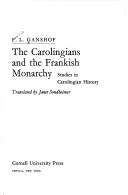
The Carolingians and the Frankish monarchy by 5588864|François Louis Ganshof book cover

πŸ“˜ The Carolingians and the Frankish monarchy


β˜…β˜…β˜…β˜…β˜…β˜…β˜…β˜…β˜…β˜… 0.0 (0 ratings)
Similar? ✓ Yes 0 ✗ No 0
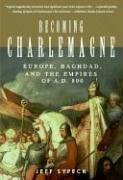
Becoming Charlemagne by 6922372|Jeff Sypeck book cover

πŸ“˜ Becoming Charlemagne

Jeff Sypeck’s *Becoming Charlemagne* retraces how the Frankish king Karl, crowned by Pope Leo III in 800, built a medieval empire through warfare, diplomacy, and alliances with leaders from Byzantium, the Abbasid Caliphate, and Jewish communities.

β˜…β˜…β˜…β˜…β˜…β˜…β˜…β˜…β˜…β˜… 0.0 (0 ratings)
Similar? ✓ Yes 0 ✗ No 0
Charlemagne by 10473308|Johannes Fried book cover

πŸ“˜ Charlemagne

"When Charlemagne died in 814 CE, he left behind a dominion and a legacy unlike anything seen in Western Europe since the fall of Rome. Distinguished historian and author of The Middle Ages Johannes Fried presents a new biographical study of the legendary Frankish king and emperor, illuminating the life and reign of a ruler who shaped Europe's destiny in ways few figures, before or since, have equaled. Living in an age of faith, Charlemagne was above all a Christian king, Fried says. He made his court in Aix la Chapelle the center of a religious and intellectual renaissance, enlisting the Anglo Saxon scholar Alcuin of York to be his personal tutor, and insisting that monks be literate and versed in rhetoric and logic. He erected a magnificent cathedral in his capital, decorating it lavishly while also dutifully attending Mass every morning and evening. And to an extent greater than any ruler before him, Charlemagne enhanced the papacy's influence, becoming the first king to enact the legal principle that the pope was beyond the reach of temporal justice a decision with fateful consequences for European politics for centuries afterward. Though devout, Charlemagne was not saintly. He was a warrior king, intimately familiar with violence and bloodshed. And he enjoyed worldly pleasures, including physical love. Though there are aspects of his personality we can never know with certainty, Fried paints a compelling portrait of a ruler, a time, and a kingdom that deepens our understanding of the man often called "the father of Europe."-- Provided by publisher.

β˜…β˜…β˜…β˜…β˜…β˜…β˜…β˜…β˜…β˜… 0.0 (0 ratings)
Similar? ✓ Yes 0 ✗ No 0
The restoration of Rome by 9582317|P. J. Heather book cover

πŸ“˜ The restoration of Rome

"In 476 AD, the last of Rome's emperors, known as 'Augustulus' was deposed by a barbarian general, the son of one of Attila the Hun's henchmen. With the imperial vestments dispatched to Constantinople, the curtain fell on the Roman empire in Western Europe, its territories divided among successor kingdoms constructed around barbarian military manpower. But, if the Roman Empire was dead, Romans across the old empire still lived, holding on to their lands, the values of their civilization, and their institutions. The conquering barbarians, witnessing the continuing psychological dominance of Rome, were ready to reignite the imperial flame and enjoy the benefits of its civilization. As Peter Heather shows in dazzling biographical portraits, each of the three greatest contenders--Theoderic, Justinian, and Charlemagne--operated with a different power base but was astonishingly successful in his own way. Though each in turn managed to put back together enough of the old Roman West to stake a plausible claim to the Western imperial title, none of their empires long outlived their founders' deaths. Not until the reinvention of the papacy in the eleventh century would Europe's barbarians find the means to establish a new Roman Empire, one that has lasted a thousand years"--

β˜…β˜…β˜…β˜…β˜…β˜…β˜…β˜…β˜…β˜… 0.0 (0 ratings)
Similar? ✓ Yes 0 ✗ No 0

Some Other Similar Books

Charlemagne: Empire and Society by Gottlieb Lukas Friedrich
The Royal Frankish Annals and Allied Sources by Bernard Bachrach
The Coronation of Charlemagne: Renaissance and Revolution in the Modern Age by Richard E. Sullivan
The Age of Charlemagne by F. A. Stenton
The Holy Roman Empire: A Short History by Barbara Stollberg-Rilinger
Charlemagne and Louis the Pious: Two Epistolae by Eric J. A. J. Hobsbaum
Medieval Europe, 400-1500 by Jeffrey L. Singman

Have a similar book in mind? Let others know!

Please login to submit books!