Books like How to Create a Mind by Ray Kurzweil


-- How to Create a Mind Kurzweil discusses how the brain functions, how the mind emerges from the brain, and the implications of vastly increasing the powers of our intelligence in addressing the world?s problems. He thoughtfully examines emotional and moral intelligence and the origins of consciousness and envisions the radical possibilities of our merging with the intelligent technology we are creating. Certain to be one of the most widely discussed and debated science books of the year, How to Create a Mind.
First publish date: 2012
Authors: Ray Kurzweil
★ ★ ★ ★ ★ 0.0 (0 community ratings)

How to Create a Mind by Ray Kurzweil

How are these books recommended?

The books recommended for How to Create a Mind by Ray Kurzweil are shaped by reader interaction. Votes on how closely books relate, user ratings, and community comments all help refine these recommendations and highlight books readers genuinely find similar in theme, ideas, and overall reading experience.


Have you read any of these books?
Your votes, ratings, and comments help improve recommendations and make it easier for other readers to discover books they’ll enjoy.

Books similar to How to Create a Mind (9 similar books)
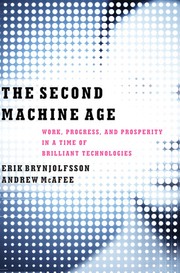
The Second Machine Age by 9671059|Erik Brynjolfsson book cover

πŸ“˜ The Second Machine Age

Erik Brynjolfsson explores how digital technologies are reshaping work, productivity, and societyβ€”highlighting both the opportunities and the disruptionsβ€”and offers strategies for education, collaboration, and policy in the emerging economy.

β˜…β˜…β˜…β˜…β˜…β˜…β˜…β˜…β˜…β˜… 3.7 (7 ratings)
Similar? ✓ Yes 0 ✗ No 0
The age of spiritual machines by 6685929|Ray Kurzweil book cover

πŸ“˜ The age of spiritual machines

Ray Kurzweil predicts how computing power, artificial intelligence, and direct brain‑computed interfaces will blur the line between humanity and technology by the early twenty‑first century.

β˜…β˜…β˜…β˜…β˜…β˜…β˜…β˜…β˜…β˜… 3.7 (6 ratings)
Similar? ✓ Yes 0 ✗ No 0
The Singularity Is Near by 6685929|Ray Kurzweil book cover

πŸ“˜ The Singularity Is Near

Kurzweil explores the coming fusion of human minds with advanced machines, predicting that integrated intelligence will surpass current human capacity, shaping future society.

β˜…β˜…β˜…β˜…β˜…β˜…β˜…β˜…β˜…β˜… 4.0 (6 ratings)
Similar? ✓ Yes 0 ✗ No 0
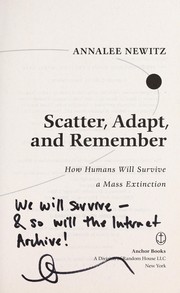
Scatter, adapt, and remember by 11645666|Annalee Newitz book cover

πŸ“˜ Scatter, adapt, and remember

Annalee Newitz examines how modern scientific advances can help humanity survive future global catastrophes, from ocean simulations to underground refuge studies, cyanobacteria-based habitats, and cost‑effective Space Elevator designs.

β˜…β˜…β˜…β˜…β˜…β˜…β˜…β˜…β˜…β˜… 2.0 (2 ratings)
Similar? ✓ Yes 0 ✗ No 0
Countdown by 8370179|Alan Weisman book cover

πŸ“˜ Countdown

Alan Weisman’s Countdown asks how many humans Earth can sustain, blending field research with ecological science to chart a path toward a balanced, prosperous future for people and nature.

β˜…β˜…β˜…β˜…β˜…β˜…β˜…β˜…β˜…β˜… 5.0 (1 rating)
Similar? ✓ Yes 0 ✗ No 0
The deep learning revolution by 6920622|Terrence J. Sejnowski book cover

πŸ“˜ The deep learning revolution

How deep learning-from Google Translate to driverless cars to personal cognitive assistants-is changing our lives and transforming every sector of the economy. The deep learning revolution has brought us driverless cars, the greatly improved Google Translate, fluent conversations with Siri and Alexa, and enormous profits from automated trading on the New York Stock Exchange. Deep learning networks can play poker better than professional poker players and defeat a world champion at Go. In this book, Terry Sejnowski explains how deep learning went from being an arcane academic field to a disruptive technology in the information economy. Sejnowski played an important role in the founding of deep learning, as one of a small group of researchers in the 1980s who challenged the prevailing logic-and-symbol based version of AI. The new version of AI Sejnowski and others developed, which became deep learning, is fueled instead by data. Deep networks learn from data in the same way that babies experience the world, starting with fresh eyes and gradually acquiring the skills needed to navigate novel environments. Learning algorithms extract information from raw data; information can be used to create knowledge; knowledge underlies understanding; understanding leads to wisdom. Someday a driverless car will know the road better than you do and drive with more skill; a deep learning network will diagnose your illness; a personal cognitive assistant will augment your puny human brain. It took nature many millions of years to evolve human intelligence; AI is on a trajectory measured in decades. Sejnowski prepares us for a deep learning future.

β˜…β˜…β˜…β˜…β˜…β˜…β˜…β˜…β˜…β˜… 2.0 (1 rating)
Similar? ✓ Yes 0 ✗ No 0
The Elements of Statistical Learning by 10483305|Jerome Friedman book cover

πŸ“˜ The Elements of Statistical Learning


β˜…β˜…β˜…β˜…β˜…β˜…β˜…β˜…β˜…β˜… 0.0 (0 ratings)
Similar? ✓ Yes 0 ✗ No 0
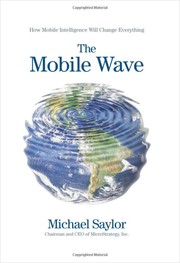
The Mobile Wave by 11560056|Michael Saylor book cover

πŸ“˜ The Mobile Wave

Michael Saylor explains how mobile computing is becoming a universal, personal computing platform, reshaping education, commerce, and society, and offers guidance for individuals and leaders to navigate this transformative technology.

β˜…β˜…β˜…β˜…β˜…β˜…β˜…β˜…β˜…β˜… 0.0 (0 ratings)
Similar? ✓ Yes 0 ✗ No 0
How to Build a Mind by 11898237|Igor Aleksander book cover

πŸ“˜ How to Build a Mind

"Igor Aleksander heads a major British team that has applied engineering principles to the understanding of the human brain and has built several pioneering machines, culminating in MAGNUS, which he calls a machine with imagination. When he asks it (in words) to produce an image of a banana that is blue with red spots, the image appears on the screen in seconds.". "Interweaving anecdotes from his own life and research with imagined dialogues between historical figures - including Descartes, Locke, Hume, Kant, Wittgenstein, Francis Crick, and Steven Pinker - Aleksander leads readers toward an understanding of consciousness. He shows not only how the latest work with artificial neural systems suggests that an artificial form of consciousness is possible but also that its design would clarify many of the puzzles surrounding the murky concepts of consciousness itself. How to Build a Mind also examines the presentation of "self" in robots, the learning of language, and the nature of emotion, will, instinct, and feelings."--BOOK JACKET.

β˜…β˜…β˜…β˜…β˜…β˜…β˜…β˜…β˜…β˜… 0.0 (0 ratings)
Similar? ✓ Yes 0 ✗ No 0

Some Other Similar Books

The Singularity Is Near: When Humans Transcend Biology by Ray Kurzweil
Superintelligence: Paths, Dangers, Strategies by Nick Bostrom
Life 3.0: Being Human in the Age of Artificial Intelligence by Max Tegmark
Homo Deus: A Brief History of Tomorrow by Yuval Noah Harari
The Age of Em: Work, Love, and Life when Robots Rule the Earth by Robin Hanson
Our Final Invention: Artificial Intelligence and the End of the Human Era by James Barrat
Artificial Intelligence: A Guide for Thinking Humans by Melanie Mitchell
The Master Algorithm: How the Quest for the Ultimate Learning Machine Will Remake Our World by Pedro Domingos
Understanding Artificial Intelligence by Michael Wooldridge

Have a similar book in mind? Let others know!

Please login to submit books!