Books like Patterns in nature by Peter S. Stevens

First publish date: 1974
Genre: Philosophy/Metaphysics
Authors: Peter S. Stevens
★ ★ ★ ★ ★ 0.0 (0 community ratings)

Patterns in nature by Peter S. Stevens

How are these books recommended?

The books recommended for Patterns in nature by Peter S. Stevens are shaped by reader interaction. Votes on how closely books relate, user ratings, and community comments all help refine these recommendations and highlight books readers genuinely find similar in theme, ideas, and overall reading experience.


Have you read any of these books?
Your votes, ratings, and comments help improve recommendations and make it easier for other readers to discover books they’ll enjoy.

Books similar to Patterns in nature (16 similar books)

A Brief History of Time by 6965847|Stephen Hawking book cover

📘 A Brief History of Time

Stephen Hawking explains the fundamental physics of the universe—space, time, cosmology, black holes, and the Big Bang—in clear, accessible language.

★★★★★★★★★★ 4.2 (203 ratings)
Similar? ✓ Yes 0 ✗ No 0
Guns, germs, and steel by 6922525|Jared Diamond book cover

📘 Guns, germs, and steel

Jared Diamond explains how geography, biology, and human ingenuity shaped the world’s unequal societies in his Pulitzer‑winning study of civilization and social evolution.

★★★★★★★★★★ 4.2 (137 ratings)
Similar? ✓ Yes 0 ✗ No 0
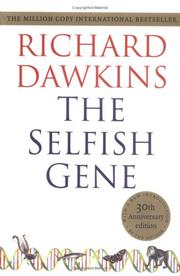
The selfish gene by 6696980|Richard Dawkins book cover

📘 The selfish gene

Richard Dawkins’ classic, The Selfish Gene reexamines evolution from the perspective of genes as primary agents, arguing that organisms serve as vehicles for gene replication.

★★★★★★★★★★ 4.4 (64 ratings)
Similar? ✓ Yes 0 ✗ No 0
The elegant universe by 6936184|Brian Greene book cover

📘 The elegant universe

Explains the vision of the universe behind string theory, including new dimensions, black holes, and mysterious phenomena in the cosmos.

★★★★★★★★★★ 4.0 (23 ratings)
Similar? ✓ Yes 0 ✗ No 0
Cosmos by 8799977|Carl Sagan book cover

📘 Cosmos
 by Carl Sagan

Carl Sagan’s Cosmos traces the history of science and the universe’s evolution, from ancient philosophers to modern discoveries, and explores the quest to understand life beyond Earth.

★★★★★★★★★★ 4.6 (12 ratings)
Similar? ✓ Yes 0 ✗ No 0
The Universe in a Nutshell by 6965847|Stephen Hawking book cover

📘 The Universe in a Nutshell

Stephen Hawking explores the cutting edge of theoretical physics in layman’s terms, guiding readers through the mysteries that shape our universe.

★★★★★★★★★★ 4.1 (9 ratings)
Similar? ✓ Yes 0 ✗ No 0
The Dancing Wu Li Masters by 10944971|Gary Zukav book cover

📘 The Dancing Wu Li Masters
 by Gary Zukav

Gary Zukav's acclaimed exploration of quantum physics, bridging the gap between science and popular culture.

★★★★★★★★★★ 4.0 (3 ratings)
Similar? ✓ Yes 0 ✗ No 0
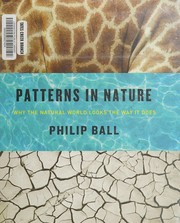
Patterns in nature by 6935819|Philip Ball book cover

📘 Patterns in nature

Philip Ball unveils the hidden order in the natural world, from the hexagonal cells of honeycombs to the spiraling shells and branching veins, blending mathematics, science, and aesthetics.

★★★★★★★★★★ 3.5 (2 ratings)
Similar? ✓ Yes 0 ✗ No 0
Comparative morphology of vascular plants by 6393678|Adriance S. Foster book cover

📘 Comparative morphology of vascular plants


★★★★★★★★★★ 0.0 (0 ratings)
Similar? ✓ Yes 0 ✗ No 0
Morphology of plants by 2081598|Harold Charles Bold book cover

📘 Morphology of plants


★★★★★★★★★★ 0.0 (0 ratings)
Similar? ✓ Yes 0 ✗ No 0
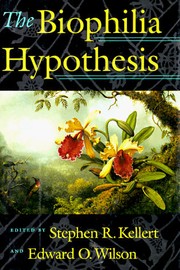
The Biophilia Hypothesis by 8792782|Stephen R. Kellert book cover

📘 The Biophilia Hypothesis

"Biophilia" is the term coined by Edward O. Wilson to describe what he believes is humanity's innate affinity for the natural world. In his landmark book Biophilia, he examined how our tendency to focus on life and lifelike processes might be a biologically based need, integral to our development as individuals and as a species. That idea has caught the imagination of diverse thinkers.The Biophilia Hypothesis brings together the views of some of the most creative scientists of our time, each attempting to amplify and refine the concept of biophilia. The variety of perspectives -- psychological, biological, cultural, symbolic, and aesthetic -- frame the theoretical issues by presenting empirical evidence that supports or refutes the hypothesis. Numerous examples illustrate the idea that biophilia and its converse, biophobia, have a genetic component: fear, and even full-blown phobias of snakes and spiders are quick to develop with very little negative reinforcement, while more threatening modern artifacts -- knives, guns, automobiles -- rarely elicit such a response people find trees that are climbable and have a broad, umbrella-like canopy more attractive than trees without these characteristics people would rather look at water, green vegetation, or flowers than built structures of glass and concrete The biophilia hypothesis, if substantiated, provides a powerful argument for the conservation of biological diversity. More important, it implies serious consequences for our well-being as society becomes further estranged from the natural world. Relentless environmental destruction could have a significant impact on our quality of life, not just materially but psychologically and even spiritually.

★★★★★★★★★★ 0.0 (0 ratings)
Similar? ✓ Yes 0 ✗ No 0
Shapes: Nature's Patterns by 6935819|Philip Ball book cover

📘 Shapes: Nature's Patterns


★★★★★★★★★★ 0.0 (0 ratings)
Similar? ✓ Yes 0 ✗ No 0
Society and nature by 7626653|Hans Kelsen book cover

📘 Society and nature


★★★★★★★★★★ 0.0 (0 ratings)
Similar? ✓ Yes 0 ✗ No 0
Nature's patterns by 6935819|Philip Ball book cover

📘 Nature's patterns


★★★★★★★★★★ 0.0 (0 ratings)
Similar? ✓ Yes 0 ✗ No 0
The hidden life of trees by 11759163|Peter Wohlleben book cover

📘 The hidden life of trees

Are trees social beings? Forester and author Peter Wohlleben makes the case that, yes, the forest is a social network. He draws on groundbreaking scientific discoveries to describe how trees are like human families: tree parents live together with their children, communicate with them, support them as they grow, share nutrients with those who are sick or struggling, and even warn each other of impending dangers. Wohlleben also shares his deep love of woods and forests, explaining the amazing processes of life, death, and regeneration he has observed in his woodland.

★★★★★★★★★★ 0.0 (0 ratings)
Similar? ✓ Yes 0 ✗ No 0
What Is Life? by 2442585|Erwin Schrödinger book cover

📘 What Is Life?


★★★★★★★★★★ 0.0 (0 ratings)
Similar? ✓ Yes 0 ✗ No 0

Some Other Similar Books

Chaos: Making a New Science by James Gleick

Have a similar book in mind? Let others know!

Please login to submit books!