Books like Intellectuals by Paul Bede Johnson
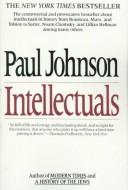

Intellectuals presents a series of richly researched case studies that portray the thinkers who have driven the evolution of the modern world. From Rousseau to Noam Chomsky, it examines the ideas, contradictions, and magnetic influence of figures such as Shelley, Marx, Ibsen, Tolstoy, Hemingway, Bertrand Russell, Brecht, Sartre, and others. By weaving biography, literary criticism, and moral analysis, the book offers insight into the intellectual life that has shaped contemporary civilization.
First publish date: 1996
Genre: Biography & Autobiography/Biography
Authors: Paul Bede Johnson
★ ★ ★ ★ ★ 5.0 (1 community ratings)

Intellectuals by Paul Bede Johnson

How are these books recommended?

The books recommended for Intellectuals by Paul Bede Johnson are shaped by reader interaction. Votes on how closely books relate, user ratings, and community comments all help refine these recommendations and highlight books readers genuinely find similar in theme, ideas, and overall reading experience.


Have you read any of these books?
Your votes, ratings, and comments help improve recommendations and make it easier for other readers to discover books they’ll enjoy.

Books similar to Intellectuals (12 similar books)
The Rise and Fall of the Third Reich by 7121516|William L. Shirer book cover

πŸ“˜ The Rise and Fall of the Third Reich

A comprehensive history of Nazi Germany from 1933 to 1945, detailing the rise of Adolf Hitler and the collapse of the Third Reich during World War II.

β˜…β˜…β˜…β˜…β˜…β˜…β˜…β˜…β˜…β˜… 4.2 (13 ratings)
Similar? ✓ Yes 0 ✗ No 0
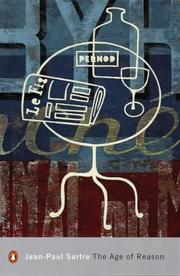
The age of reason by 1917156|Jean-Paul Sartre book cover

πŸ“˜ The age of reason

Jean‑Paul Sartre's novel blends a narrative set in war‑torn Paris with classic existentialist ideas, reflecting on human freedom during World War II.

β˜…β˜…β˜…β˜…β˜…β˜…β˜…β˜…β˜…β˜… 4.0 (1 rating)
Similar? ✓ Yes 0 ✗ No 0
From the Ruins of Empire by 6420725|Pankaj Mishra book cover

πŸ“˜ From the Ruins of Empire

Pankaj Mishra charts a century‑old network of Asian thinkers who crafted a distinct intellectual tradition challenging Western dominance, revealing a nuanced anti‑colonial movement rooted in philosophy rather than violence.

β˜…β˜…β˜…β˜…β˜…β˜…β˜…β˜…β˜…β˜… 0.0 (0 ratings)
Similar? ✓ Yes 0 ✗ No 0
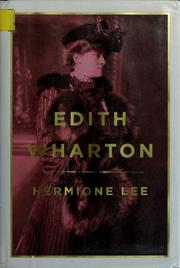
Edith Wharton by 7983527|Hermione Lee book cover

πŸ“˜ Edith Wharton

From Hermione Lee, the internationally acclaimed, award-winning biographer of Virginia Woolf and Willa Cather, comes a superb reexamination of one of the most famous American women of letters.Delving into heretofore untapped sources, Lee does away with the image of the snobbish bluestocking and gives us a new Edith Wharton-tough, startlingly modern, as brilliant and complex as her fiction. Born into a wealthy family, Wharton left America as an adult and eventually chose to create a life in France. Her renowned novels and stories have become classics of American literature, but as Lee shows, Wharton's own life, filled with success and scandal, was as intriguing as those of her heroines. Bridging two centuries and two very different sensibilities, Wharton here comes to life in the skillful hands of one of the great literary biographers of our time.From the Trade Paperback edition.

β˜…β˜…β˜…β˜…β˜…β˜…β˜…β˜…β˜…β˜… 0.0 (0 ratings)
Similar? ✓ Yes 0 ✗ No 0
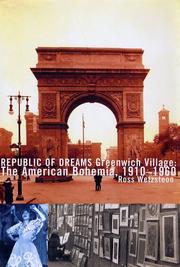
Republic of dreams by 5893881|Ross Wetzsteon book cover

πŸ“˜ Republic of dreams


β˜…β˜…β˜…β˜…β˜…β˜…β˜…β˜…β˜…β˜… 0.0 (0 ratings)
Similar? ✓ Yes 0 ✗ No 0
Schnitzler's century by 12528629|Peter Gay book cover

πŸ“˜ Schnitzler's century
 by Peter Gay

Peter Gay’s "Schnitzler's Century" explores how the rise of the modern middle class shaped 19th‑century Europe, using Arthur Schnitzler as a lens to re‑examine social mores, science, and cultural shifts.

β˜…β˜…β˜…β˜…β˜…β˜…β˜…β˜…β˜…β˜… 0.0 (0 ratings)
Similar? ✓ Yes 0 ✗ No 0
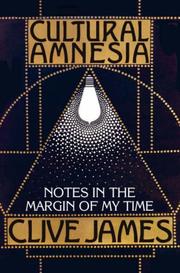
Cultural Amnesia by 8361338|Clive James book cover

πŸ“˜ Cultural Amnesia

Clive James compiles over a hundred essays, arranged alphabetically, that examine the lives and ideas of twentieth‑century intellectuals, artists, musicians and philosophers, urging the preservation of Western humanism.

β˜…β˜…β˜…β˜…β˜…β˜…β˜…β˜…β˜…β˜… 0.0 (0 ratings)
Similar? ✓ Yes 0 ✗ No 0
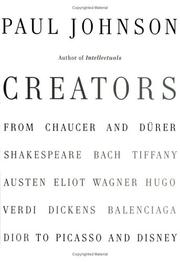
Creators by 6802644|Paul Bede Johnson book cover

πŸ“˜ Creators

Twenty years ago Paul Johnson published Intellectuals, biographical essays forming what Kingsley Amis described as "a valuable and entertaining Rogues' Gallery of Adventures of the Mind." It was a bestseller in many of the score of languages into which it was translated, but also criticized for describing clever people "so as to bring out their bad behavior" (Bernard Williams, New York Review of Books).Paul Johnson now meets the charge with this companion volume of essays on outstanding and prolific creative spirits. He looks at writers from Chaucer and Shakespeare to Mark Twain and T. S. Eliot, artists like Durer, and architects such as Pugin and Viollet-le-Duc. He explains the different ways in which Jane Austen, Madame de Stael, and George Eliot struggled to make their voices heard in the masculine hubbub. Victor Hugo allows him to ask, "Can imaginative genius coexist with low intelligence?" Johann Sebastian Bach gives him the opportunity to focus on the role of genetics in creativity and to explore the strange world of the organ loft. Louis Comfort Tiffany takes him into the technology of glass-making and the tragic vagaries of aesthetic fashion. Some essays make illuminating comparisons: of Turner with his contemporary the Japanese master Hokusai, and of the two great dress designers, Balenciaga and Dior. The final essay examines those two inventive geniuses, Picasso and Disney, and asks which had the greater influence on the visual arts of the twentieth century -- and beyond.Paul Johnson believes that creation is a mysterious business that cannot be satisfactorily analyzed. But it can be illustrated in such a way as to bring out its salient characteristics. That is the purpose of this instructive and witty book.

β˜…β˜…β˜…β˜…β˜…β˜…β˜…β˜…β˜…β˜… 0.0 (0 ratings)
Similar? ✓ Yes 0 ✗ No 0
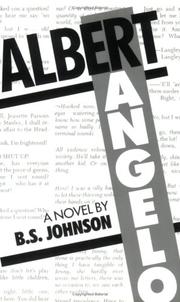
Albert Angelo by 13530418|B. S. Johnson book cover

πŸ“˜ Albert Angelo


β˜…β˜…β˜…β˜…β˜…β˜…β˜…β˜…β˜…β˜… 0.0 (0 ratings)
Similar? ✓ Yes 0 ✗ No 0
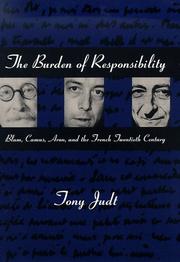
The Burden of Responsibility by 6599732|Tony Judt book cover

πŸ“˜ The Burden of Responsibility
 by Tony Judt

Leon Blum, Albert Camus, and Raymond Aron might seem an unlikely combination. Blum was a fin-de-siecle aesthete who became the spiritual and political leader of the French non-Communist Left in the first half of this century. Camus, best known to millions of readers worldwide for his novels The Stranger and The Plague, was a wartime Resistance figure who played a prominent part in post-1945 intellectual life in France before dying tragically young in a car crash in 1960. Aron, a contemporary of Jean-Paul Sartre in the brilliant intellectual generation of interwar France, was a political theorist, journalist, and critic of Communism who made a major contribution to the recent revival of liberal thought in contemporary France. In The Burden of Responsibility Tony Judt offers a distinctive and original reinterpretation of the writings and public role of these three men, arguing that they have much in common. Despite the great differences in their backgrounds, their interests, and their views, all three were men of integrity who took seriously their responsibility as public intellectuals.

β˜…β˜…β˜…β˜…β˜…β˜…β˜…β˜…β˜…β˜… 0.0 (0 ratings)
Similar? ✓ Yes 0 ✗ No 0
Oppenheimer by 6856902|Charles Thorpe book cover

πŸ“˜ Oppenheimer

At a time when the Manhattan Project was synonymous with large-scale science, physicist J. Robert Oppenheimer (1904–67) represented the new sociocultural power of the American intellectual. Catapulted to fame as director of the Los Alamos atomic weapons laboratory, Oppenheimer occupied a key position in the compact between science and the state that developed out of World War II. By tracing the makingβ€”and unmakingβ€”of Oppenheimer’s wartime and postwar scientific identity, Charles Thorpe illustrates the struggles over the role of the scientist in relation to nuclear weapons, the state, and culture.A stylish intellectual biography, Oppenheimer maps out changes in the roles of scientists and intellectuals in twentieth-century America, ultimately revealing transformations in Oppenheimer’s persona that coincided with changing attitudes toward science in society."This is an outstandingly well-researched book, a pleasure to read and distinguished by the high quality of its observations and judgments. It will be of special interest to scholars of modern history, but non-specialist readers will enjoy the clarity that Thorpe brings to common misunderstandings about his subject."β€”Graham Farmelo, Times Higher Education Supplement"A fascinating new perspective....Thorpe’s book provides the best perspective yet for understanding Oppenheimer’s Los Alamos years, which were critical, after all, not only to his life but, for better or worse, the history of mankind."β€”Catherine Westfall, Nature

β˜…β˜…β˜…β˜…β˜…β˜…β˜…β˜…β˜…β˜… 0.0 (0 ratings)
Similar? ✓ Yes 0 ✗ No 0
The Death of Expertise by 7349003|Tom Nichols book cover

πŸ“˜ The Death of Expertise


β˜…β˜…β˜…β˜…β˜…β˜…β˜…β˜…β˜…β˜… 0.0 (0 ratings)
Similar? ✓ Yes 0 ✗ No 0

Some Other Similar Books

The Great Influenza: The Story of the Deadliest Pandemic in History by John M. Barry
Genius in the Shadows by George Roche
The Age of Enlightenment by Eric H. H. H. H. Hobsbawm
The Intellectuals and the Masses by Theodore Roszak
Think: Why Only the Intellectuals Can Save Us by Simon Blackburn
The Power of Ideas by Hieronymus, Stephen

Have a similar book in mind? Let others know!

Please login to submit books!