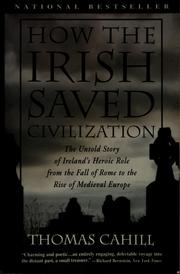
How the Irish saved civilization
From the collapse of Rome to Charlemagne’s reign, Irish monks and scribes preserved and transmitted the classics, Jewish and Christian texts that...
Is this book similar?
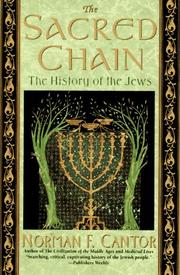
Books like this one
Reviewed by Dr. William L. Pierce “ANTI-SEMITES sensed the truth of Jewish history, the specialness of the Jews, their strangeness on the face of the earth. The anti-Semites could not stand to witness all the good things the Jews had brought mankind because that would remind these inferior people of their own underdevelopment and depravity.” (p. 11) These two sentences sum up the 472 pages of Norman Cantor’s book, its hubris and subjectivity. Yes, most everything you’ve heard about the Jews is true, but only a warped, envious, hate-filled person would object to the contributions of God’s Chosen People to the benighted Gentiles. The Sacred Chain is a survey of the history of the Jews from their obscure origins as just one of many Semitic tribes inhabiting the eastern Mediterranean to their unique position of international wealth and power today. Although Cantor is an academic, this is not an academic history, for there are no footnotes citing sources. There are a bibliography and a useful index, however, and the preface suggests that the book would be suitable for an introductory college course. One of the themes of Cantor’s book is that the Jews are indeed a separate race and not just a religious or cultural group. They are a race created, in part, by their religion and modified by their contact with other peoples, but nevertheless a race with their own peculiar mentality, which has endured for many centuries. Another of Cantor’s themes, as can be gleaned from the opening quote, is the “superhuman strength, intelligence, and durability” of the Jews. (p. 11) While the author’s overweening pride of race may be difficult at times for the Gentile reader to stomach, it is itself instructive. More important, this arrogance and presumptuousness result in candor when the author discusses the more negative aspects of Jewish history. A third motif of Jewish history chronicled in the book is the cyclical ups and downs in the fortunes of the race. Gamblers and speculators by nature, the Jews live close to the edge, pressing their luck, at times riding high on a winning streak, and at other times seeing their power and wealth come crashing down. There is only enough space in a short review to cite a few of the many revelations and confirmations of misdeeds contained in this volume. The following will give the reader a brief sampling. One charge made against the Jews has been their involvement throughout history in the slave trade. In the Carolingian Empire “Jewish merchants exported to the Mediterranean world not only fur, timber, and swords, but also slaves. Blond Germanic slaves brought to the markets and Arab Mediterranean cities by Jewish merchants were much in demand, especially if they were young boys or adolescent, nubile women.” (p. 162) Cantor goes on to explain that by 1000 AD Jews were well established in the “towns along the Rhine, which they used as a conduit to trade in the Low Countries, northern Germany, and Scandinavia. The size and prosperity of the slave trade with the Mediterranean increased.” (p. 163) How were the Jews allowed to engage in the trafficking of White slaves to Arab lands through the heart of Europe? Basically it came down to using their great wealth to buy “the goodwill of the magnates.” (p. 166) But such an outrage could not be endured forever. In 1096, at the beginning of the First Crusade, Christian knights on their way to the Holy Land “inflicted terrible pogroms upon the Rhenish Jews . . . . It was a rupture with several centuries of Jewish peace, prosperity, and privilege . . . .” (p.167) Thus, we see an instance of the Jews waxing prosperous for a time, overreaching themselves, and suffering the consequences. As all good gamblers do, the Jews try to hedge their bets by wagering on more than one horse. Thus, if we move ahead 800 years we find that “empirical data support the contention of French and German anti-Semites in the 1920s and 1930s that Jews were both capitalists
Discover your next read
Compare books other readers have recommended. Vote to help improve these suggestions.
Looking for more books like The Sacred Chain by Norman F. Cantor? This list brings together suggested alternatives and feedback from SimilarBooks readers. Ratings reflect what readers think of each individual book, while the Yes and No votes show whether visitors consider it a good match for this title. Compare the recommendations below and suggest another book to help fellow readers discover their next read.
From the collapse of Rome to Charlemagne’s reign, Irish monks and scribes preserved and transmitted the classics, Jewish and Christian texts that...
A sweeping, narrative history of the Middle Ages that blends cultural, religious, and social insight with updated scholarship and new biographica...

"This volume is a major contribution to Jewish as well as to Ottoman, Balkan, Middle Eastern, and North African history.
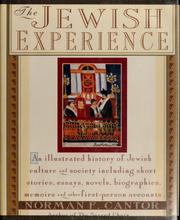
History, Jews, New York Times reviewed, Histoire, Geschichte
Community ratings describe each book independently. Similarity votes measure whether readers consider a recommendation a good match for this particular title; results can change as more visitors share feedback.
Suggest another book below, or vote Yes or No on any existing recommendation.
Share your suggestion →Readers make discovery better
Share a recommendation and help other readers discover their next great read.