Books like The Three Emperors by Miranda Carter
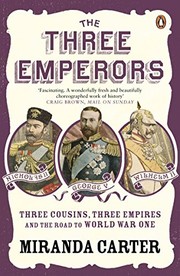

Drawing extensively on the private letters exchanged among the three monarchs and a wide array of contemporary documents, The Three Emperors presents a nuanced portrait of how personal relationships and political intrigue intersected during the lead‑up to and conduct of the First World War. Carter traces the ways in which George V, Nicholas II, and William II responded to the mounting tensions among European powers, how their decision‑making was influenced by loyalty to family and kingdom, and how the war ultimately upended the old order. Readers gain insight into the diplomatic history of early twentieth‑century Europe, the shifting alliances between Britain, Germany, and Russia, and the role of royal diplomacy amid a rapidly changing international landscape.
First publish date: 2009
Genre: Biography & Autobiography/Biography
Authors: Miranda Carter
★ ★ ★ ★ ★ 0.0 (0 community ratings)

The Three Emperors by Miranda Carter

How are these books recommended?

The books recommended for The Three Emperors by Miranda Carter are shaped by reader interaction. Votes on how closely books relate, user ratings, and community comments all help refine these recommendations and highlight books readers genuinely find similar in theme, ideas, and overall reading experience.


Have you read any of these books?
Your votes, ratings, and comments help improve recommendations and make it easier for other readers to discover books they’ll enjoy.

Books similar to The Three Emperors (7 similar books)
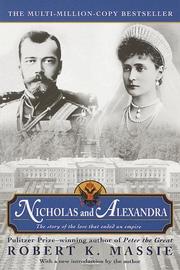
Nicholas and Alexandra by 8369610|Robert K. Massie book cover

📘 Nicholas and Alexandra

The reign of Tsar Nicholas II and Empress Alexandra, the final chapter of the Romanov dynasty, and the influence of Rasputin, told through rich narrative and rare photographs.

★★★★★★★★★★ 4.2 (4 ratings)
Similar? ✓ Yes 0 ✗ No 0
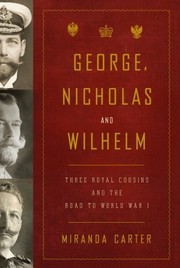
George, Nicholas and Wilhelm by 5894996|Miranda Carter book cover

📘 George, Nicholas and Wilhelm

In the years before World War I, the great European powers were ruled by three first cousins: King George V, Kaiser Wilhelm II, and Tsar Nicholas II. Carter uses the cousins' correspondence and a host of historical sources to tell their tragicomic stories.

★★★★★★★★★★ 5.0 (1 rating)
Similar? ✓ Yes 0 ✗ No 0
Catastrophe by 7689692|Max Hastings book cover

📘 Catastrophe

Max Hastings illuminates the frantic opening year of World War I, tracing diplomacy’s collapse, the early battles of the Marne, Ypres and Tannenberg, and the brutal Eastern Front, while assessing leaders and ordinary soldiers to explain why Germany’s defeat saved Europe.

★★★★★★★★★★ 4.0 (1 rating)
Similar? ✓ Yes 0 ✗ No 0
Monarchy by 2269969|David Starkey book cover

📘 Monarchy

To coincide with the Channel 4 series to be aired at the end of this year – David Starkey's 'Monarchy' charts the rise of the British monarchy from the War of the Roses, the English Civil War and the Georgians, right up until the present day monarchs of the 20th Century.David Starkey's magisterial new book Monarchy charts the rise of the British crown from the insurgency of the War of the Roses, through the glory and dangers of the Tudors, to the insolvency of the Stuarts and chaos of the English Civil War, the execution of Charles I, the rule of a commoner who was 'king in all but name', the importing of a German dynasty, and the coming-to-terms with modernity under the wise guidance of another German, Victoria's Prince Consort Albert. An epilogue brings to story up to the present and asks questions about the future. The crown of England is the oldest surviving political institution in Europe. And yet, throughout this book Starkey emphasises the Crown's endless capacity to reinvent itself to circumstances and reshape national polity whilst he unmasks the personalities and achievements, the defeats and victories, which lie behind the kings and queens of British history. Each of these monarchs has contributed, in their own way, to the religion, geography, laws, language and government that we currently live with today. In this book,Starkey demonstrates exactly how these states were arrived at, how these monarchs subtly influenced each other, which battles were won and why, whose whim or failure caused religious tradition to wither or flourish, and which monarchs, through their acumen and strength or single minded determination came to enforce the laws of England. With his customary authority and verve, David Starkey reignites these personalities to produce an entertaining and masterful account of these figures whose many victories and failures are the building blocks upon which Britain today is built. Far more than a biography of kings and queens, 'Monarchy' is a radical reappraisal of British nationhood, culture and politics, shown through the most central institution in British life.

★★★★★★★★★★ 0.0 (0 ratings)
Similar? ✓ Yes 0 ✗ No 0
An ordinary person's guide to empire by 530232|Arundhati Roy book cover

📘 An ordinary person's guide to empire

Collected speeches and essays.

★★★★★★★★★★ 0.0 (0 ratings)
Similar? ✓ Yes 0 ✗ No 0
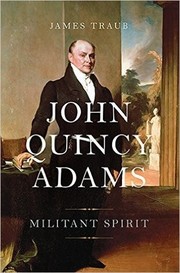
John Quincy Adams by 10186571|James Traub book cover

📘 John Quincy Adams

From the Introduction... Adams was also a hard man. He did not aim to please, and he largely succeeded. He drove away many of his old friends and offended most of his onetime allies. He frightened his children and exasperated his long-suffering wife, Louisa. He was that rare politician who is happiest alone. He knew this and perpetually rebuked himself for his bearish manner, but he did not really wish to be otherwise. He lived according to principles he considered self-evident. Others of his contemporaries did so as well, of course; what set Adams apart was that his principles were so inviolable that he eagerly sacrificed his self-interest to them. As president he accomplished very little of his ambitious agenda in part because he refused to do anything to reward his friends or punish his enemies. Such inflexibility is a dubious virtue for a politician. It is, however, an estimable virtue for a man who needs to hold fast in the face of adversity.

★★★★★★★★★★ 0.0 (0 ratings)
Similar? ✓ Yes 0 ✗ No 0
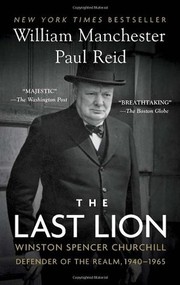
The Last Lion by 6967805|William Manchester book cover

📘 The Last Lion

Spanning the years 1940 to 1965, The Last Lion: Defender of the Realm begins shortly after Winston Churchill became prime minister—when Great Britain stood alone against the overwhelming might of Nazi Germany. In brilliant prose and informed by decades of research, William Manchester and Paul Reid recount how Churchill organized his nation’s military response and defense, convinced FDR to support the cause, and personified the “never surrender” ethos that helped win the war. We witness Churchill, driven from office, warning the world of the coming Soviet menace. And after his triumphant return to 10 Downing Street, we follow him as he pursues his final policy goal: a summit with President Dwight Eisenhower and Soviet leaders. And in the end, we experience Churchill’s last years, when he faces the end of his life with the same courage he brought to every battle he ever fought.

★★★★★★★★★★ 0.0 (0 ratings)
Similar? ✓ Yes 0 ✗ No 0

Some Other Similar Books

The Last Empire: The Final Days of the Soviet Union by Serhii Plokhy
The Rise and Fall of the Russian Empire by Vladimir Khaustov
The Tsar's Last Armada: The Epic Voyage to Balaklava by Constantine Pleshakov
The Romanovs: 1613–1918 by Simon Sebag Montefiore
Kaiser Wilhelm II: A Life in Power by Georg Laier
The Empress of Art: Catherine the Great and the Transformation of Russia by Susan Jaques
The Fall of the Romanovs: Political Dreams and Personal Struggles in a New Russia by Mark D. Steinberg
The Russian Revolution: A New History by Sean McMeekin
Catherine the Great: Portrait of a Woman by Robert K. Massie

Have a similar book in mind? Let others know!

Please login to submit books!