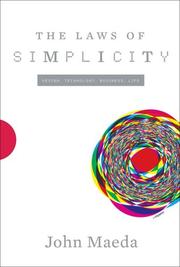
The Laws of Simplicity
John Maeda distills simplicity into ten universal laws and three essential keys, offering practical guidance for designers, engineers, and organi...
Is this book similar?

Books like this one
The aims of this book are two. First, to contribute to the elucidation of some key concepts of both philosophy and science, such as those of conceptual analysis, analyticity, truth, law, level, and simplicity. Second, to show the complexity, i.e., the richness, of those very concepts, thereby exploding the myth that simplicity is always either a fact or a desideratum of research. To the extent to which the book succeeds in attaining both goals it should discourage the concoction of naïve, oversimplified pictures of knowledge. The method employed is a kind of philosophic procedure that may be called metascientific elucidation. This kind of clarification may be analytic or synthetic: it may consist either in the analysis or reduction of conceptual entities (concepts, propositions, theories), or in the construction of such entities. In either case, whether in the phase of analysis or in the phase of synthesis, I call this work meta- scientific if the objects of elucidation are relevant to science and if the task is performed in a way congenial to science and with the help of some of the tools of contemporary scientific philosophy, such as formal logic, semantics, and theory formalization. To the extent to which the ideas dealt with in this book are relevant to science and therefore of interest to both scientists and philosophers of science, and to the extent to which the analyses and syntheses proposed do take advantage of the tools of scientific philosophy, this is a work on metascientific elucidation. But it is not a purely technical, neutral book. Unlike most scientific discourse, philosophizing, even if constructive, is more or less polemical: an opponent or, rather, a rival theory, method, or aim is always in sight or in the background of every philosophic activity--save in pure logic.
Discover your next read
Compare books other readers have recommended. Vote to help improve these suggestions.
Looking for more books like The myth of simplicity by Mario Bunge? This list brings together suggested alternatives and feedback from SimilarBooks readers. Ratings reflect what readers think of each individual book, while the Yes and No votes show whether visitors consider it a good match for this title. Compare the recommendations below and suggest another book to help fellow readers discover their next read.
John Maeda distills simplicity into ten universal laws and three essential keys, offering practical guidance for designers, engineers, and organi...

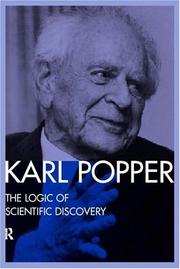
When first published in 1959, this book revolutionized contemporary thinking about science and knowledge.

The Structure of Scientific Revolutions by Thomas S. Kuhn.
Science, Methodology, Méthodologie, Sciences
Community ratings describe each book independently. Similarity votes measure whether readers consider a recommendation a good match for this particular title; results can change as more visitors share feedback.
Suggest another book below, or vote Yes or No on any existing recommendation.
Share your suggestion →Readers make discovery better
Share a recommendation and help other readers discover their next great read.