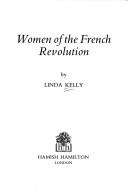
Books like Women of the French Revolution by Linda Kelly

First publish date: 1987
Authors: Linda Kelly
0.0 (0 community ratings)

Women of the French Revolution by Linda Kelly

How are these books recommended?

The books recommended for Women of the French Revolution by Linda Kelly are shaped by reader interaction. Votes on how closely books relate, user ratings, and community comments all help refine these recommendations and highlight books readers genuinely find similar in theme, ideas, and overall reading experience.


Have you read any of these books?
Your votes, ratings, and comments help improve recommendations and make it easier for other readers to discover books they’ll enjoy.

Books similar to Women of the French Revolution (7 similar books)
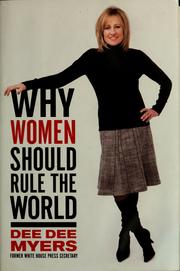
Why women should rule the world by 7667553|Dee Dee Myers book cover

πŸ“˜ Why women should rule the world

Former White House press secretary Dee Dee Myers argues that women’s leadership would transform politics, business, and society by fostering collaboration, communication, and consensus‑building, drawing on her own groundbreaking experience in the Clinton White House.

β˜…β˜…β˜…β˜…β˜…β˜…β˜…β˜…β˜…β˜… 0.0 (0 ratings)
Similar? ✓ Yes 0 ✗ No 0
Women and the limits of citizenship in the French Revolution by 9707280|Olwen H. Hufton book cover

πŸ“˜ Women and the limits of citizenship in the French Revolution


β˜…β˜…β˜…β˜…β˜…β˜…β˜…β˜…β˜…β˜… 0.0 (0 ratings)
Similar? ✓ Yes 0 ✗ No 0
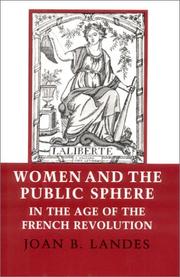
Women and the public sphere in the age of the French Revolution by 1321842|Joan B. Landes book cover

πŸ“˜ Women and the public sphere in the age of the French Revolution

"In this provocative interdisciplinary essay, Joan B. Landes examines the impact on women of the emergence of a new, bourgeois organization of public life in the eighteenth century. She focuses on France, contrasting the role and representation of women under the Old Regime with their status during and after the Revolution. Basing her work on a wide reading of current historical scholarship, Landes draws on the work of Habermas and his followers, as well as on recent theories of representation, to re-create public-sphere theory from a feminist point of view. Within the extremely personal and patriarchal political culture of Old Regime France, elite women wielded surprising influence and power, both in the court and in salons. Urban women of the artisanal class often worked side by side with men and participated in many public functions. But the Revolution, Landes asserts, relegated women to the home, and created a rigidly gendered, essentially male, bourgeois public sphere. The formal adoption of "universal" rights actually silenced public women by emphasizing bourgeois conceptions of domestic virtue. In the first part of this book, Landes links the change in women's roles to a shift in systems of cultural representation. Under the absolute monarchy of the Old Regime, political culture was represented by the personalized iconic imagery of the father/king. This imagery gave way in bourgeois thought to a more symbolic system of representation based on speech, writing, and the law. Landes traces this change through the art and writing of the period. Using the works of Rousseau and Montesquieu as examples of the passage to the bourgeois theory of the public sphere, she shows how such concepts as universal reason, law, and nature were rooted in an ideologically sanctioned order of gender difference and separate public and private spheres. In the second part of the book, Landes discusses the discourses on women's rights and on women in society authored by Condorcet, Wollstonecraft, Gouges, Tristan, and Comte within the context of these new definitions of the public sphere. Focusing on the period after the execution of the king, she asks who got to be included as "the People" when men and women demanded that liberal and republican principles be carried to their logical conclusion. She examines women's roles in the revolutionary process and relates the birth of modern feminism to the silencing of the politically influential women of the Old Regime court and salon and to women's expulsion from public participation during and after the Revolution."--pub. webpg.

β˜…β˜…β˜…β˜…β˜…β˜…β˜…β˜…β˜…β˜… 0.0 (0 ratings)
Similar? ✓ Yes 0 ✗ No 0
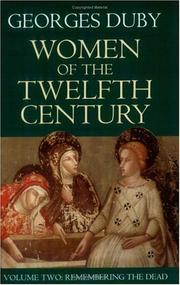
Dames du XIIe siècle by 10537817|Georges Duby book cover

πŸ“˜ Dames du XIIe siècle


β˜…β˜…β˜…β˜…β˜…β˜…β˜…β˜…β˜…β˜… 0.0 (0 ratings)
Similar? ✓ Yes 0 ✗ No 0
The women of Paris and their French Revolution by 9677503|Dominique Godineau book cover

πŸ“˜ The women of Paris and their French Revolution


β˜…β˜…β˜…β˜…β˜…β˜…β˜…β˜…β˜…β˜… 0.0 (0 ratings)
Similar? ✓ Yes 0 ✗ No 0
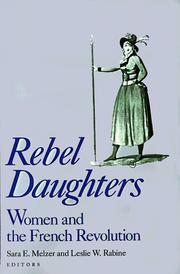
Rebel daughters by 1364113|Sara E. Melzer book cover

πŸ“˜ Rebel daughters


β˜…β˜…β˜…β˜…β˜…β˜…β˜…β˜…β˜…β˜… 0.0 (0 ratings)
Similar? ✓ Yes 0 ✗ No 0
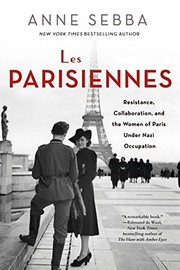
Les Parisiennes by 8972311|Anne Sebba book cover

πŸ“˜ Les Parisiennes
 by Anne Sebba

"What did it feel like to be a woman living in Paris from 1939 to 1949? These were years of fear, power, aggression, courage, deprivation and secrets until--finally--renewal and retribution. Even at the darkest moments of Occupation, with the Swastika flying from the Eiffel Tower and pet dogs abandoned howling on the streets, glamour was ever present. French women wore lipstick. Why? It was women more than men who came face to face with the German conquerors on a daily basis--perhaps selling them their clothes or travelling alongside them on the Metro, where a German soldier had priority over seats. By looking at a wide range of individuals from collaborators to resisters, actresses and prostitutes to teachers and writers, Anne Sebba shows that women made life-and-death decisions every day, and often did whatever they needed to survive. Her fascinating cast of characters includes both native Parisian women and those living in Paris temporarily--American women and Nazi wives, spies, mothers, mistresses, and fashion and jewellery designers. Some women, like the heiress Béatrice de Camondo or novelist Irène Némirovsky, converted to Catholicism; others like lesbian racing driver Violette Morris embraced the Nazi philosophy; only a handful, like Coco Chanel, retreated to the Ritz with a German lover. A young medical student, Anne Spoerry, gave lethal injections to camp inmates one minute but was also known to have saved the lives of Jews. But this is not just a book about wartime. In enthralling detail Sebba explores the aftershock of the Second World War and the choices demanded. How did the women who survived to see the Liberation of Paris come to terms with their actions and those of others? Although politics lies at its heart, Les Parisiennes is a fascinating account of the lives of people of the city and, specifically, in this most feminine of cities, its women and young girls"--Publisher's website.

β˜…β˜…β˜…β˜…β˜…β˜…β˜…β˜…β˜…β˜… 0.0 (0 ratings)
Similar? ✓ Yes 0 ✗ No 0

Some Other Similar Books

Revolutionary Mothers: Women in the French Revolution by Carol Berkin
Citizens: A Chronicle of the French Revolution by Simon Schama
The Women's Revolution: France 1789-1794 by Bruce K. Wright
Madame Tussaud: A Life in Wax by Michelle Moran
The Scarlet Pimpernel and the French Revolution by Baroness Orczy
The Great Revolutions of Modern History by John H. Plumb
Women in the French Revolution by Lynn Hunt
Becoming Julia: A Novel of the French Revolution by Lynn Eve no
Liberty or Death: The French Revolution by Peter McPhee

Have a similar book in mind? Let others know!

Please login to submit books!