
A Brief History of Time
Stephen Hawking explains the fundamental physics of the universe—space, time, cosmology, black holes, and the Big Bang—in clear, accessible langu...
Is this book similar?
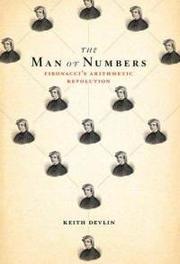
Books like this one
From NPR's Math Guy, the story of Leonardo of Pisa, the medieval mathematician who introduced Arabic numbers to the West and helped launch the modern era. In 1202, a young Italian published one of the most influential books of all time, introducing modern arithmetic to Western Europe. Leonardo of Pisa (better known today as Fibonacci) had learned the Hindu-Arabic number system when as a teenager he traveled with his father, a customs official for Pisa, to North Africa, then one of the principal mercantile centers of Europe. Devised in India in the seventh and eighth centuries and brought to North Africa by Muslim traders, the Hindu-Arabic system (featuring the numerals 0 through 9) offered a much simpler method of calculation than the then-popular finger reckoning and cumbersome Roman numerals. Though written in scholarly Latin, Fibonacci's book Liber Abbaci (The Book of Calculation) was the first to recognize the power of the 10 numerals, and to aim them at the world of commerce. It spawned generations of popular math texts in colloquial Italian and other languages that made it possible for ordinary people to buy and sell goods, convert currencies, and keep accurate records more readily than ever before—helping transform the West into the dominant force in science, technology, and large-scale international commerce. Liber Abbaci and Fibonacci's other books made him the greatest mathematician of the Middle Ages. Yet despite the ubiquity of his discoveries, Leonardo of Pisa has largely slipped from the pages of history. He is best known today for discovering the "Fibonacci sequence" of numbers that appears with great regularity in biological structures throughout nature, and is used by some to predict the rise and fall of financial markets. Keith Devlin re-creates the life and enduring legacy of an overlooked genius, and in the process makes clear how central numbers and mathematics are to our daily lives. - Publisher.
Discover your next read
Compare books other readers have recommended. Vote to help improve these suggestions.
Looking for more books like The Man of Numbers by Keith J. Devlin? This list brings together suggested alternatives and feedback from SimilarBooks readers. Ratings reflect what readers think of each individual book, while the Yes and No votes show whether visitors consider it a good match for this title. Compare the recommendations below and suggest another book to help fellow readers discover their next read.
Stephen Hawking explains the fundamental physics of the universe—space, time, cosmology, black holes, and the Big Bang—in clear, accessible langu...
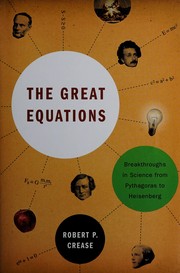
Discover 10 of the greatest equations in Western history from Robert P. Crease.

A 40‑page illustrated children's biography of Leonardo Fibonacci, exploring his life and the famous numerical sequences he discovered.
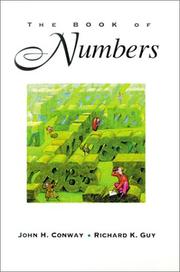
A collection of mathematical stories and patterns shared by mathematicians John Conway and Richard Guy

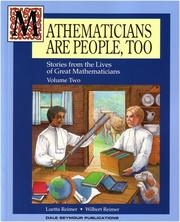

Explore everyday life through five engaging mathematical puzzles, from predicting planetary motion to forecasting population growth, presented in...
History, Biography, Mathematics, Italy, Arithmetic
Community ratings describe each book independently. Similarity votes measure whether readers consider a recommendation a good match for this particular title; results can change as more visitors share feedback.
Suggest another book below, or vote Yes or No on any existing recommendation.
Share your suggestion →Readers make discovery better
Share a recommendation and help other readers discover their next great read.