
Coming of age in the Milky Way
A sweeping survey of humanity’s quest to comprehend space and time—from prehistoric contemplations to the cutting‑edge supersymmetry theories tha...
Is this book similar?
Books like this one
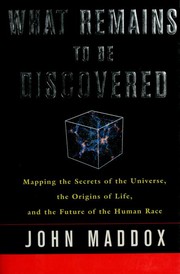
[O]n the eve of the millennium the question about science's future reappears. In his widely discussed 1996 book, ''The End of Science,'' John Horgan argued that, indeed, the end is nigh: The big discoveries have all been made. Horgan, a veteran science writer, did not argue that we have answered all the big questions; he is as curious as the next guy about, say, the nature of human consciousness or life on other worlds. The problem, he wrote, is that we will probably never find the answers -- or the solution will be some dispiriting triviality. Consciousness may one day be revealed to be nothing more than an accumulation of nerve impulses. As to the question of extraterrestrials, Horgan says we will never be able to get far enough out into space to find out. The impossibility of exceeding the speed of light hangs from us like a ball and chain. Sir John Maddox doesn't buy any of this. Maddox was for almost 23 years editor in chief of the British journal Nature, one of the world's leading scientific publications. By deciding what to publish, he was more than an observer of the scientific enterprise -- he helped to shape it. In ''What Remains to Be Discovered,'' he attempts to set an agenda for the coming decades, even centuries. The title was carefully chosen: He discusses what scientists need to find out, and where they might look. He doesn't try to predict what they will find. He mischievously avoids mention of Horgan, but Maddox is clearly out to refute him. ''Science, far from being at an end, has a long agenda ahead of it,'' Maddox writes. And the discoveries to come will change our view of the world ''as radically as it has been changed since the time of Copernicus.'' [excerpted from a review by Paul Raeburn, NYT, 1999 [1]] [1]: https://www.nytimes.com/books/99/01/10/reviews/990110.10raeburt.html
Discover your next read
Compare books other readers have recommended. Vote to help improve these suggestions.
Looking for more books like What remains to be discovered by John Royden Maddox? This list brings together suggested alternatives and feedback from SimilarBooks readers. Ratings reflect what readers think of each individual book, while the Yes and No votes show whether visitors consider it a good match for this title. Compare the recommendations below and suggest another book to help fellow readers discover their next read.
A sweeping survey of humanity’s quest to comprehend space and time—from prehistoric contemplations to the cutting‑edge supersymmetry theories tha...
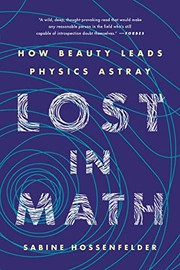
In *Lost in Math*, Sabine Hossenfelder critiques the blind faith in elegance that has stalled progress in physics, urging a return to empirical r...

This book offers a stunning and provocative vision of the future, and explains how science will shape human destiny and everyone's daily life by ...
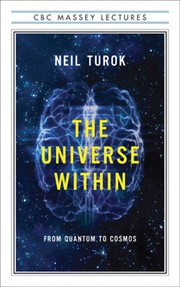
Neil Turok examines how scientific breakthroughs over the last three centuries—from classical mechanics to quantum physics—have reshaped technolo...

I am part of nature, and nature is part of me. I am what I am in my communication and communion with all living things.
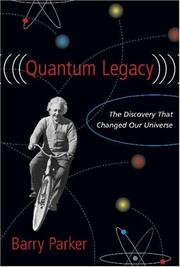
"Quantum Legacy is the story of the physicists who made the quantum leaps that have so altered our world.
ix, 277 pages, [32] pages of plates : 20 cm

History, Science, Genetics, Research, Miscellanea
Community ratings describe each book independently. Similarity votes measure whether readers consider a recommendation a good match for this particular title; results can change as more visitors share feedback.
Suggest another book below, or vote Yes or No on any existing recommendation.
Share your suggestion →Readers make discovery better
Share a recommendation and help other readers discover their next great read.