
Anarchy, State, and Utopia
Robert Nozick’s 1974 classic argues for a minimal state limited to protecting citizens from force, theft, fraud, and enforcing contracts, contend...
Is this book similar?
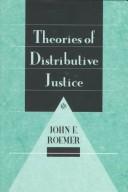
Books like this one
Equally at home in economic theory and political philosophy, John Roemer has written a unique book that critiques economists' conceptions of justice from a philosophical perspective and philosophical theories of distributive justice from an economic one. He unites the economist's skill in constructing precise, axiomatic models with the philosopher's in exploring the assumptions of those models. His synthesis will enable philosophers and economists to engage each other's ideas more fruitfully. Roemer first shows how economists' understanding of the fairness of various resource allocation mechanisms can be enriched. He extends the theory of social choice to show how individual preferences can be aggregated into social preferences over various economic alternatives. He critiques the standard applications of axiomatic bargaining theory to distributive justice, showing that they ignore information on available resources and preference orderings. He puts these variables in the models, which enables him to generate resource allocation mechanisms that are more consonant with our intuitions about distributive justice. He then critiques economists' theories of utilitarianism and examines the question of the optimal population size in a world of finite resources. . Roemer explores the major new philosophical concepts of the theory of distributive justice - primary goods, functionings and capability, responsibility in its various forms, procedural versus outcome justice, midfare - and shows how they can be sharpened and clarified with the aid of economic analysis. He critiques and extends the ideas of major contemporary theories of distributive justice, including those of Rawls, Sen, Nozick, and Dworkin. Beginning from the recent theories of Richard Arneson and G. A. Cohen, he constructs a theory of equality of opportunity. Theories of Distributive Justice contains important and original results, but it can also be used as a graduate-level text in economics and philosophy.
Discover your next read
Compare books other readers have recommended. Vote to help improve these suggestions.
Looking for more books like Theories of distributive justice by John E. Roemer? This list brings together suggested alternatives and feedback from SimilarBooks readers. Ratings reflect what readers think of each individual book, while the Yes and No votes show whether visitors consider it a good match for this title. Compare the recommendations below and suggest another book to help fellow readers discover their next read.
Robert Nozick’s 1974 classic argues for a minimal state limited to protecting citizens from force, theft, fraud, and enforcing contracts, contend...
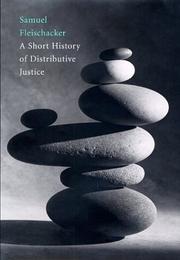
"Samuel Fleischacker argues that guaranteeing aid to the poor is a modern idea, developed only in the last two centuries.

Presents an analysis of what justice is, the transcendental theory of justice and its drawbacks, and a persuasive argument for a comparative pers...
Mathematical models, Income distribution, Welfare economics, Distributive justice, Mathematisches Modell
Community ratings describe each book independently. Similarity votes measure whether readers consider a recommendation a good match for this particular title; results can change as more visitors share feedback.
Suggest another book below, or vote Yes or No on any existing recommendation.
Share your suggestion →Readers make discovery better
Share a recommendation and help other readers discover their next great read.