Books like Concussion by Jeanne Marie Laskas


First publish date: 2015
Authors: Jeanne Marie Laskas
★ ★ ★ ★ ★ 5.0 (1 community ratings)

Concussion by Jeanne Marie Laskas

How are these books recommended?

The books recommended for Concussion by Jeanne Marie Laskas are shaped by reader interaction. Votes on how closely books relate, user ratings, and community comments all help refine these recommendations and highlight books readers genuinely find similar in theme, ideas, and overall reading experience.


Have you read any of these books?
Your votes, ratings, and comments help improve recommendations and make it easier for other readers to discover books they’ll enjoy.

Books similar to Concussion (5 similar books)

League of denial by 7103878|Mark Fainaru-Wada book cover

πŸ“˜ League of denial

Both ESPN investigative reporters, the authors reveal how the NFL, over a period of nearly two decades, sought to cover up and deny mounting evidence of the connection between football and brain damage. This narrative moves between the NFL trenches, America's research labs and the boardrooms where the NFL went to war against science; it examines how the league used its power and resources to attack independent scientists and elevate its own flawed research.

β˜…β˜…β˜…β˜…β˜…β˜…β˜…β˜…β˜…β˜… 3.0 (1 rating)
Similar? ✓ Yes 0 ✗ No 0
The brain's way of healing by 7038154|Norman Doidge book cover

πŸ“˜ The brain's way of healing

"The New York Times bestselling author of The Brain That Changes Itself presents astounding advances in the treatment of brain injury and illness. In The Brain That Changes Itself, Norman Doidge described the most important breakthrough in our understanding of the brain in four hundred years: the discovery that the brain can change its own structure and function in response to mental experience-what we call neuroplasticity. His revolutionary new book shows, for the first time, how the amazing process of neuroplastic healing really works. It describes natural, non-invasive avenues into the brain provided by the forms of energy around us-light, sound, vibration, movement-which pass through our senses and our bodies to awaken the brain's own healing capacities without producing unpleasant side effects. Doidge explores cases where patients alleviated years of chronic pain or recovered from debilitating strokes or accidents; children on the autistic spectrum or with learning disorders normalizing; symptoms of multiple sclerosis, Parkinson's disease, and cerebral palsy radically improved, and other near-miracle recoveries. And we learn how to vastly reduce the risk of dementia with simple approaches anyone can use. For centuries it was believed that the brain's complexity prevented recovery from damage or disease. The Brain's Way of Healing shows that this very sophistication is the source of a unique kind of healing. As he did so lucidly in The Brain That Changes Itself, Doidge uses stories to present cutting-edge science with practical real-world applications, and principles that everyone can apply to improve their brain's performance and health"-- "Norman Doidge's revolutionary new book shows, for the first time, how the amazing process of neuroplastic healing really works. It describes natural, non-invasive avenues into the brain provided by the forms of energy around us--light, sound, vibration, movement--which pass through our senses and our bodies to awaken the brain's own healing capacities without producing unpleasant side effects. Doidge explores cases where patients alleviated years of chronic pain or recovered from debilitating strokes or accidents; children on the autistic spectrum or with learning disorders normalizing; symptoms of multiple sclerosis, Parkinson's disease, and cerebral palsy radically improved, and other near-miracle recoveries. And we learn how to vastly reduce the risk of dementia with simple approaches anyone can use. For centuries it was believed that the brain's complexity prevented recovery from damage or disease. The Brain's Way of Healing shows that this very sophistication is the source of a unique kind of healing"--

β˜…β˜…β˜…β˜…β˜…β˜…β˜…β˜…β˜…β˜… 3.0 (1 rating)
Similar? ✓ Yes 0 ✗ No 0
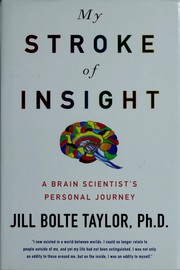
My Stroke of Insight by 9460802|Jill Bolte Taylor book cover

πŸ“˜ My Stroke of Insight

Jill Bolte Taylor, a neuroanatomist, records the day her left brain failed during a massive stroke and the hours she lived between its loss and the right brain's peace, ultimately tracing her radical recovery and the insights it spurred.

β˜…β˜…β˜…β˜…β˜…β˜…β˜…β˜…β˜…β˜… 0.0 (0 ratings)
Similar? ✓ Yes 0 ✗ No 0
Game change by 7616627|Ken Dryden book cover

πŸ“˜ Game change
 by Ken Dryden

"The story of NHLer Steve Montador, who was diagnosed with chronic traumatic encephalopathy (CTE) after his death in 2015, and of the remarkable evolution of hockey itself" -- adapted from jacket.

β˜…β˜…β˜…β˜…β˜…β˜…β˜…β˜…β˜…β˜… 0.0 (0 ratings)
Similar? ✓ Yes 0 ✗ No 0
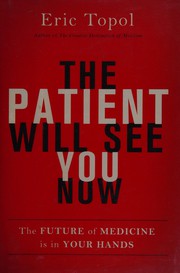
The patient will see you now by 7155302|Eric J. Topol book cover

πŸ“˜ The patient will see you now

"In The Patient Will See You Now, Eric Topol, one of the nation's top physicians, examines what he calls medicine's "Gutenberg moment." Much as the printing press liberated knowledge from the control of an elite class, new technology--from the smartphone to machine learning--is poised to democratize medicine. In this new era, patients will control their data and be emancipated from a paternalistic medical regime in which "the doctor knows best." Mobile phones, apps, and attachments will literally put the lab and the ICU in our pockets. Computers will replace physicians for many diagnostic tasks, and enormous data sets will give us new means to attack conditions that have long been incurable. In spite of these benefits, the path forward will be complicated: some in the medical establishment will resist these changes, and digitized medicine will raise serious issues surrounding privacy. Nevertheless, the result--better, cheaper, and more humane health care for all--will be worth it. The Patient Will See You Now is essential reading for anyone who thinks they deserve better health care. That is, for all of us."-- "In The Patient Will See You Now, Eric Topol, one of the nation's top physicians, examines what he calls medicine's Gutenberg moment--much as the printing press took learning out of the hands of a priestly class, the internet is doing the same for medicine, giving us unprecedented control over our healthcare. With smartphones in hand, we are no longer beholden to an impersonal and paternalistic medical system. Medicine has been digitized, Topol argues, now it's time for it to be democratized. Provocative and engrossing, The Patient Will See You Now is about all that lies ahead in a world of digital, democratic medicine, including fair discussion of a range of potential downsides, from privacy violations to intransigence on the part of the medical powers that be. Indeed, though many in the medical establishment will resist Topol's vision, he argues convincingly that medicine has been authoritarian for far too long, and that not changing the course of medicine will incur steep costs for us all. It's time to put the tools of medicine, and the power that goes with them, into the hands of the people"--

β˜…β˜…β˜…β˜…β˜…β˜…β˜…β˜…β˜…β˜… 0.0 (0 ratings)
Similar? ✓ Yes 0 ✗ No 0

Some Other Similar Books

Brain on Fire: My Month of Madness by Susannah Cahalan
The Man Who Mistook His Wife for a Hat by Oliver Sacks
The Electric War: Edison, Tesla, Westinghouse, and the Race to Light the World by Melanie J. Billingsley
Every Deep-Drawn Breath by Bruce Schimmel
The Gift of Pain: Why We Need Self-Repair by Ted Costantino
The Brain's Symphony: The Power of Neuroscience and Music by Don Campbell
Healthy Brain, Happy Life by Teodoro S. Pizarro

Have a similar book in mind? Let others know!

Please login to submit books!