
Matrices and tensors in physics
A comprehensive resource on matrices and tensors for physics, covering advanced topics such as Bessel inequality, invariance principles in Newton...
Is this book similar?
Books like this one
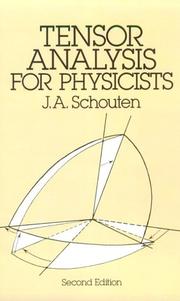
When we represent data for machine learning, this generally needs to be done numerically. Especially when referring specifically of neural network data representation, this is accomplished via a data repository known as the tensor. A tensor is a container which can house data in N dimensions. Often and erroneously used interchangeably with the matrix (which is specifically a 2-dimensional tensor), tensors are generalizations of matrices to N-dimensional space. Mathematically speaking, tensors are more than simply a data container, however. Aside from holding numeric data, tensors also include descriptions of the valid linear transformations between tensors. Examples of such transformations, or relations, include the cross product and the dot product. From a computer science perspective, it can be helpful to think of tensors as being objects in an object-oriented sense, as opposed to simply being a data structure. The first five chapters incisively set out the mathematical theory underlying the use of tensors. The tensor algebra in EN and RN is developed in Chapters I and II. Chapter II introduces a sub-group of the affine group, then deals with the identification of quantities in EN. The tensor analysis in XN is developed in Chapter IV. In chapters VI through IX, Professor Schouten presents applications of the theory that are both intrinsically interesting and good examples of the use and advantages of the calculus. Chapter VI, intimately connected with Chapter III, shows that the dimensions of physical quantities depend upon the choice of the underlying group, and that tensor calculus is the best instrument for dealing with the properties of anisotropic media. In Chapter VII, modern tensor calculus is applied to some old and some modern problems of elasticity and piezo-electricity. Chapter VIII presents examples concerning anholonomic systems and the homogeneous treatment of the equations of Lagrange and Hamilton. Chapter IX deals first with relativistic kinematics and dynamics, then offers an exposition of modern treatment of relativistic hydrodynamics. Chapter X introduces Dirac’s matrix calculus. Two especially valuable features of the book are the exercises at the end of each chapter, and a summary of the mathematical theory contained in the first five chapters — ideal for readers whose primary interest is in physics rather than mathematics.
Discover your next read
Compare books other readers have recommended. Vote to help improve these suggestions.
Looking for more books like Tensor analysis for physicists by J. A. Schouten? This list brings together suggested alternatives and feedback from SimilarBooks readers. Ratings reflect what readers think of each individual book, while the Yes and No votes show whether visitors consider it a good match for this title. Compare the recommendations below and suggest another book to help fellow readers discover their next read.
A comprehensive resource on matrices and tensors for physics, covering advanced topics such as Bessel inequality, invariance principles in Newton...

physics

City planning, Cities and towns, Mathematical physics, Calculus of tensors, Calcul tensoriel
Community ratings describe each book independently. Similarity votes measure whether readers consider a recommendation a good match for this particular title; results can change as more visitors share feedback.
Suggest another book below, or vote Yes or No on any existing recommendation.
Share your suggestion →Readers make discovery better
Share a recommendation and help other readers discover their next great read.