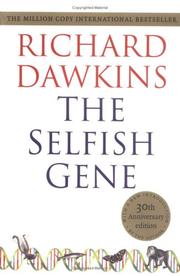
The selfish gene
Richard Dawkins’ classic, The Selfish Gene reexamines evolution from the perspective of genes as primary agents, arguing that organisms serve as ...
Is this book similar?

Books like this one
This is the middle of a set of three biochemistry books Asimov wrote in the 1950’s and 1960’s which form a progressive examination of the field. The Wellsprings of Life is divided into four sections. The first is a general overview of life and its possible origins. Asimov spends a fair amount of time discussing the history of the struggles within biology and geology which lead to the modern world-view centered on Darwinian evolution, including a literal interpretation of the early chapters of Genesis, the issue of spontaneous generation, and the development of evolution by natural selection by Darwin and Wallace. Himself an ardent Darwinist, Asimov pulls no punches over his feelings regarding a literal reading of Genesis being used as the basis for thinking about the origin of life on earth, although he is sensitive to avoid dismissing the Bible’s religious value. The religious issues are, nonetheless, at the core of the first section, as generation after generation of scientist has to struggle against religious opposition to scientific progress, and Asimov tells this story well and with dramatic flair. (Some of his favorite stories about the history of science and the ideal ethics of the scientist are from this period of the history of biology: Darwin and Wallace, and the rediscovery of Mendel’s work.) The second section is a general overview of the organization of life on the planet into phyla, subphyla, and so on, and a brief overview of cytology. The third then delves into the molecule and covers basic biochemistry, focusing on proteins, enzymes, and the DNA that makes them. The book ends with a chapter on the modern spontaneous generation and how science currently feels life on the Earth may have originated. This is, in fact, an excellent volume which manages to cover a broad amount of material in a fairly short space. Each section is thorough, straightforward, and simple to understand, and the sections are interwoven well to create a coherent, logical whole. It is also a book which provides a good broad understanding of Asimov’s own philosophy regarding science, rationalism, religion, and ethics, and so is a good introduction to some of the author’s own approaches to life, as well.
Discover your next read
Compare books other readers have recommended. Vote to help improve these suggestions.
Looking for more books like The Wellsprings of Life by Isaac Asimov? This list brings together suggested alternatives and feedback from SimilarBooks readers. Ratings reflect what readers think of each individual book, while the Yes and No votes show whether visitors consider it a good match for this title. Compare the recommendations below and suggest another book to help fellow readers discover their next read.
Richard Dawkins’ classic, The Selfish Gene reexamines evolution from the perspective of genes as primary agents, arguing that organisms serve as ...
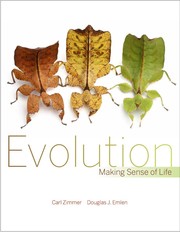
Carl Zimmer and evolutionary biologist Douglas Emlen combine storytelling and rigorous science to teach biology majors the core principles of evo...

A biography of the English author who has been called the first great science fiction writer, with a discussion of his works.
J. Scott Turner challenges modern Darwinism, arguing that its materialist focus stops science from defining life.
A fascinating exploration of the nature of consciousness and its evolution.


Are trees social beings? Forester and author Peter Wohlleben makes the case that, yes, the forest is a social network.

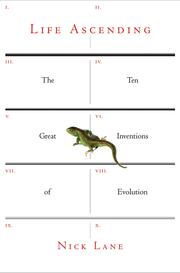
A biochemist, building on the pillars of evolutionary theory and drawing on cutting-edge research into the link between energy and genes, argues ...
Science, Biology, Evolution, Evolution (Biology), Life (Biology)
Community ratings describe each book independently. Similarity votes measure whether readers consider a recommendation a good match for this particular title; results can change as more visitors share feedback.
Suggest another book below, or vote Yes or No on any existing recommendation.
Share your suggestion →Readers make discovery better
Share a recommendation and help other readers discover their next great read.