Books like Existentialists and Mystics by Iris Murdoch


Iris Murdoch, celebrated novelist and philosopher, brings together her most influential essays in this single volume. The collection traces her development toward a modern Platonism, providing incisive evaluations of thinkers such as T. S. Eliot, Jean‑Paul Sartre, Albert Camus, Simone de Beauvior, and Elias Canetti. It also explores enduring themes of the sublime, the nature of love, and the capacity of great literature to address philosophical difficulties. These texts illuminate the mystical and intellectual foundations that permeate Murdoch’s novels and underscore her significant contributions to twentieth‑century thought.
First publish date: 1998
Genre: Philosophy/Ethics
Authors: Iris Murdoch
★ ★ ★ ★ ★ 4.0 (1 community ratings)

Existentialists and Mystics by Iris Murdoch

How are these books recommended?

The books recommended for Existentialists and Mystics by Iris Murdoch are shaped by reader interaction. Votes on how closely books relate, user ratings, and community comments all help refine these recommendations and highlight books readers genuinely find similar in theme, ideas, and overall reading experience.


Have you read any of these books?
Your votes, ratings, and comments help improve recommendations and make it easier for other readers to discover books they’ll enjoy.

Books similar to Existentialists and Mystics (9 similar books)

Zen and the Art of Motorcycle Maintenance by 11412761|Robert M. Pirsig book cover

📘 Zen and the Art of Motorcycle Maintenance

Robert M. Pirsig’s classic blends a true‑to‑life motorcycle trip with a deep meditation on self‑discovery and philosophy, exploring how we live and how we might live better.

★★★★★★★★★★ 3.8 (117 ratings)
Similar? ✓ Yes 0 ✗ No 0
The philosopher's pupil by 3815970|Iris Murdoch book cover

📘 The philosopher's pupil


★★★★★★★★★★ 5.0 (1 rating)
Similar? ✓ Yes 0 ✗ No 0
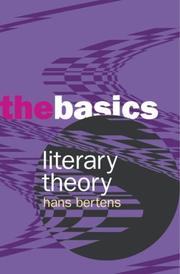
Literary Theory by 6983772|Hans Bertens book cover

📘 Literary Theory

An approachable entry into literary theory, guiding readers through major critical approaches, their historical and political contexts, practical examples, and further reading, to show how theory transforms the act of reading.

★★★★★★★★★★ 4.0 (1 rating)
Similar? ✓ Yes 0 ✗ No 0
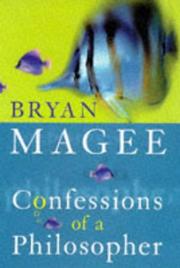
Confessions of a philosopher by 6313663|Bryan Magee book cover

📘 Confessions of a philosopher

Bryan Magee tells the story of his own discovery of philosophy and makes the subject not only come alive but seem intensely relevant. He describes the fundamentals of philosophy as questions about the nature of reality encountered in the course of living, not as problems presented in the writings of the philosophers. Experiences of everyday life provoke discussions about why, through the ages, certain philosophical questions have persistently exercised our minds. Magee's memoir follows the course of his life, so that problems and philosophers are discussed in the order in which he came upon them, rather than in chronological order. By the end of the book, we have been introduced to all the great philosophers, from the pre-Socratics to those of the twentieth century, including two of the most important contemporary philosophers, Bertrand Russell and Karl Popper, both of whom the author knew personally. Logically and with great fluency, Magee clarifies this sometimes obscure subject, revealing its richness to readers who may have considered it inaccessible.

★★★★★★★★★★ 4.0 (1 rating)
Similar? ✓ Yes 0 ✗ No 0
Existentialism from Dostoevsky to Sartre by 8629968|Walter Arnold Kaufmann book cover

📘 Existentialism from Dostoevsky to Sartre

Existentialism is perhaps the most misunderstood of modern philosophic positions-- misunderstood by reason of its broad popularity and general unfamiliarity with its origins, representatives, and principles. Existential thinking did not originate with Jean Paul Sartre. It has prior religious, literary, and philosophic origins. In its narrowest formulation it is a metaphysical doctrine, arguing as it does that any definition of man's essence must follow, not precede, an estimation of his existence. In Heidegger, it affords a view of Being in its totality; in Kierkegaard, an approach to that inwardness indispensable to authentic religious experience; for Dostoevsky, Kafka, and Rilke the existential situation bears the stamp of modern man's alienation, uprootedness, and absurdity; to Sartre it has vast ethical and political implications. This book contains only complete selections or entire works by the major thinkers.--From publisher description.

★★★★★★★★★★ 0.0 (0 ratings)
Similar? ✓ Yes 0 ✗ No 0
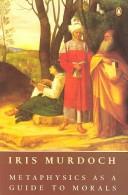
Metaphysics as a guide to morals by 3815970|Iris Murdoch book cover

📘 Metaphysics as a guide to morals

Dame Iris Murdoch who has written several works of philosophy as well as twenty-four distinguished novels, now crowns her philosophic quest with a book that asks many questions and reflects on the essential aspects of the great subject: moral philosophy. Among her concerns are the roles literature, politics, art, and science play in the search for morality in a world that avoids the issue. What is morality, after all, Murdoch asks. Is it important? Is it true? Can it be taught in schools? Is it the very basis of our existence, or is it just one of many peripheral matters? A main theme of this profound work concerns religion and its relation to morals, to moral philosophy, and to the great metaphysical systems which have supported it in the past. These are questions that concern us all, as we are driven to reflect upon the relation between religion and morals and upon the various conceptions of what religion is. Iris Murdoch believes it is time for a dialogue between moral philosophy and a demythologizing theology. She casts fresh light on our great western metaphysicians, Plato and Kant. She writes that philosophy is now in danger of being fragmented into psychology, sociology, anthropology, and other peripheral disciplines. Some universities are closing their philosophy departments. Moral philosophy (ethics), if considered at all, tends to be segregated as a small, special subject. Technology, so beneficial in innumerable ways, displays to us a vast, colorful world of facts within which "moral value" may appear as a little particular item. In her lucid and tightly reasoned "reflections," Dame Iris Murdoch constructs a warning that the survival of philosophy with its persistent ever-new attempts to seek "foundations" is more than ever essential, when the very question of "human being" is at stake. A grand work by one of the most distinguished thinkers of our time.

★★★★★★★★★★ 0.0 (0 ratings)
Similar? ✓ Yes 0 ✗ No 0
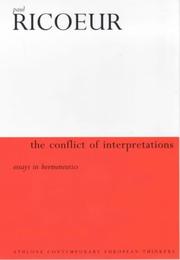
The conflict of interpretations by 6959967|Paul Ricœur book cover

📘 The conflict of interpretations


★★★★★★★★★★ 0.0 (0 ratings)
Similar? ✓ Yes 0 ✗ No 0
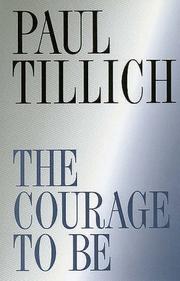
The Courage to Be by 6873679|Paul Tillich book cover

📘 The Courage to Be

In this classic and deeply insightful book, one of the world's most eminent philosophers describes the dilemma of modern man and points a way to the conquest of the problem of anxiety.

★★★★★★★★★★ 0.0 (0 ratings)
Similar? ✓ Yes 0 ✗ No 0
The practice of everyday life by 8287804|Michel de Certeau book cover

📘 The practice of everyday life


★★★★★★★★★★ 0.0 (0 ratings)
Similar? ✓ Yes 0 ✗ No 0

Some Other Similar Books

The Brothers Karamazov by Fyodor Dostoevsky
The Myth of Sisyphus by Albert Camus
The Sea, The Sea by Irish Murdoch
The Existentialist Mystique by Thomas Flynn
The Death of the Moth and Other Essays by Virginia Woolf

Have a similar book in mind? Let others know!

Please login to submit books!