
A Brief History of Time
Stephen Hawking explains the fundamental physics of the universe—space, time, cosmology, black holes, and the Big Bang—in clear, accessible langu...
Is this book similar?
Books like this one
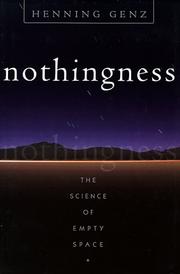
This is a wonderful book on one of the most puzzling problems of physics and philosophy: Does empty space have an existence independent of the matter within it? Einstein thought not. In his universe, there can be no space without matter; but quantum physicist Werner Heisenberg's famous "uncertainty principle" allows for the spontaneous, though fleeting, creation and destruction of fundamental particles from empty space. As physicist Henning Genz shows, "empty space" is really not empty at all; in fact it is an ocean seething with the creation and destruction of subatomic particles. Through the use of crystal-clear prose and over a hundred cleverly rendered and exceptionally instructive illustrations, Genz takes the reader from the metaphysical speculations of the ancient Greek philosophers, through the theories of Newton and the early experiments of his contemporaries, right up to the latest theories of quantum physics and cosmology. While some of man's ideas about the vacuum of outer space have been treated sporadically in other books, this is the first book for the nonscientist on a much neglected yet incredibly interesting segment of modern physics and timeless philosophy.
Discover your next read
Compare books other readers have recommended. Vote to help improve these suggestions.
Looking for more books like Entdeckung des Nichts by Henning Genz? This list brings together suggested alternatives and feedback from SimilarBooks readers. Ratings reflect what readers think of each individual book, while the Yes and No votes show whether visitors consider it a good match for this title. Compare the recommendations below and suggest another book to help fellow readers discover their next read.
Stephen Hawking explains the fundamental physics of the universe—space, time, cosmology, black holes, and the Big Bang—in clear, accessible langu...

Bill Bryson turns the universe into a conversational guide, tracing science from the Big Bang through evolution, geology, chemistry, astronomy, a...

The Immortal Life of Henrietta Lacks follows the story of Henrietta Lacks, a poor black tobacco farmer whose cancer cells were taken in 1951 with...
A thrilling exploration of the cosmos, brilliantly explained by a popular science master.
Carl Sagan’s Cosmos traces the history of science and the universe’s evolution, from ancient philosophers to modern discoveries, and explores the...
Stephen Hawking explores the cutting edge of theoretical physics in layman’s terms, guiding readers through the mysteries that shape our universe.
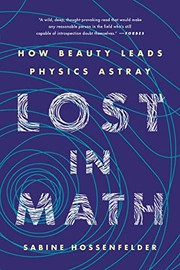
In *Lost in Math*, Sabine Hossenfelder critiques the blind faith in elegance that has stalled progress in physics, urging a return to empirical r...

Brian Greene guides readers through the universe’s history—from the big bang to the ultimate fate of the cosmos—examining how objects, life, and ...

In **Dark Matter and the Dinosaurs**, Lisa Randall links the K–T extinction event to a comet dislodged by a dark–matter disk in our galaxy, explo...
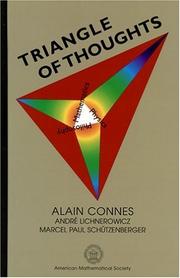
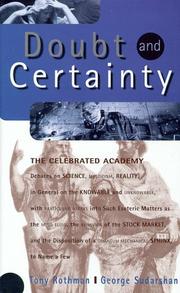
Two physicists—one Western, one Eastern—debate whether scientific models truly reflect reality or merely mirror cultural biases, exploring philos...
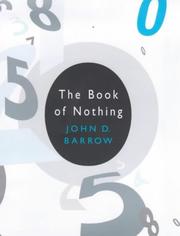
John D.

Are trees social beings? Forester and author Peter Wohlleben makes the case that, yes, the forest is a social network.
Science, Philosophy, Metaphysics, Physics, Science/Mathematics
Community ratings describe each book independently. Similarity votes measure whether readers consider a recommendation a good match for this particular title; results can change as more visitors share feedback.
Suggest another book below, or vote Yes or No on any existing recommendation.
Share your suggestion →Readers make discovery better
Share a recommendation and help other readers discover their next great read.