Books like Better for all the world by Harry Bruinius


First publish date: 2006
Authors: Harry Bruinius
★ ★ ★ ★ ★ 0.0 (0 community ratings)

Better for all the world by Harry Bruinius

How are these books recommended?

The books recommended for Better for all the world by Harry Bruinius are shaped by reader interaction. Votes on how closely books relate, user ratings, and community comments all help refine these recommendations and highlight books readers genuinely find similar in theme, ideas, and overall reading experience.


Have you read any of these books?
Your votes, ratings, and comments help improve recommendations and make it easier for other readers to discover books they’ll enjoy.

Books similar to Better for all the world (9 similar books)

Roll of Thunder, Hear My Cry by 7101850|Mildred D. Taylor book cover

πŸ“˜ Roll of Thunder, Hear My Cry

A powerful story of a Black family's battle for dignity, family, and land in Depression‑era Mississippi, seen through the eyes of eight‑year‑old Cassie Logan.

β˜…β˜…β˜…β˜…β˜…β˜…β˜…β˜…β˜…β˜… 4.1 (29 ratings)
Similar? ✓ Yes 0 ✗ No 0
We're All In This Together by 4611843|Owen King book cover

πŸ“˜ We're All In This Together
 by Owen King


β˜…β˜…β˜…β˜…β˜…β˜…β˜…β˜…β˜…β˜… 2.0 (1 rating)
Similar? ✓ Yes 0 ✗ No 0
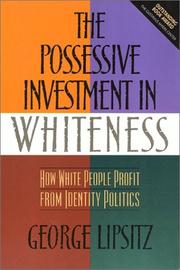
The possessive investment in whiteness by 8379316|George Lipsitz book cover

πŸ“˜ The possessive investment in whiteness

In this unflinching look at white supremacy, George Lipsitz argues that racism is a matter of interests as well as attitudes, a problem of property as well as pigment. Above and beyond personal prejudice, whiteness is a structured advantage that produces unfair gains and unearned rewards for whites while imposing impediments to asset accumulation, employment, housing, and health care for minorities. Reaching beyond the black/white binary, Lipsitz shows how whiteness works in respect to Asian Americans, Latinos, and Native Americans.Lipsitz delineates the weaknesses embedded in civil rights laws, the racial dimensions of economic restructuring and deindustrialization, and the effects of environmental racism, job discrimination and school segregation. He also analyzes the centrality of whiteness to U.S. culture, and perhaps most importantly, he identifies the sustained and perceptive critique of white privilege embedded in the radical black tradition. This revised and expanded edition also includes an essay about the impact of Hurricane Katrina on working class Blacks in New Orleans, whose perpetual struggle for dignity and self determination has been obscured by the city's image as a tourist party town.

β˜…β˜…β˜…β˜…β˜…β˜…β˜…β˜…β˜…β˜… 5.0 (1 rating)
Similar? ✓ Yes 0 ✗ No 0
The Nazi connection by 8704448|Stefan Kühl book cover

πŸ“˜ The Nazi connection

When Hitler published Mein Kampf in 1924, he held up a foreign law as a model for his program of racial purification: The U.S. Immigration Restriction Act, which prohibited the immigration of those with hereditary illnesses and entire ethnic groups. When the Nazis took power in 1933, they installed a program of eugenics - the attempted "improvement" of the population through forced sterilization and marriage controls - that consciously drew on the U.S. example. By then, many American states had long had compulsory sterilization laws for "defectives," upheld by the Supreme Court in 1927. Small wonder that the Nazi laws led one eugenics activist in Virginia to complain, "The Germans are beating us at our own game. . In The Nazi Connection, Stefan Kuhl uncovers the ties between the American eugenics movement and the Nazi program of racial hygiene, showing that many American scientists actively supported Hitler's policies. After introducing us to the recently resurgent problem of scientific racism, Kuhl carefully recounts the history of the eugenics movement, both in the United States and internationally, demonstrating how widely the idea of sterilization as a genetic control had become accepted by the early twentieth century. From the first, American eugenicists led the way with radical ideas. Their influence led to sterilization laws in dozens of states - laws which were studied carefully by the German racial hygienists. With the rise of Hitler, the Germans enacted compulsory sterilization laws partly based on the U.S. experience, and American eugenicists took pride in their influence on Nazi policies. Kuhl recreates astonishing scenes of American eugenicists travelling to Germany to study the new laws, publishing scholarly articles lionizing the Nazi eugenics program, and proudly comparing personal notes from Hitler thanking them for their books. Even after the outbreak of war, he writes, the American eugenicists frowned upon Hitler's totalitarian government, but not his sterilization laws . By 1945, when the murderous nature of the Nazi government was made perfectly clear, the American eugenicists sought to downplay the close connections between themselves and the German program. Some of them, in fact, had sought to distance themselves from Hitler even before the war. But Stefan Kuhl's deeply documented book provides a devastating indictment of the influence - and aid - provided by American scientists for the most comprehensive attempt to enforce racial purity in world history.

β˜…β˜…β˜…β˜…β˜…β˜…β˜…β˜…β˜…β˜… 0.0 (0 ratings)
Similar? ✓ Yes 0 ✗ No 0
Everything beautiful in the world by 9264430|Lisa Levchuk book cover

πŸ“˜ Everything beautiful in the world

A coming‑of‑age story set in the late disco era, following seventeen‑year‑old Edna as she navigates family illness, school life, and a complicated crush on her art teacher.

β˜…β˜…β˜…β˜…β˜…β˜…β˜…β˜…β˜…β˜… 0.0 (0 ratings)
Similar? ✓ Yes 0 ✗ No 0
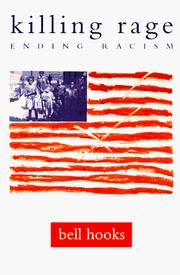
killing rage by 6923016|Bell Hooks book cover

πŸ“˜ killing rage
 by Bell Hooks

Bell Hooks examines racism and sexism in America, arguing that the fight for racial and gender justice must proceed together. Through twenty‑three essays, she critiques mainstream narratives, explores black rage as a catalyst for change, and offers hopeful plans for a future free of oppression.

β˜…β˜…β˜…β˜…β˜…β˜…β˜…β˜…β˜…β˜… 0.0 (0 ratings)
Similar? ✓ Yes 0 ✗ No 0
Inheriting Shame by 6727024|Steven Selden book cover

πŸ“˜ Inheriting Shame


β˜…β˜…β˜…β˜…β˜…β˜…β˜…β˜…β˜…β˜… 0.0 (0 ratings)
Similar? ✓ Yes 0 ✗ No 0
Making Stories by 8850134|Jerome S. Bruner book cover

πŸ“˜ Making Stories

xi, 130 p. ; 21 cm

β˜…β˜…β˜…β˜…β˜…β˜…β˜…β˜…β˜…β˜… 0.0 (0 ratings)
Similar? ✓ Yes 0 ✗ No 0
The Truth About Everything by 13265882|Brianna Wiest book cover

πŸ“˜ The Truth About Everything


β˜…β˜…β˜…β˜…β˜…β˜…β˜…β˜…β˜…β˜… 0.0 (0 ratings)
Similar? ✓ Yes 0 ✗ No 0

Some Other Similar Books

Factfulness: Ten Reasons We're Wrong About the World – and Why Things Are Better Than You Think by Hans Rosling
Enlightenment Now: The Case for Reason, Science, Humanism, and Progress by Steven Pinker
The Rational Optimist: How Prosperity Evolves by Matt Ridley
The Better Angels of Our Nature: Why Violence Has Declined by Steven Pinker
Progress: Ten Reasons to Look Forward to the Future by Johan Norberg
Abundance: The Future Is Better Than You Think by Peter H. Diamandis & Steven Kotler
The Inflection Point: How the Bad Economics of the Past Are Holding Back the Future by Brian Wesbury
The World: A Brief Introduction by Richard Haass
Freedom from Want: American Liberalism and the Idea of the Consumer by Dorothy Ross
The End of Poverty: Economic Possibilities for Our Time by Jeffrey D. Sachs

Have a similar book in mind? Let others know!

Please login to submit books!