Title of Review: "What Ever Happened to the Hippocratic Oath"? Written by Bernie Weisz Historian E Mail Address:
[email protected]
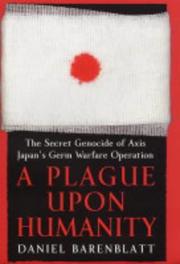
Part of the "Hippocratic Oath" states: "I will apply dietetic measures for the benefit of the sick according to my ability and judgment; I will keep them from harm and injustice. I will neither give a deadly drug to anybody who asked for it, nor will I make a suggestion to this effect". This did not occur to the medical community nor Hirohito, Japan's "Divine Emperor" during W.W. II. Born a "God" on 4/29/01, Hirohito's childhood friends were generals and kings. Hirohito, Emperor Of Japan. In the 1920's, he visited the Western world, conferring with the Prince of Wales and King George of England. Hirohito felt that according to "Shinto" (the official religion of Japan), he was the "Son Of Heaven", the future "high priest" of Shinto. According to "Shintoism", only the emperor and his descendants were created in God's image. By "Divine Right", he was destined to rule Japan and the whole world. Supposedly, more people have been killed in the name of religion than any other cause. This is not true, as "science" is the best friend of "the killer". Hirohito was not an ordinary god, rather a god of science. Being a specialist in biology, Hirohito understood the massive killing power of diseases and epidemics. Interested more in the science of death than life, it was Hirohito's "divine desire" to rule the world and harness science's killing power. He would see to it that Japan would conquer the world with biological terrorism and biological weapons of mass destruction. This is exactly what Hal Gold's book, "Unit 731" is all about. Hirohito directly financed and created "Unit 731", Japan's code for secret biological weapons laboratories. Human prisoners were the unwilling subjects and the purpose of 731 was to develop deadly biological weapons which could be used to infect, sicken and kill millions of innocent people. Hirohito's intentions were so diabolical that secrecy became the most important factor. Because of this, these biological laboratories had to be located outside Japan in conquered territories beginning in Manchuria where Japanese scientists could be provided with an unlimited supply of unwilling victims. After Japan occupied Manchuria following the 9/18/31/ "Mukden Incident", a brilliant scientist, Dr. Ishii Shiro, under the auspices of Japan's secret police, commenced human experiments in Manchuria. In 1936, a state of the art medical research facility was established in Ping Fang, called "Unit 731". It had a prison that held 500 victims at once and had 100 human cages. Like Auschwitz, 731 had a crematorium, belching human smoke of 731's mutilated and murdered victims. Bodies that were torn, gassed and missing organs by live dissection (called "vivisection") were incinerated. Victims were referred to as "Marutas". Held in small cages, "Maruta's" were forcibly injected with a variety of deadly diseases and bacteria and observed until they were dissected alive. In some cells, "Maruta's" and rats infected with plague carrying fleas were kept together. Diseased and healthy humans were paired to determine how fast disease would spread from human to human. The purpose was to discover the best way to infect prisoners. Unit 731 had a dungeon where victims were hung upside down and tortured, burned with flame throwers and had arms and legs intentionally broken. Maruta's were blown up with grenades, bombarded with lethal dosages of x-rays, injected with air, and frozen to death. Vivisections (live dissections with no anesthesia) were performed on prisoners after intentional infection to observe what disease does to a human's insides. So that the results were not affected, no sedatives were administered. Women prisoners were raped and impregnated by other prisoners under guard's orders. They would be injected or exposed to sexually transmitted diseases and then live dissections would be performed to i