Books like Cause by Gregory Smithsimon


First publish date: 2018
Authors: Gregory Smithsimon
★ ★ ★ ★ ★ 4.0 (1 community ratings)

Cause by Gregory Smithsimon

How are these books recommended?

The books recommended for Cause by Gregory Smithsimon are shaped by reader interaction. Votes on how closely books relate, user ratings, and community comments all help refine these recommendations and highlight books readers genuinely find similar in theme, ideas, and overall reading experience.


Have you read any of these books?
Your votes, ratings, and comments help improve recommendations and make it easier for other readers to discover books they’ll enjoy.

Books similar to Cause (6 similar books)
The Death and Life of Great American Cities by 7232722|Jane Jacobs book cover

📘 The Death and Life of Great American Cities

Jane Jacobs’ seminal work argues that diverse, vibrant street life sustains cities, challenging conventional plans that favor large developments and uniformity.

★★★★★★★★★★ 4.1 (16 ratings)
Similar? ✓ Yes 0 ✗ No 0
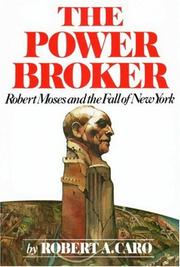
The power broker: Robert Moses and the fall of New York by 12334107|Robert A. Caro book cover

📘 The power broker: Robert Moses and the fall of New York

A scholarly examination of Robert Moses, the powerful New York City planner whose initiatives shaped the city’s infrastructure and symbolized the concentration of municipal authority.

★★★★★★★★★★ 4.7 (15 ratings)
Similar? ✓ Yes 0 ✗ No 0
Smart Cities: Big Data, Civic Hackers, and the Quest for a New Utopia by 11831063|Anthony M. Townsend book cover

📘 Smart Cities: Big Data, Civic Hackers, and the Quest for a New Utopia

We live in a world defined by urbanization and digital ubiquity, where mobile broadband connections outnumber fixed ones, machines dominate a new "Internet of things," and more people live in cities than in the countryside. In Smart Cities, urbanist and technology expert Anthony Townsend takes a broad historical look at the forces that have shaped the planning and design of cities and information technologies from the rise of the great industrial cities of the nineteenth century to the present. A century ago, the telegraph and the mechanical tabulator were used to tame cities of millions. Today, cellular networks and cloud computing tie together the complex choreography of mega-regions of tens of millions of people. In response, cities worldwide are deploying technology to address both the timeless challenges of government and the mounting problems posed by human settlements of previously unimaginable size and complexity. In Chicago, GPS sensors on snow plows feed a real-time "plow tracker" map that everyone can access. In Zaragoza, Spain, a "citizen card" can get you on the free city-wide Wi-Fi network, unlock a bike share, check a book out of the library, and pay for your bus ride home. In New York, a guerrilla group of citizen-scientists installed sensors in local sewers to alert you when stormwater runoff overwhelms the system, dumping waste into local waterways. As technology barons, entrepreneurs, mayors, and an emerging vanguard of civic hackers are trying to shape this new frontier, Smart Cities considers the motivations, aspirations, and shortcomings of them all while offering a new civics to guide our efforts as we build the future together, one click at a time. -- Provided by publisher.

★★★★★★★★★★ 4.0 (1 rating)
Similar? ✓ Yes 0 ✗ No 0
International Library of Psychology by 6984093|Routledge book cover

📘 International Library of Psychology
 by Routledge


★★★★★★★★★★ 0.0 (0 ratings)
Similar? ✓ Yes 0 ✗ No 0
Human nature and the social order by 10240859|Charles Horton Cooley book cover

📘 Human nature and the social order


★★★★★★★★★★ 0.0 (0 ratings)
Similar? ✓ Yes 0 ✗ No 0
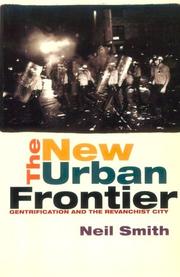
The new urban frontier by 10643747|Neil Smith book cover

📘 The new urban frontier
 by Neil Smith

¿Qué está ocurriendo en los centros urbanos y en muchos otros barrios históricos de las ciudades de Europa, Norteamérica y otros continentes? ¿Por qué se ha producido esa oleada de operaciones de regeneración urbana con resultados tan extremadamente chic? ¿Se puede dar por terminado este proceso en el marco de la actual crisis financiero-inmobiliaria? ¿Qué supone la remodelación de los centros urbanos para la gente que vive en los mismos? Este libro, convertido ya en el estudio clásico sobre lagentrificación, revela con notable lucidez la fuertedependencia de los procesos de transformación urbana de las dinámicas de acumulación de capital sobre el territorio. Ajeno a toda complacencia con los gustos y estilos de vida de clase media, que normalmente justifican las políticas pro-gentrificación, Smith muestra con crudeza sus obvios efectos sociales: desplazamiento de la población con menores recursos, banalización y musealización de los centros urbanos, subordinación de las políticas urbanas al beneficio de promotores y entidades financieras, segregación espacial, criminalización de la pobreza y de las personas sin hogar, etc. En este terreno su análisis no sólo es convergente con movimientos como la okupación y la democratización del acceso a la vivienda, sino también extremadamente útil para cualquier aproximación que reivindique el derecho a la ciudad.

★★★★★★★★★★ 0.0 (0 ratings)
Similar? ✓ Yes 0 ✗ No 0

Some Other Similar Books

The End of the Suburbs: Where the American Dream Is Moving by Leigh Gallagher
Palaces for the People:... How Social Infrastructure Can Help Fight Inequality, Polarization, and the Decline of Civic Life by Eric Klinenberg
Walkable City: How Downtown Can Save America, One Step at a Time by Jeff Speck
The Geography of Nowhere: The Rise and Decline of America’s Man-Made Landscape by James Howard Kunstler
Race, Power, and Urban Sprawl by Rachel G. Bratt
Golden Gates: Fighting for Housing in America by Conor Dougherty
City of Quartz: Excavating the Future in Los Angeles by Mike Davis

Have a similar book in mind? Let others know!

Please login to submit books!