In this groundbreaking book, distinguished historian Gotz Aly addresses one of modern history's greatest conundrums: How did Adolf Hitler win the allegiance of ordinary Germans for his program of mass murder and military conquest? The answer Aly provides is as shocking as it is persuasive. By engaging in a campaign of theft on an almost unimaginable scale, and by channeling the proceeds into a succession of generous social programs, Hitler literally bought the consent of the German people. Drawing on secret Nazi files and unexamined financial records, Aly shows that while Jews and citizens of occupied lands suffered crippling taxation, mass looting, enslavement, and destruction, most Germans enjoyed a marked improvement in their standard of living. He documents the many millions of packages soldiers sent from the front stuffed with valuables and provisions; the systematic plunder of conquered territory for raw materials, industrial goods, and food supplies; and the disappearance of Jewish property and fortunes into German homes and pockets across the Reich. Whatever moral qualms Germans may have felt toward Nazi policies were swept away by waves of government handouts, tax breaks, and preferential legislation
Aly depicts a Nazi leadership addicted to the spoils of invasion, annexation and dispossession. He shows that the pace and timing of Nazi conquests-from the Anschluss of Austria to the annexation of the Czech Sudetenland-were dictated by the rapidly escalating financial needs of the German war machine. Time and again, warnings of an imminent financial collapse spurred the Third Reich to ever more desperate and brazen acts of thievery and destruction. A gripping work of scrupulous erudition and great historical importance, Hitleralʾs Beneficiaries explains the inexplicable, making a radically new contribution to our understanding of Nazi aggression, the Holocaust and the complicity of a people. From the book jacket
Includes information on anti-Semitism, atonement payments, Banque de France Bank of Greece, Belgium, consumer goods, currency, debt and credit, Eastern Europe (Front), forced labor, France, Joseph Goebbels, gold, Hermann Goring, government bonds, Greece, Adolf Hitler, Holland (Netherlands), responsibility for Holocaust, Hungary, inflation, Italy, Jewish assets, Jews, deportation of Jews, National Socialist German Workers Party (Nazi Party), occupation costs, Poland, Reich Credit Banks (Rreichkreditkasse), Reichsbank, Romania, Schwerin von Krosigk (Count Lutz), social welfare system, Soldiers, Soviet Union, taxes and tax policy, Vichy France, Wehrmacht, working classes, World War I, World War II, etc
The books recommended for Hitlers Volksstaat by
Götz Aly are shaped by reader interaction.
Votes on how closely books relate, user ratings, and community comments all help
refine these recommendations and highlight books readers genuinely find similar
in theme, ideas, and overall reading experience.
Have you read any of these books?
Your votes, ratings, and comments help improve recommendations and make it easier
for other readers to discover books they’ll enjoy.
Books similar to Hitlers Volksstaat (8 similar books)
Hannah Arendt’s seminal study charts the rise of totalitarianism from 19th‑century anti‑Semitism and European colonialism to the emergence of Nazi Germany and Stalinist Russia, examining propaganda, terror, and mass mobilization.
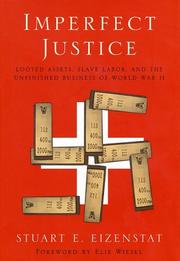
Recent news about the 1.25 billion dollar settlement of three major Swiss banks with the victims of the Holocaust has sent shockwaves throughout the world. Now, prizewinning investigative journalist, George Carpozi, Jr., exposes the rest of the story: How billions in looted gold, world famous art, jewels, and other assets made their nefarious way not only to Switzerland, but to Sweden, Portugal, Spain, Turkey, Argentina, England, France, the Vatican, and the United States.
Drawing on scores of interviews, previously unrevealed intelligence documents from many countries, the U.S. State Department Report, as well as archives of England, Argentina, France, and Italy, Carpozi makes public startling information about the dealings all these nations had with Nazi Germany and follows the trail of the valuables stolen from victims of the Holocaust.
A study of the numerous academics and technocrats whose ideas and patterns of thinking culminated in proposals for the state-directed mass extermination of part of the human race as an entirely necessary and logical component of a long-term programme of social modernisation.
The Nazi Period and the German Society, 1933-1945 by Joachim C. Fest Ordinary Men: Reserve Police Battalion 101 and the Final Solution in Poland by Christopher R. Browning The Holocaust: A New History by Dan Stone Hitler's Willing Executioners: Ordinary Germans and the Holocaust by Daniel Jonah Goldhagen Auschwitz: A New History by Laurence Rees Nazi Germany and the Jews: The Years of Persecution, 1933-1939 by Saul Friedländer Totalitarian Dictatorship and Autocracy by Juan J. Linz The Third Reich: A History of Nazi Germany by Michael Burleigh Nazi Ideology and the Holocaust by Peter Longerich Hitler's Empire: How the Nazis Ruled Europe by Mark Mazower The Fascist Effect: Beyond the Paranoid Style by Eric D. Weitz Ordinary Men: Reserve Police Battalion 101 and the Final Solution in Poland by Christopher R. Browning The Holocaust: A New History by Laurence Rees From Weimar to Auschwitz by Paul Bookbinder Hitler's Germany: Origins, Interpretations, Legacies by Robert S. Wistrich
Have a similar book in mind? Let others know!
Please login to submit books!
Is it a similar book?
Thank you for sharing your feedback. Please also let us know why you're thinking this is a similar (or not similar) book.