Books like Philosophic classics by Forrest E. Baird

First publish date: 1999
Authors: Forrest E. Baird
★ ★ ★ ★ ★ 0.0 (0 community ratings)

Philosophic classics by Forrest E. Baird

How are these books recommended?

The books recommended for Philosophic classics by Forrest E. Baird are shaped by reader interaction. Votes on how closely books relate, user ratings, and community comments all help refine these recommendations and highlight books readers genuinely find similar in theme, ideas, and overall reading experience.


Have you read any of these books?
Your votes, ratings, and comments help improve recommendations and make it easier for other readers to discover books they’ll enjoy.

Books similar to Philosophic classics (7 similar books)

Meditations by 3683405|Marcus Aurelius book cover

📘 Meditations

A series of spiritual exercises for leading a meaningful life, 2,000 years old and still relevant today.

★★★★★★★★★★ 4.0 (120 ratings)
Similar? ✓ Yes 0 ✗ No 0
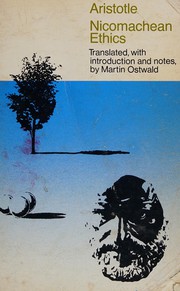
Nicomachean Ethics by 6540416|Aristotle book cover

📘 Nicomachean Ethics
 by Aristotle

Aristotle’s Nicomachean Ethics explores how human beings might achieve the best possible life by examining virtue and its components.

★★★★★★★★★★ 3.9 (18 ratings)
Similar? ✓ Yes 0 ✗ No 0
Εὐθύφρων / Κρίτων / Μένων / Φαίδων / Ἀπολογία Σωκράτους by 3070899|Πλάτων book cover

📘 Εὐθύφρων / Κρίτων / Μένων / Φαίδων / Ἀπολογία Σωκράτους

An ancient Greek philosophical dialogue by Plato in which Socrates defends his teachings at trial.

★★★★★★★★★★ 4.0 (6 ratings)
Similar? ✓ Yes 0 ✗ No 0
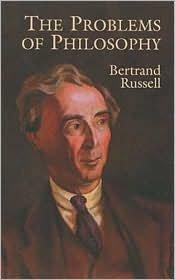
The Problems of Philosophy by 1410756|Bertrand Russell book cover

📘 The Problems of Philosophy

A concise exploration of Bertrand Russell’s key philosophical questions, focusing primarily on epistemology while briefly addressing metaphysics and other contemporary issues.

★★★★★★★★★★ 3.4 (5 ratings)
Similar? ✓ Yes 0 ✗ No 0
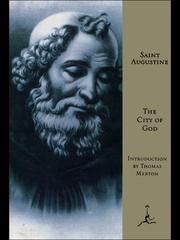
City of God by 6535781|Augustine of Hippo book cover

📘 City of God

One of the great cornerstones in the history of Christian thought, The City of God is vital to an understanding of modern Western society and how it came into being. Begun in A.D. 413 by Saint Augustine, the great theologian who was bishop of Hippo, the book's initial purpose was to refute the charge that Christianity was to blame for the fall of Rome (which had occurred just three years earlier). Indeed, Augustine produced a wealth of evidence to prove that paganism bore within itself the seeds of its own destruction. However, over the next thirteen years that it took to complete the work, the brilliant ecclesiastic proceeded to his larger theme: a cosmic interpretation of history in terms of the struggle between good and evil. By means of his contrast of the earthly and heavenly cities--the one pagan, self-centered, and contemptuous of God and the other devout, God-centered, and in search of grace--Augustine explored and interpreted human history in relation to eternity. After you finish The City of God it becomes clear why some have suggested that most of Western thought could be read as 'a series of footnotes to Augustine.' This edition of The City of God, in the Marcus Dods translation, is complete and unabridged. The introduction is by Thomas Merton, Trappist monk and author of The Seven Storey Mountain and The Waters of Siloe.

★★★★★★★★★★ 3.0 (1 rating)
Similar? ✓ Yes 0 ✗ No 0
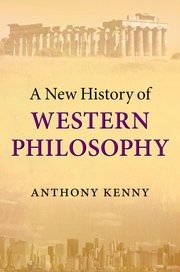
A New History of Western Philosophy by 6068438|Anthony Kenny book cover

📘 A New History of Western Philosophy

xvii, 1058 p. ; 24 cm

★★★★★★★★★★ 0.0 (0 ratings)
Similar? ✓ Yes 0 ✗ No 0
Socrates' children by 8178007|Peter Kreeft book cover

📘 Socrates' children

"How is this history of philosophy different from all others? 1. It's neighter very long (like Copleston's twelve-volumet tome, which is a clear and hepful reference work but pretty dull reading) nor very short (like many skimpy one-volume summaries) just long enough. 2. It's available in separate volumes but eventually in one complete work (after the four volumes - Ancient, Medieval, Modern, Contemporary - are produced in paperbound editions, a one-volume clothbound will be published). 3. It focuses on the "big ideas" that have influenced present people and present times. 4. It includes relevant biographical data, proportionate to its importance for each thinker. 5. It is not just history but philosophy. Its aim is not merely to record facts (of life or opinion) but to stimulate philosophizing, controversy, argument. 6. It aims above all at understanding, at what the old logic called the "first act of the mind" rather than the third: the thing computers and many "analytic philosophers" cannot understand. 7. It uses ordinary language and logic, not academic jargon or symbolic logic. 8. It is commonsensical (and therefore is sympathetic to commonsense philosophers like Aristotle). 9. It is "existential" in that it sees philosophy as something to be lived and tested"--

★★★★★★★★★★ 0.0 (0 ratings)
Similar? ✓ Yes 0 ✗ No 0

Some Other Similar Books

The Ethics by Spinoza
An Inquiry into the Good by Kant

Have a similar book in mind? Let others know!

Please login to submit books!