Books like Free soil, free labor, free men by Eric Foner
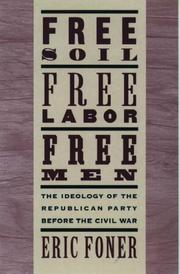

First publish date: 1970
Authors: Eric Foner
0.0 (0 community ratings)

Free soil, free labor, free men by Eric Foner

How are these books recommended?

The books recommended for Free soil, free labor, free men by Eric Foner are shaped by reader interaction. Votes on how closely books relate, user ratings, and community comments all help refine these recommendations and highlight books readers genuinely find similar in theme, ideas, and overall reading experience.


Have you read any of these books?
Your votes, ratings, and comments help improve recommendations and make it easier for other readers to discover books they’ll enjoy.

Books similar to Free soil, free labor, free men (4 similar books)
A People's History of the United States by 6974933|Howard Zinn book cover

πŸ“˜ A People's History of the United States

A compelling overview of American history through the eyes and experiences of its women, workers, African Americans, Native Americans, immigrants, and the working poor.

β˜…β˜…β˜…β˜…β˜…β˜…β˜…β˜…β˜…β˜… 4.0 (36 ratings)
Similar? ✓ Yes 0 ✗ No 0
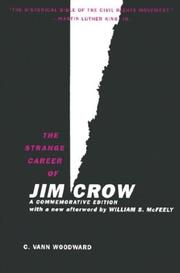
The strange career of Jim Crow by 11567354|C. Vann Woodward book cover

πŸ“˜ The strange career of Jim Crow

C.β€―Vann Woodward’s classic 1955 study argues that Jimβ€―Crow segregation emerged only in the 1890s, showing the South’s racial relations were more mixed during slavery and Reconstruction.

β˜…β˜…β˜…β˜…β˜…β˜…β˜…β˜…β˜…β˜… 3.0 (1 rating)
Similar? ✓ Yes 0 ✗ No 0
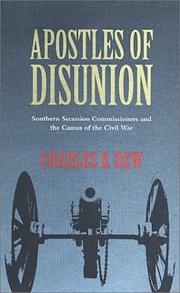
Apostles of disunion by 11493999|Charles B. Dew book cover

πŸ“˜ Apostles of disunion

"In late 1860 and early 1861, state-appointed commissioners traveled the length and breadth of the slave South carrying a fervent message in pursuit of a clear goal: to persuade the political leadership and the citizenry of the uncommitted slave states to join in the effort to destroy the Union and forge a new Southern nation.". "Directly refuting the neo-Confederate contention that slavery was neither the reason for secession nor the catalyst for the resulting onset of hostilities in 1861, Charles B. Dew finds in the commissioners' brutally candid rhetoric a stark white supremacist ideology that proves the contrary. The commissioners included in their speeches a constitutional justification for secession, to be sure, and they pointed to a number of political "outrages" committed by the North in the decades prior to Lincoln's election. But the core of their argument - the reason the right of secession had to be invoked and invoked immediately - did not turn on matters of constitutional interpretation or political principle. Over and over again, the commissioners returned to the same point: that Lincoln's election signaled an unequivocal commitment on the part of the North to destroy slavery and that emancipation would plunge the South into a racial nightmare.". "Dew's discovery and study of the highly illuminating public letters and speeches of these apostles of disunion - often relatively obscure men sent out to convert the unconverted to the secessionist cause - have led him to suggest that the arguments the commissioners presented provide us with the best evidence we have of the motives behind the secession of the lower South in 1860-61."--BOOK JACKET.

β˜…β˜…β˜…β˜…β˜…β˜…β˜…β˜…β˜…β˜… 0.0 (0 ratings)
Similar? ✓ Yes 0 ✗ No 0
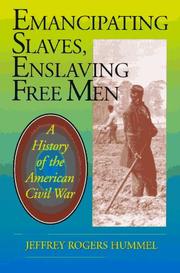
Emancipating slaves, enslaving free men by 9630677|Jeffrey Rogers Hummel book cover

πŸ“˜ Emancipating slaves, enslaving free men

This book combines a sweeping narrative history of the Civil War with a bold new look at the war's significance for American society. Professor Hummel sees the Civil War as America's turning point: simultaneously the culmination and repudiation of the American revolution. A unique feature of the book is the bibliographical essays which follow every chapter. Here the author surveys the literature and points out where his own interpretation fits into the continuing clash of viewpoints which informs historical debate on the Civil War.

β˜…β˜…β˜…β˜…β˜…β˜…β˜…β˜…β˜…β˜… 0.0 (0 ratings)
Similar? ✓ Yes 0 ✗ No 0

Some Other Similar Books

Ratification: The People Debate the Constitution, 1787-1788 by Melissa J. Cox
The Fiery Trial: Abraham Lincoln and American Slavery by Eric Foner
A Short History of Reconstruction by Eric Foner
The American South: A History by William T. conveniently
The Civil War and America’s Archives by Lisa Tendrich Frank
Slavery's Capitalism: A New History of American Economic Development by Svlana P. Bill
The Battle of Civil Rights and the Rise of Black Power by William G. Martin
The Invention of Race in the European Middle Ages by Kenneth W. Chase

Have a similar book in mind? Let others know!

Please login to submit books!