Books like The Minority Body by Elizabeth Barnes

First publish date: 2016
Authors: Elizabeth Barnes
★ ★ ★ ★ ★ 0.0 (0 community ratings)

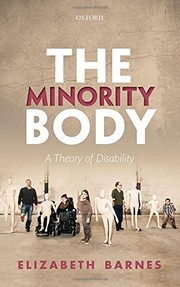
The Minority Body by Elizabeth Barnes

How are these books recommended?

The books recommended for The Minority Body by Elizabeth Barnes are shaped by reader interaction. Votes on how closely books relate, user ratings, and community comments all help refine these recommendations and highlight books readers genuinely find similar in theme, ideas, and overall reading experience.


Have you read any of these books?
Your votes, ratings, and comments help improve recommendations and make it easier for other readers to discover books they’ll enjoy.

Books similar to The Minority Body (4 similar books)
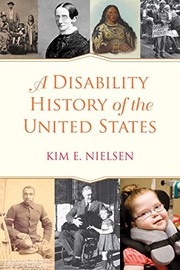
A disability history of the United States by 5892188|Kim E. Nielsen book cover

πŸ“˜ A disability history of the United States


β˜…β˜…β˜…β˜…β˜…β˜…β˜…β˜…β˜…β˜… 0.0 (0 ratings)
Similar? ✓ Yes 0 ✗ No 0
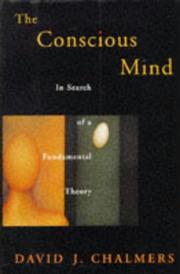
The Conscious Mind by 6954139|David J. Chalmers book cover

πŸ“˜ The Conscious Mind

David J. Chalmers explores the mystery of consciousness, arguing that a reductive, purely materialist account is insufficient and outlining a possible fundamental theory linking physical processes and subjective experience.

β˜…β˜…β˜…β˜…β˜…β˜…β˜…β˜…β˜…β˜… 0.0 (0 ratings)
Similar? ✓ Yes 0 ✗ No 0
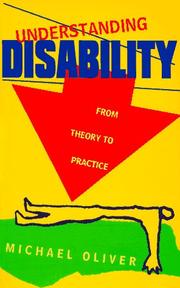
Understanding disability by 7713404|Michael Oliver book cover

πŸ“˜ Understanding disability


β˜…β˜…β˜…β˜…β˜…β˜…β˜…β˜…β˜…β˜… 0.0 (0 ratings)
Similar? ✓ Yes 0 ✗ No 0
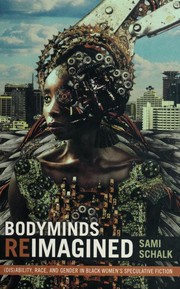
Bodyminds Reimagined by 11790932|Samantha Dawn Schalk book cover

πŸ“˜ Bodyminds Reimagined

Traces how black women's speculative fiction complicates the understanding of bodyminds - the intertwinement of the mental and the physical - in the context of race, gender and (dis)ability. Bridging black feminist theory and disability studies, th author demonstrates that this genre's political potential lies in the authors' creation of bodyminds that transcend reality's limitations. She reads (dis)ability in neo-slave narratives by Octavia Butler ("Kindred") and Phyllis Alesia Perry ("Stigmata") not only as representing the literal injuries suffered under slavery, but also as a metaphor for the legacy of racial violence. The fantasy worlds in works by N.K. Jemisin, Shawntelle Madison, and Nalo Hopkinson - where werewolves have obsessive-compulsive disorder and blind demons can see magic - destabilize social categories and definitions of the human, calling into question the very nature of identity. in these texts, as well as in Butler's "Parable" series, able-mindedness and able-bodiedness are socially constructed and upheld through racial and gendered norms. Outlining (dis)ability's centrality to speculative fiction, the author shows how these works open up new social possibilities while changing conceptualizations of identity and oppression through nonrealist contexts.

β˜…β˜…β˜…β˜…β˜…β˜…β˜…β˜…β˜…β˜… 0.0 (0 ratings)
Similar? ✓ Yes 0 ✗ No 0

Some Other Similar Books

Contingent Identities by Elizabeth Barnes
Objectivity and Diversity: Science, Race, and Gender by Harriet A. Washington
The Matter of Judgment by L. A. Paul
The Ethical Project by Felix g. Frankfurter
Thoughts on Thinking: The Philosophy of Mind by Tim Crane
The Nature of Consciousness by David J. Chalmers
Minds and Bodies by Susan Schneider
The Content and the Form by Ingvar Johansson
Philosophy of Mind: A Beginner's Guide by Ian Ravenscroft

Have a similar book in mind? Let others know!

Please login to submit books!