WHY THIS IS IMPORTANT:
Tufte shows how to examine data for quality and "truthiness". Tufte also shows how to "design" information to turn meaningless data into meaningful, usable information--which could improve your career, or help the war on "Fake News".
Due to the cost-cutting elimination of many fact-checkers and overseers of information quality & ethics in newsagencies, corporations, and schools, many people are losing important tools for critical thinking ie. being able to tell or comprehend "real truths" versus "fake" information. This affects everybody's freedom by manipulating the public, voting, and whether they can protect themselves from fraudsters.
ABSTRACT: Solving Social Problems using data analysis; Intro to How to use Data Analysis, Predictions and projections: some issues of research design...
"PREFACE
If you want to understand and solve social problems, a good first step toward these goals is to master the quantitative ideas in this collection Of papers. The readings show What quantitative analysis is good for and how it can be Criticized and improved. Included, then, are a number of well-executed studies of important social, economic, and political problems: equality of educational opportunity, voting behavior, poverty, automobile accidents, smoking and health, and so forth. Other papers center on data analysis, research design, and statistical criticism. Many Of the papers either are published here for the first time or have been relatively inaccessible. Thus the collection should prove enlightening to those who want access to the more quantitative studies Of social problems as well as to those studying statistics and data analysis in the social sciences.
The collection is divided into five parts:
*Statistical Evidence and Statistical Criticism.
*Experimental and Quasi-Experimental Studies.
*Economic and Aggregate Analysis.
*Survey Data.
*Data Analysis and Research Design.
The first three readings are careful and judicious assessments of quantitative work. They discuss controversial and sometimes difficult studies: Sexual Be- havior in the Human Male by Kinsey, Pomeroy, and Martin; a political tract called "Catholic Voters and the Democratic National Ticket"; and studies of the relationship between smoking and lung cancer.
The fourth paper in this section, growing out of some of the criticisms of the research on smoking and health, suggests a number of ground rules for statistical criticism. All these readings are valuable, it seems to me, because, by their example, they help us to arrive at sensible evaluations of quantitative studies. The discussion by Cochran, Mosteller, and Tukey Of "Sexual Behavior in The Human Male" reaches a balanced conclusion about a flawed but highly significant study. The paper by Cornfield, Haenszel, Hammond, Lilienfeld, Shimkin, and Wynder pulls together many different types of evidence about the consequences of smoking. Their work is especially valuable because of its stress on the logic of inference and the logic of counterexplanation. ………. "
------------------
Edward Rolf Tufte (born 1942 in Kansas City, Missouri to Virginia and Edward E. Tufte), a professor emeritus of statistics, graphic design, and political economy at Yale University has been described by The New York Times as "the Leonardo da Vinci of Data". He is an expert in the presentation of informational graphics such as charts and diagrams, and is a fellow of the American Statistical Association. Tufte has held fellowships from the Guggenheim Foundation and the Center for Advanced Studies in Behavioral Sciences.
Tufte currently resides in Cheshire, Connecticut. He periodically travels around the United States to offer one-day workshops on data presentation and information graphics. http://www.edwardtufte.com
The books recommended for The quantitative analysis of social problems by
Edward R. Tufte are shaped by reader interaction.
Votes on how closely books relate, user ratings, and community comments all help
refine these recommendations and highlight books readers genuinely find similar
in theme, ideas, and overall reading experience.
Have you read any of these books?
Your votes, ratings, and comments help improve recommendations and make it easier
for other readers to discover books they’ll enjoy.
Books similar to The quantitative analysis of social problems (6 similar books)
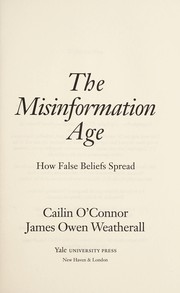
Cailin O'Connor explores why false beliefs endure and spread, arguing that social forces—not individual psychology—are key to understanding misinformation in our age.
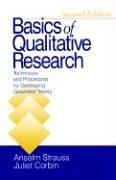
A step-by-step guide to qualitative research methods and analysis for researchers and students in the social sciences, providing practical advice and technical expertise in understanding and interpreting qualitative data.
A practical guide for researchers on data collection, analysis, and grounded theory development, featuring theoretical sampling, real data examples, and software tools like MAXQDA.
"Hot on the heels of the award-winning and best selling Discovering Statistics Using SPSS Third Edition, Andy Field has teamed up with Jeremy Miles (co-author of Discovering Statistics Using SAS) to write Discovering Statistics Using R. Keeping the uniquely humorous and self-depreciating style that has made students across the world fall in love with Andy Field's books, Discovering Statistics Using R takes students on a journey of statistical discovery using the freeware R, a free, flexible and dynamically changing software tool for data analysis that is becoming increasingly popular across the social and behavioral sciences throughout the world. The journey begins by explaining basic statistical and research concepts before a guided tour of the R software environment. Next the importance of exploring and graphing data will be discovered, before moving onto statistical tests that are the foundations of the rest of the book (for e.g. correlation and regression). Readers will then stride confidently into intermediate level analyses such as ANOVA, before ending their journey with advanced techniques such as MANOVA and multilevel models. Although there is enough theory to help the reader gain the necessary conceptual understanding of what they're doing, the emphasis is on applying what's learned to playful and real-world examples that should make the experience more fun than expected."--Publisher's website.
Statistics for Social Data Analysis by Kenneth J. Bollen Data Analysis for Social Scientists by Herbert S. Keller Applied Regression Analysis and Generalized Linear Models by John Fox The SAGE Handbook of Social Research Methods by Pertti Pelto Quantitative Methods in Social Science by Charles F. G. Smith Social Science Data Analysis by Alan Agresti Regression Analysis: Understanding and Building Models by Frank Harrell Analyzing Social Data by Ann Sullivan Statistical Methods for Social Sciences by Alan Agresti
Have a similar book in mind? Let others know!
Please login to submit books!
Is it a similar book?
Thank you for sharing your feedback. Please also let us know why you're thinking this is a similar (or not similar) book.