Books like Image Factory by Donald Richie


First publish date: 2003
Genre: History/Modern History
Authors: Donald Richie
★ ★ ★ ★ ★ 0.0 (0 community ratings)

Image Factory by Donald Richie

How are these books recommended?

The books recommended for Image Factory by Donald Richie are shaped by reader interaction. Votes on how closely books relate, user ratings, and community comments all help refine these recommendations and highlight books readers genuinely find similar in theme, ideas, and overall reading experience.


Have you read any of these books?
Your votes, ratings, and comments help improve recommendations and make it easier for other readers to discover books they’ll enjoy.

Books similar to Image Factory (15 similar books)

On photography by 7617333|Susan Sontag book cover

📘 On photography

A seminal collection of essays by Susan Sontag that examines photography’s history, meaning and role in capitalist societies.

★★★★★★★★★★ 4.0 (5 ratings)
Similar? ✓ Yes 0 ✗ No 0
The camera by 9187622|Ansel Adams book cover

📘 The camera


★★★★★★★★★★ 4.0 (2 ratings)
Similar? ✓ Yes 0 ✗ No 0
Very Recent History by 11710634|Choire Sicha book cover

📘 Very Recent History

A grounded exploration of contemporary New York life that examines how money, technology, and culture shape everyday experiences and social relationships.

★★★★★★★★★★ 2.0 (1 rating)
Similar? ✓ Yes 0 ✗ No 0
Understanding exposure by 11479313|Bryan F. Peterson book cover

📘 Understanding exposure

Veteran photographer Bryan Peterson simplifies exposure, covering light fundamentals, aperture, shutter speed, and their interactions, plus advanced topics like flash, gels, and star trails.

★★★★★★★★★★ 5.0 (1 rating)
Similar? ✓ Yes 0 ✗ No 0
Bobos in paradise by 4264637|David Brooks book cover

📘 Bobos in paradise

"It used to be pretty easy to distinguish between the bourgeois world of capitalism and the bohemian counterculture. The bourgeois worked for corporations, wore gray, and went to church. The bohemians were artists and intellectuals. Bohemians championed the values of the liberated 1960s; the bourgeois were the enterprising yuppies of the 1980s.". "But now the bohemian and the bourgeois are all mixed up, as David Brooks explains in this description of upscale culture in America. It is hard to tell an espresso-sipping professor from a cappuccino-gulping banker. Laugh and sob as you read about the information age economy's new dominant class. Marvel at their attitudes toward morality, sex, work, and lifestyle, and at how the members of this new elite have combined the values of the counter-cultural sixties with those of the achieving eighties. These are the people who set the tone for society today, for you. They are bourgeois bohemians: Bobos." "Their hybrid culture is the atmosphere we breathe. Their status codes govern social life, and their moral codes govern ethics and influence our politics. Bobos in Paradise is a witty and serious look at the cultural consequences of the information age and a penetrating description of how we live now."--BOOK JACKET.

★★★★★★★★★★ 3.0 (1 rating)
Similar? ✓ Yes 0 ✗ No 0
Towards a philosophy of photography by 9357282|Vilém Flusser book cover

📘 Towards a philosophy of photography


★★★★★★★★★★ 0.0 (0 ratings)
Similar? ✓ Yes 0 ✗ No 0
The negative by 9187622|Ansel Adams book cover

📘 The negative


★★★★★★★★★★ 0.0 (0 ratings)
Similar? ✓ Yes 0 ✗ No 0
The art of photography by 10285492|Bruce Barnbaum book cover

📘 The art of photography

Bruce Barnbaum’s celebrated photography guide, now in its latest edition, balances technical depth with artistic vision, offering clear explanations of composition and creative expression supported by his renowned imagery.

★★★★★★★★★★ 0.0 (0 ratings)
Similar? ✓ Yes 0 ✗ No 0
Takarazuka by 7026370|Jennifer Robertson book cover

📘 Takarazuka

The all-female Takarazuka Revue is world-famous today for its rococo musical productions, including gender-bending love stories, torridly romantic liaisons in foreign settings, and fanatically devoted fans. But that is only a small part of its complicated and complicit performance history. In this sophisticated and historically grounded analysis, anthropologist Jennifer Robertson draws from over a decade of fieldwork and archival research to explore how the Revue illuminates discourses of sexual politics, nationalism, imperialism, and popular culture in twentieth-century Japan. The Revue was founded in 1913 as a novel counterpart to the all-male Kabuki theater. Tracing the contradictory meanings of Takarazuka productions over time, with special attention to the World War II period, Robertson illuminates the intricate web of relationships among managers, directors, actors, fans, and social critics, whose clashes and compromises textured the theater and the wider society in colorful and complex ways. Using Takarazuka as a key to understanding the "logic" of everyday life in Japan and placing the Revue squarely in its own social, historical, and cultural context, she challenges both the stereotypes of "the Japanese" and the Eurocentric notions of gender performance and sexuality.

★★★★★★★★★★ 0.0 (0 ratings)
Similar? ✓ Yes 0 ✗ No 0
The seventies by 4207242|Shelton Waldrep book cover

📘 The seventies


★★★★★★★★★★ 0.0 (0 ratings)
Similar? ✓ Yes 0 ✗ No 0
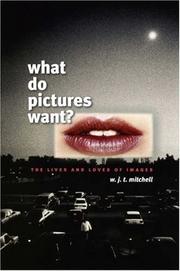
What Do Pictures Want? by 7549667|W. J. T. Mitchell book cover

📘 What Do Pictures Want?


★★★★★★★★★★ 0.0 (0 ratings)
Similar? ✓ Yes 0 ✗ No 0
Chinese creeds & customs by 3403995|V. R. Burkhardt book cover

📘 Chinese creeds & customs


★★★★★★★★★★ 0.0 (0 ratings)
Similar? ✓ Yes 0 ✗ No 0
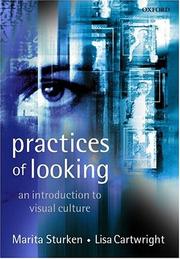
Practices of looking by 9604830|Marita Sturken book cover

📘 Practices of looking


★★★★★★★★★★ 0.0 (0 ratings)
Similar? ✓ Yes 0 ✗ No 0
The sociology of taste by 9653332|Jukka Gronow book cover

📘 The sociology of taste

The role of fashion and taste are central to our understanding of the social dynamics in any modern society. In this treatise on the aestheticization of social life, Jukka Gronow uses the insights of Veblen, Simmel and Lyotard, among others, to show how fashion operates as a form of play binding modern society together and allowing an equilibrium between the opposing forces of individualization and socialization. In the process, he draws on a rich range of examples and case studies including the dominance of kitsch in late nineteenth-century Europe; the shifting nature of luxury in the Soviet Union from the 1930s; the growing influence of western ideas of the good life from the 1960s; and the food scares and food fashion in the late twentieth century.

★★★★★★★★★★ 0.0 (0 ratings)
Similar? ✓ Yes 0 ✗ No 0
Everything bad is good for you by 9153400|Steven Johnson book cover

📘 Everything bad is good for you

Steven Johnson argues that modern pop culture—from video games to television—has become increasingly sophisticated, challenging our minds and sharpening cognition rather than dulling it.

★★★★★★★★★★ 0.0 (0 ratings)
Similar? ✓ Yes 0 ✗ No 0

Some Other Similar Books

Photographic Truths by Michael Freeman
Light and Lens by Trinity University Press

Have a similar book in mind? Let others know!

Please login to submit books!