
The Pragmatic Programmer
Timeless guide to software craftsmanship, it offers practical lessons for coders and managers alike, from career growth to adaptable architecture...
Is this book similar?
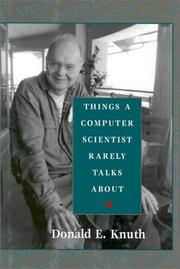
Books like this one
In the fall of 1999, computer scientist Donald E. Knuth was invited to give six public lectures at MIT on the general subject of relations between faith and science. The lectures were broadcast live on the Internet and watched regularly by tens of thousands of people around the world, and they have remained popular many months after the event. This book contains transcripts of those lectures, edited and annotated by the author. After an introductory first lecture, the second one focusses on the interaction of randomization and religion, since randomization has become a key area of scientific interest during the past few decades. The third lecture considers questions of language translation, with many examples drawn from the author's experiments in which random verses of the Bible were analyzed in depth. The fourth lecture deals with art and aesthetics; it illustrates several ways in which beautiful presentations can greatly deepen our perception of difficult concepts. The fifth lecture discusses what the author learned from the "3:16 project," a personal exploration of Biblical literature which he regards as a turning point in his own life. The sixth and final lecture, "God and Computer Science," is largely independent of the other five. It deals with several new perspectives by which concepts of computer science help to shed light on many ancient and difficult questions previously addressed by scientists in other fields. A significant part of each lecture is devoted to spontaneous questions from the audience and the speaker's impromptu responses, transcribed from videotapes of the original sessions. The book concludes with a transcript of a panel discussion in which Knuth joins several other prominent computer specialists to discuss "Creativity, Spirituality, and Computer Science." The other panelists are Guy L. Steele Jr. of Sun Microsystems, Manuela Veloso of Carnegie Mellon University, and Mitch Kapor of Lotus Development Corporation, together with moderator Harry Lewis (Dean of Harvard College). The book includes over 100 illustrations and photographs. The author has contributed additional notes and a comprehensive index. - Publisher.
Discover your next read
Compare books other readers have recommended. Vote to help improve these suggestions.
Looking for more books like Things a Computer Scientist Rarely Talks About by Donald Knuth? This list brings together suggested alternatives and feedback from SimilarBooks readers. Ratings reflect what readers think of each individual book, while the Yes and No votes show whether visitors consider it a good match for this title. Compare the recommendations below and suggest another book to help fellow readers discover their next read.
Timeless guide to software craftsmanship, it offers practical lessons for coders and managers alike, from career growth to adaptable architecture...
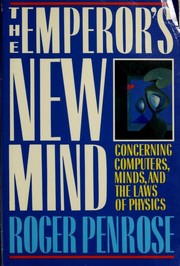
Roger Penrose argues that human thought is rooted in deep, non-computable aspects of physics, suggesting true intelligence cannot be fully replic...
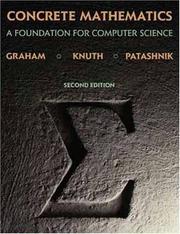
Concrete Mathematics introduces the mathematical foundations that underpin advanced computing and algorithm analysis, offering essential techniqu...

Includes An Essay on Scians, Can Scientific Discovery be Premeditated and the Limits of Science.

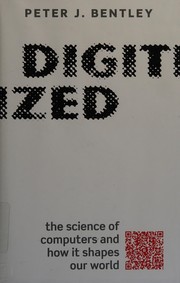
In this book the author tells the story of computer science, explaining how and why computers were invented, how they work, looking at real-world...
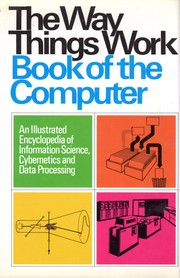
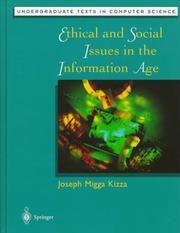
The rapid pace of change in computing demands a continuous review of our defensive strategies, and a strong ethical framework in our computer sci...
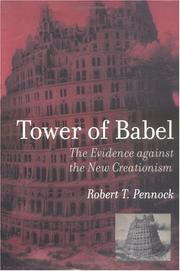

Science, Philosophy, Moral and ethical aspects, Computers, Religion and science
Community ratings describe each book independently. Similarity votes measure whether readers consider a recommendation a good match for this particular title; results can change as more visitors share feedback.
Suggest another book below, or vote Yes or No on any existing recommendation.
Share your suggestion →Readers make discovery better
Share a recommendation and help other readers discover their next great read.