"In Out of the Mountains, David Kilcullen, one of the world's leading experts on modern warfare, offers a groundbreaking look ahead at what may happen after the war in Afghanistan ends. It is a book about future conflicts and future cities, about the challenges and opportunities that four powerful megatrends are creating across the planet. And it is about what national governments, cities, communities and businesses can do to prepare for a future in which all aspects of human society-including, but not limited to, conflict, crime and violence-are rapidly changing. Kilcullen analyzes four megatrends--population growth, urbanization, coastal life, and connectedness-and concludes that future conflict is increasingly likely to occur in sprawling coastal cities, in underdeveloped regions of the Middle East, Africa, Latin America and Asia, and in highly networked, connected settings. He ranges across the globe, from Kingston to Mogadishu to Honduras to Benghazi to Mumbai. Mumbai exemplifies the trend: a coastal megacity, terrorists based in nearby Karachi exploited new forms of connectivity to direct a horrific terrorist attack. Kilcullen also offers a unified theory of "competitive control" that shows how non-state armed groups, drug cartels, street gangs, warlords--draw their strength from local populations, providing useful ideas for dealing with these groups and with diffuse social conflicts in general. But for many of the struggles we will face, he notes, there will be no military solution. We will need to involve local people deeply to address problems which neither outsiders nor locals alone can solve. These collaborations will interweave the insight only locals can bring, with outsider knowledge from fields such as urban planning, systems engineering, alternative energy technology, conflict resolution and mediation, and other disciplines. Deeply researched and compellingly argued, Out of the Mountains provides an invaluable roadmap to a future that will increasingly be crowded, urban, coastal, connected-and dangerous"--
"Kilcullen analyzes four megatrends--population growth, urbanization, coastal life, and connectedness-and concludes that future conflict is increasingly likely to occur in sprawling coastal cities, in underdeveloped regions of the Middle East, Africa, Latin America and Asia, and in highly networked, connected settings. Kilcullen also offers a unified theory of "competitive control" that shows how non-state armed groups, drug cartels, street gangs, warlords--draw their strength from local populations, providing useful ideas for dealing with these groups and with diffuse social conflicts in general. But for many of the struggles we will face, he notes, there will be no military solution. We will need to involve local people deeply to address problems which neither outsiders nor locals alone can solve. These collaborations will interweave the insight only locals can bring, with outsider knowledge from fields such as urban planning, systems engineering, alternative energy technology, conflict resolution and mediation, and other disciplines"--
The books recommended for Out of the mountains by
David Kilcullen are shaped by reader interaction.
Votes on how closely books relate, user ratings, and community comments all help
refine these recommendations and highlight books readers genuinely find similar
in theme, ideas, and overall reading experience.
Have you read any of these books?
Your votes, ratings, and comments help improve recommendations and make it easier
for other readers to discover books they’ll enjoy.
Books similar to Out of the mountains (7 similar books)
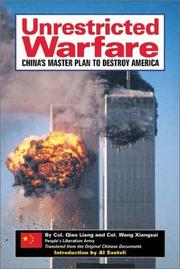
Unrestricted Warfare is a Chinese military treatise that argues asymmetric, multidimensional tactics—including terrorism—can be used to counter U.S. power, offering strategic insights for 21st‑century conflict.
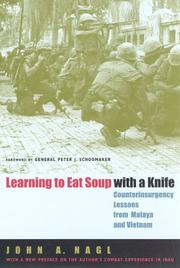
This book contains the doctoral thesis of the author, comparing counterinsurgency strategies and methods applied by the British in Malaya (successfully) and the Americans in Vietnam (unsuccessfully). It tries to identify success factors when fighting an insurgency in general.
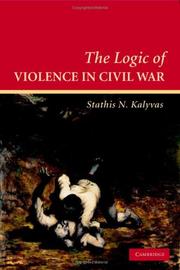
The Logic of Violence in Civil War argues that battlefield violence follows a coherent logic, shaped by political actors’ information tactics and civilians’ opportunistic responses, rather than blind passion or ideology.
"A complete introduction to the history, evolution, and future of the modern city, this book covers a wide range of theory, including the significance of space and place, to provide a balanced account of why cities are an essential part of the global human experience. Covers a wide range of theoretical approaches to the city, from the historical to the cutting edge Emphasizes the important themes of space and place Offers a balanced account of cities and offers extensive coverage including urban inequality, environment and sustainability, and methods for studying the city Takes a global approach, with examples from Berlin and Chicago to Shanghai and Mumbai Includes a range of pedagogical features such as a substantial glossary of key terms, critical thinking questions, suggestions for further reading and a range of innovative textboxes which follow the themes of Exploring Further, Studying the City and Making the City Better Extensively illustrated with maps, charts, tables, and over 80 photographs Accompanied by a comprehensive website (www.wiley.com/go/cities) featuring further examples and case studies, discussion and essay questions, chapter outlines and links to useful online resources and films and documentaries "--
"A complete introduction to the history, evolution, and future of the modern city, this book covers a wide range of theory, including the significance of space and place, to provide a balanced account of why cities are an essential part of the global human experience"--
Counterinsurgency by David H. Petraeus and John A. Nagl The Utility of Force by Frank G. Hoffman The Battle for Syria by Christopher Phillips The War Behind the Wire by Robert J. C. Collins The Limits of Power by Michael Ignatieff
Have a similar book in mind? Let others know!
Please login to submit books!
Is it a similar book?
Thank you for sharing your feedback. Please also let us know why you're thinking this is a similar (or not similar) book.