
A Brief History of Time
Stephen Hawking explains the fundamental physics of the universe—space, time, cosmology, black holes, and the Big Bang—in clear, accessible langu...
Is this book similar?
Books like this one
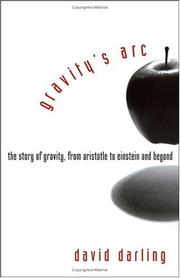
David Darling’s *Gravity’s Arc* traces the evolution of our understanding of gravitation, weaving together the lives of influential scientists—Aristotle, Galileo, Newton, Einstein—and their groundbreaking experiments. The book explains how each discovery built on or challenged the previous ones, ultimately leading to modern concepts like general relativity and the possibility of antigravity. Through clear prose and engaging narrative, Darling explores the cultural, philosophical, and scientific forces that shaped the study of gravity. He shows how misconceptions became dogma, how daring experiments altered long‑held beliefs, and how new theories opened vistas beyond Earth. This book offers readers both polished biography and comprehensive science history.
Discover your next read
Compare books other readers have recommended. Vote to help improve these suggestions.
Looking for more books like Gravity's arc by David Darling? This list brings together suggested alternatives and feedback from SimilarBooks readers. Ratings reflect what readers think of each individual book, while the Yes and No votes show whether visitors consider it a good match for this title. Compare the recommendations below and suggest another book to help fellow readers discover their next read.
Stephen Hawking explains the fundamental physics of the universe—space, time, cosmology, black holes, and the Big Bang—in clear, accessible langu...
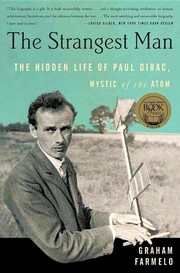
Paul Dirac, a pioneering quantum physicist, is portrayed as a brilliant yet reclusive genius whose groundbreaking work—including the prediction o...
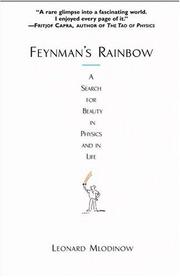
The story of Richard Feynman, a young physicist who found his place in the world with mentor Richard Feynman.

"At the core of Einstein's general theory of relativity are a set of equations that explain the relationship among gravity, space, and time--poss...
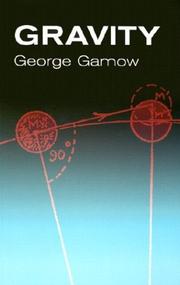
Classic and modern views of gravity including the Newtonian concept, Einstein's theory, and post-Einstein speculations.
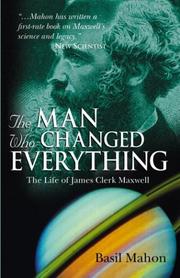
Biography of James Clerk Maxwell, the 19th‑century physicist whose groundbreaking theories of electromagnetism laid the foundations for the twent...
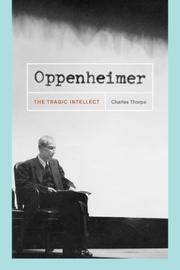
At a time when the Manhattan Project was synonymous with large-scale science, physicist J.

The Structure of Scientific Revolutions by Thomas S. Kuhn.
Discusses the concept of gravity from its earliest recognition in 1666 to the discovery of gravitational waves in 2015, and explains why gravity ...
History, Biography, Science, Nonfiction, Physics
Community ratings describe each book independently. Similarity votes measure whether readers consider a recommendation a good match for this particular title; results can change as more visitors share feedback.
Suggest another book below, or vote Yes or No on any existing recommendation.
Share your suggestion →Readers make discovery better
Share a recommendation and help other readers discover their next great read.