Books like The spell of the sensuous by David Abram
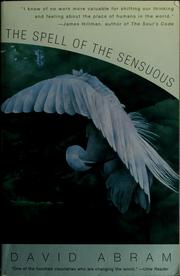

In "The Spell of the Sensuous," David Abram draws on a rich tapestry of influences—from the phenomenology of Merleau-Ponty to Balinese shamanism and Apache storytelling—alongside his experience as a sleight-of-hand magician. He argues that human perception and language are not purely abstract but are fundamentally shaped by our engagement with the environment. Abram explores how the body’s sensuality underlies cognitive processes and how language echoes the earth’s own voice.
First publish date: 1996
Genre: Philosophy/Philosophy of Mind
Authors: David Abram
★ ★ ★ ★ ★ 4.5 (2 community ratings)

The spell of the sensuous by David Abram

How are these books recommended?

The books recommended for The spell of the sensuous by David Abram are shaped by reader interaction. Votes on how closely books relate, user ratings, and community comments all help refine these recommendations and highlight books readers genuinely find similar in theme, ideas, and overall reading experience.


Have you read any of these books?
Your votes, ratings, and comments help improve recommendations and make it easier for other readers to discover books they’ll enjoy.

Books similar to The spell of the sensuous (7 similar books)
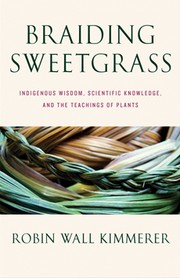
BRAIDING SWEETGRASS by 7232990|Robin Wall Kimmerer book cover

📘 BRAIDING SWEETGRASS

Robin Wall Kimmerer blends scientific inquiry and Indigenous wisdom, illustrating how listening to plant and animal languages can deepen our ecological stewardship.

★★★★★★★★★★ 4.6 (13 ratings)
Similar? ✓ Yes 0 ✗ No 0
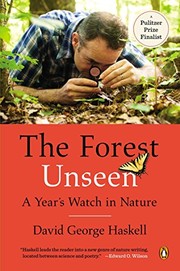
The Forest Unseen by 11391229|David George Haskell book cover

📘 The Forest Unseen


★★★★★★★★★★ 4.0 (1 rating)
Similar? ✓ Yes 0 ✗ No 0
Vibrant matter by 10174211|Jane Bennett book cover

📘 Vibrant matter


★★★★★★★★★★ 0.0 (0 ratings)
Similar? ✓ Yes 0 ✗ No 0
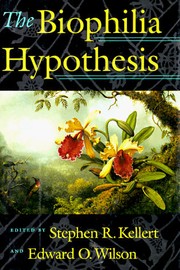
The Biophilia Hypothesis by 8792782|Stephen R. Kellert book cover

📘 The Biophilia Hypothesis

"Biophilia" is the term coined by Edward O. Wilson to describe what he believes is humanity's innate affinity for the natural world. In his landmark book Biophilia, he examined how our tendency to focus on life and lifelike processes might be a biologically based need, integral to our development as individuals and as a species. That idea has caught the imagination of diverse thinkers.The Biophilia Hypothesis brings together the views of some of the most creative scientists of our time, each attempting to amplify and refine the concept of biophilia. The variety of perspectives -- psychological, biological, cultural, symbolic, and aesthetic -- frame the theoretical issues by presenting empirical evidence that supports or refutes the hypothesis. Numerous examples illustrate the idea that biophilia and its converse, biophobia, have a genetic component: fear, and even full-blown phobias of snakes and spiders are quick to develop with very little negative reinforcement, while more threatening modern artifacts -- knives, guns, automobiles -- rarely elicit such a response people find trees that are climbable and have a broad, umbrella-like canopy more attractive than trees without these characteristics people would rather look at water, green vegetation, or flowers than built structures of glass and concrete The biophilia hypothesis, if substantiated, provides a powerful argument for the conservation of biological diversity. More important, it implies serious consequences for our well-being as society becomes further estranged from the natural world. Relentless environmental destruction could have a significant impact on our quality of life, not just materially but psychologically and even spiritually.

★★★★★★★★★★ 0.0 (0 ratings)
Similar? ✓ Yes 0 ✗ No 0
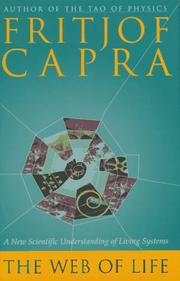
The web of life by 9604758|Fritjof Capra book cover

📘 The web of life


★★★★★★★★★★ 0.0 (0 ratings)
Similar? ✓ Yes 0 ✗ No 0
The hidden life of trees by 11759163|Peter Wohlleben book cover

📘 The hidden life of trees

Are trees social beings? Forester and author Peter Wohlleben makes the case that, yes, the forest is a social network. He draws on groundbreaking scientific discoveries to describe how trees are like human families: tree parents live together with their children, communicate with them, support them as they grow, share nutrients with those who are sick or struggling, and even warn each other of impending dangers. Wohlleben also shares his deep love of woods and forests, explaining the amazing processes of life, death, and regeneration he has observed in his woodland.

★★★★★★★★★★ 0.0 (0 ratings)
Similar? ✓ Yes 0 ✗ No 0

Some Other Similar Books

Thinking Like a Mountain by Aldo Leopold
The Reenchantment of Nature by David Abram
The Spell of the Lodge by G. E. Johnson
The History of Bees by Maja Lunde

Have a similar book in mind? Let others know!

Please login to submit books!