Books like Paranoia by Daniel Freeman


The authors analyse the causes of paranoia, identifying the social and cultural factors that seem to be skewing the way we think and feel about the world around us. And they explain why paranoia may be on the rise and, crucially, what we can do to tackle it. --from publisher description
First publish date: 2004
Authors: Daniel Freeman
★ ★ ★ ★ ★ 4.0 (1 community ratings)

Paranoia by Daniel Freeman

How are these books recommended?

The books recommended for Paranoia by Daniel Freeman are shaped by reader interaction. Votes on how closely books relate, user ratings, and community comments all help refine these recommendations and highlight books readers genuinely find similar in theme, ideas, and overall reading experience.


Have you read any of these books?
Your votes, ratings, and comments help improve recommendations and make it easier for other readers to discover books they’ll enjoy.

Books similar to Paranoia (3 similar books)
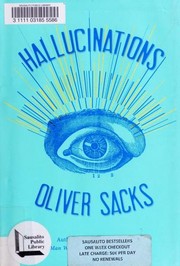
Hallucinations by 6502167|Oliver Sacks book cover

πŸ“˜ Hallucinations

Oliver Sacks explores the many faces of hallucination, weaving patient stories and his own psychedelic encounters to reveal how these visions illuminate brain function, culture, and the human experience.

β˜…β˜…β˜…β˜…β˜…β˜…β˜…β˜…β˜…β˜… 4.1 (12 ratings)
Similar? ✓ Yes 0 ✗ No 0
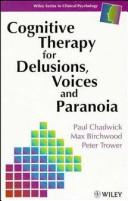
Cognitive therapy for delusions, voices, and paranoia by 6332136|Chadwick, Paul. book cover

πŸ“˜ Cognitive therapy for delusions, voices, and paranoia

Psychologists, psychotherapists, psychiatrists and nurses are increasingly involved in treatments which include psychological therapy, and particularly cognitive therapy, for serious mental disorders. The aim of this book is to guide such professionals towards better practice by treating the the individual symptoms of delusions, voices and paranoia, rather than by the categorisation of schizophrenia. The authors provide an introduction to their cognitive model and show how therapy depends crucially on the collaborative relationship with the client. While earlier approaches to these distressing symptoms depended on an overall model of schizophrenia which emphasised fundamental discontinuities with normal thought and psychological processes, the authors' approach is supported by substantial research that indicates that delusions, voices and paranoia lie on a continuum of differences in thought and behaviour, and do not arise from fundamentally different psychological processes. This book offers a practical, research-based and essentially hopeful approach to the assessment and treatment of psychotic disorders and also an argument for the development of a person model for treatment, which is based on the person's enduring psychological vulnerabilities.

β˜…β˜…β˜…β˜…β˜…β˜…β˜…β˜…β˜…β˜… 0.0 (0 ratings)
Similar? ✓ Yes 0 ✗ No 0
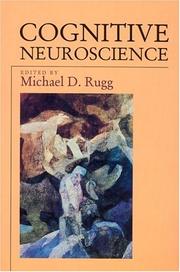
Cognitive neuroscience by 12752866|Michael D. Rugg book cover

πŸ“˜ Cognitive neuroscience


β˜…β˜…β˜…β˜…β˜…β˜…β˜…β˜…β˜…β˜… 0.0 (0 ratings)
Similar? ✓ Yes 0 ✗ No 0

Some Other Similar Books

The Psychopath Test: A Journey Through the Madness Industry by Jon Ronson
The Man Who Mistook His Wife for a Hat by Oliver Sacks
Confusion: A Guide to the Mind by Elizabeth F. Loftus
The Age of Anxiety: A History of America'sObsession with Mental Illness by Andrei Bitov
An Anatomy of Melancholy by Robert Burton
The Delusions of Crowds: Why People Go Mad by Benjamin W. Racusin
Schizophrenia: A Very Short Introduction by Chris Frith
The Center Cannot Hold: My Journey Through Madness by Elyn R. Saks

Have a similar book in mind? Let others know!

Please login to submit books!