
A Brief History of Time
Stephen Hawking explains the fundamental physics of the universe—space, time, cosmology, black holes, and the Big Bang—in clear, accessible langu...
Is this book similar?

Books like this one
This book is written for anybody who is curious about nature and motion. Curiosity about how people, animals, things, images and space move leads to many adventures. This volume presents the best of them in the domain of everyday life. Carefully observing everyday motion allows us to deduce six essential statements: everyday motion is continuous, conserved, relative, reversible, mirror-invariant – and lazy. Yes, nature is indeed lazy: in every motion, it minimizes change. This text explores how these six results are deduced and how they fit with all those observations that seem to contradict them. In the structure of modern physics, shown in Figure 1, the results on everyday motion form the major part of the starting point at the bottom. The present volume is the first of a six-volume overview of physics. It resulted from a threefold aim I have pursued since 1990: to present motion in a way that is simple, up to date and captivating. In order to be simple, the text focuses on concepts, while keeping mathematics to the necessary minimum. Understanding the concepts of physics is given precedence over using formulae in calculations. The whole text is within the reach of an undergraduate. In order to be up to date, the text is enriched by the many gems – both theoretical and empirical – that are scattered throughout the scientific literature. In order to be captivating, the text tries to startle the reader as much as possible. Read- ing a book on general physics should be like going to a magic show. We watch, we are astonished, we do not believe our eyes, we think, and finally we understand the trick. When we look at nature, we often have the same experience. Indeed, every page presents at least one surprise or provocation for the reader to think about. Numerous interesting challenges are proposed. The motto of the text, die Menschen stärken, die Sachen klären, a famous statement by Hartmut von Hentig on pedagogy, translates as: ‘To fortify people, to clarify things.’ Clarifying things – and adhering only to the truth – requires courage, as changing the habits of thought produces fear, often hidden by anger. But by overcoming our fears we grow in strength. And we experience intense and beautiful emotions. All great adventures in life allow this, and exploring motion is one of them. Enjoy it!
Discover your next read
Compare books other readers have recommended. Vote to help improve these suggestions.
Looking for more books like Motion Mountain by Christoph Schiller? This list brings together suggested alternatives and feedback from SimilarBooks readers. Ratings reflect what readers think of each individual book, while the Yes and No votes show whether visitors consider it a good match for this title. Compare the recommendations below and suggest another book to help fellow readers discover their next read.
Stephen Hawking explains the fundamental physics of the universe—space, time, cosmology, black holes, and the Big Bang—in clear, accessible langu...
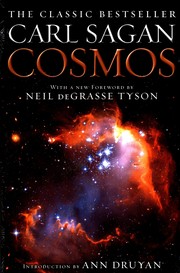
Carl Sagan’s Cosmos traces the history of science and the universe’s evolution, from ancient philosophers to modern discoveries, and explores the...
Stephen Hawking explores the cutting edge of theoretical physics in layman’s terms, guiding readers through the mysteries that shape our universe.


Two dramatically different philosophical approaches to classical mechanics were developed during the 17th – 18th centuries.
Textbooks, Physics, Physical sciences, Natural sciences
Community ratings describe each book independently. Similarity votes measure whether readers consider a recommendation a good match for this particular title; results can change as more visitors share feedback.
Suggest another book below, or vote Yes or No on any existing recommendation.
Share your suggestion →Readers make discovery better
Share a recommendation and help other readers discover their next great read.