Books like Köpek Gibi Büyütülmüş Çocuk by Bruce D. Perry


First publish date: 2017
Authors: Bruce D. Perry
★ ★ ★ ★ ★ 0.0 (0 community ratings)

Köpek Gibi Büyütülmüş Çocuk by Bruce D. Perry

How are these books recommended?

The books recommended for Köpek Gibi Büyütülmüş Çocuk by Bruce D. Perry are shaped by reader interaction. Votes on how closely books relate, user ratings, and community comments all help refine these recommendations and highlight books readers genuinely find similar in theme, ideas, and overall reading experience.


Have you read any of these books?
Your votes, ratings, and comments help improve recommendations and make it easier for other readers to discover books they’ll enjoy.

Books similar to Köpek Gibi Büyütülmüş Çocuk (10 similar books)

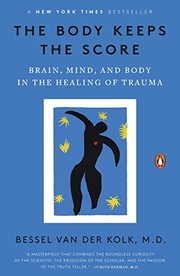
The Body Keeps the Score by 7167004|Bessel van der Kolk book cover

📘 The Body Keeps the Score

A groundbreaking work that explains how trauma rewires the brain and body, and presents evidence‑based therapies—from neurofeedback to yoga—that unlock the mind’s natural capacity for healing.

★★★★★★★★★★ 4.1 (30 ratings)
Similar? ✓ Yes 0 ✗ No 0
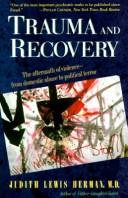
Trauma and Recovery by 8213628|Judith Lewis Herman book cover

📘 Trauma and Recovery

Trauma and Recovery, by Judith Lewis Herman, is a foundational examination of the causes, treatment, and societal context of post‑traumatic stress disorder, drawing on research in domestic violence, combat, and political terror.

★★★★★★★★★★ 4.6 (5 ratings)
Similar? ✓ Yes 0 ✗ No 0
Attachment in Psychotherapy by 7430716|David J. Wallin book cover

📘 Attachment in Psychotherapy


★★★★★★★★★★ 5.0 (2 ratings)
Similar? ✓ Yes 0 ✗ No 0
The Body Remembers by 4727912|Babette Rothschild book cover

📘 The Body Remembers

"For both clinicians and their clients there is tremendous value in understanding the psychophysiology of trauma and knowing what to do about its manifestations. This book illuminates that physiology, shining a bright light on the impact of trauma on the body and the phenomenon of somatic memory." "It is now thought that people who have been traumatized hold an implicit memory of traumatic events in their brains and bodies. That memory is often expressed in the symptomatology of posttraumatic stress disorder - nightmares, flashbacks, startle responses, and dissociative behaviors. In essence, the body of the traumatized individual refuses to be ignored." "Rothschild presents principles and non-touch techniques for giving the body its due. With an eye to its relevance for clinicians, she consolidates current knowledge about the psychobiology of the stress response both in normally challenging situations and during extreme and prolonged trauma." "Packed with engaging case studies, The Body Remembers integrates body and mind in the treatment of posttraumatic stress disorder. It will appeal to clinicians, researchers, students, and general readers."--Jacket. "For both clinicians and their clients there is tremendous value in understanding the psychophysiology of trauma and knowing what to do about its manifestations. This book illuminates that physiology, shining a bright light on the impact of trauma on the body and the phenomenon of somatic memory.". "It is now thought that people who have been traumatized hold an implicit memory of traumatic events in their brains and bodies. That memory is often expressed in the symptomatology of posttraumatic stress disorder - nightmares, flashbacks, startle responses, and dissociative behaviors. In essence, the body of the traumatized individual refuses to be ignored.". "Rothschild presents principles and non-touch techniques for giving the body its due. With an eye to its relevance for clinicians, she consolidates current knowledge about the psychobiology of the stress response both in normally challenging situations and during extreme and prolonged trauma.". "Packed with engaging case studies, The Body Remembers integrates body and mind in the treatment of posttraumatic stress disorder. It will appeal to clinicians, researchers, students, and general readers."--BOOK JACKET.

★★★★★★★★★★ 5.0 (1 rating)
Similar? ✓ Yes 0 ✗ No 0
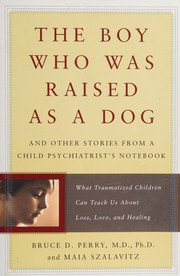
The boy who was raised as a dog by 9527025|Bruce Duncan Perry book cover

📘 The boy who was raised as a dog

Includes material on "genocide survivors, witnesses to their own parents' murders, children raised in closets and cages, and victims of family violence ... explains what happens to the brain when a child is exposed to extreme stress, and he reveals how today's innovative treatments are helping ease children's pain, allowing to become healthy adults.

★★★★★★★★★★ 4.0 (1 rating)
Similar? ✓ Yes 0 ✗ No 0
Cocuklugun Sonu by 6915824|Arthur C. Clarke book cover

📘 Cocuklugun Sonu

Dünya üzerindeki uygarlığımızın kaderini, insan neslinin akıbetini irdeleyen Çocukluğun Sonu, ters köşeye yatıran bir "öteki" anlatısı, farklı bir uzaylı istilası öyküsü, ütopya ve distopya arasındaki ince çizgiye dair, kalın harflerle tarihe geçen bir bilimkurgu klasiği…

★★★★★★★★★★ 5.0 (1 rating)
Similar? ✓ Yes 0 ✗ No 0
Psikoloji İçin İstatistiksel Metotlar by 6623542|David C. Howell book cover

📘 Psikoloji İçin İstatistiksel Metotlar


★★★★★★★★★★ 1.0 (1 rating)
Similar? ✓ Yes 0 ✗ No 0
Childhood Disrupted by 4340952|Donna Jackson Nakazawa book cover

📘 Childhood Disrupted

This book explores how the experiences of childhood shape us into the adults we become. Cutting-edge research tells us that what doesn’t kill you doesn’t necessarily make you stronger. Far more often, the opposite is true: the early chronic unpredictable stressors, losses, and adversities we face as children shape our biology in ways that predetermine our adult health. This early biological blueprint depicts our proclivity to develop life-altering adult illnesses such as heart disease, cancer, autoimmune disease, fibromyalgia, and depression. It also lays the groundwork for how we relate to others, how successful our love relationships will be, and how well we will nurture and raise our own children. My own investigation into the relationship between childhood adversity and adult physical health began after I’d spent more than a dozen years struggling to manage several life- limiting autoimmune illnesses while raising young children and working as a journalist. In my forties, I was paralyzed twice with an autoimmune disease known as Guillain-Barré syndrome, similar to multiple sclerosis, but with a more sudden onset. I had muscle weakness; pervasive numbness; a pacemaker for vasovagal syncope, a fainting and seizing disorder; white and red blood cell counts so low my doctor suspected a problem was brewing in my bone marrow; and thyroid disease. Still I knew: I was fortunate to be alive, and I was determined to live the fullest life possible. If the muscles in my hands didn’t cooperate, I clasped an oversized pencil in my fist to write. If I couldn’t get up the stairs because my legs resisted, I sat down halfway up and rested. I gutted through days battling flulike fatigue—pushing away fears about what might happen to my body next; faking it through work phone calls while lying prone on the floor; reserving what energy I had for moments with my children, husband, and family life; pretending that our “normal” was really okay by me. It had to be—there was no alternative in sight. Increasingly, I devoted my skills as a science journalist to helping women with chronic illness, writing about the intersection between neuroscience, our immune systems, and the innermost workings of our human hearts. I investigated the many triggers of disease, reporting on chemicals in our environment and foods, genetics, and how inflammatory stress undermines our health. I reported on how going green, eating clean, and practices like mindbody meditation can help us to recuperate and recover. At health conferences I lectured to patients, doctors, and scientists. My mission became to do all I could to help readers who were caught in a chronic cycle of suffering, inflammation, or pain to live healthier, better lives. In the midst of that quest, three years ago, in 2012, I came across a growing body of science based on a groundbreaking public health research study, the Adverse Childhood Experiences Study, or ACE Study. The ACE Study shows a clear scientific link between many types of childhood adversity and the adult onset of physical disease and mental health disorders. These traumas include being verbally put down and humiliated; being emotionally or physically neglected; being physically or sexually abused; living with a depressed parent, a parent with a mental illness, or a parent who is addicted to alcohol or other substances; witnessing one’s mother being abused; and losing a parent to separation or divorce. The ACE Study measured ten types of adversity, but new research tells us that other types of childhood trauma—such as losing a parent to death, witnessing a sibling being abused, violence in one’s community, growing up in poverty, witnessing a father being abused by a mother, being bullied by a classmate or teacher—also have a long-term impact. These types of chronic adversities change the architecture of a child’s brain, altering the expression of genes that control stress hormone output, triggering an overactive inflammatory stress respon

★★★★★★★★★★ 0.0 (0 ratings)
Similar? ✓ Yes 0 ✗ No 0
Köpek Gibi Büyütülmüs Cocuk by 4708592|Maia Szalavitz book cover

📘 Köpek Gibi Büyütülmüs Cocuk


★★★★★★★★★★ 0.0 (0 ratings)
Similar? ✓ Yes 0 ✗ No 0
Zamanı Durdurmanın Yolları by 4516940|Matt Haig book cover

📘 Zamanı Durdurmanın Yolları
 by Matt Haig


★★★★★★★★★★ 0.0 (0 ratings)
Similar? ✓ Yes 0 ✗ No 0
Some Other Similar Books

The Deepest Well by Nadine Burke Harris
Lost Childhoods by Jon R. R. Levenson
Resilient by Eric Greitens
Physical and Sexual Abuse of Children by Sheri A. Lippman

Have a similar book in mind? Let others know!

Please login to submit books!