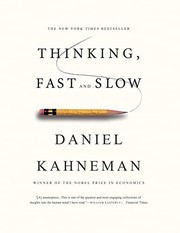
Thinking, fast and slow
Daniel Kahneman's "Thinking, Fast and Slow" explains how two distinct mental systems shape our judgments and decisions, offering insights into th...
Is this book similar?
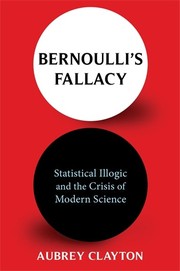
Books like this one
There is a logical flaw in the statistical methods used across experimental science. This fault is not a minor academic quibble: it underlies a reproducibility crisis now threatening entire disciplines. In an increasingly statistics-reliant society, this same deeply rooted error shapes decisions in medicine, law, and public policy with profound consequences. The foundation of the problem is a misunderstanding of probability and its role in making inferences from observations. Aubrey Clayton traces the history of how statistics went astray, beginning with the groundbreaking work of the seventeenth-century mathematician Jacob Bernoulli and winding through gambling, astronomy, and genetics. Clayton recounts the feuds among rival schools of statistics, exploring the surprisingly human problems that gave rise to the discipline and the all-too-human shortcomings that derailed it. He highlights how influential nineteenth- and twentieth-century figures developed a statistical methodology they claimed was purely objective in order to silence critics of their political agendas, including eugenics. Clayton provides a clear account of the mathematics and logic of probability, conveying complex concepts accessibly for readers interested in the statistical methods that frame our understanding of the world. He contends that we need to take a Bayesian approach—that is, to incorporate prior knowledge when reasoning with incomplete information—in order to resolve the crisis. Ranging across math, philosophy, and culture, *Bernoulli’s Fallacy* explains why something has gone wrong with how we use data—and how to fix it.
Discover your next read
Compare books other readers have recommended. Vote to help improve these suggestions.
Looking for more books like Bernoulli's Fallacy by Aubrey Clayton? This list brings together suggested alternatives and feedback from SimilarBooks readers. Ratings reflect what readers think of each individual book, while the Yes and No votes show whether visitors consider it a good match for this title. Compare the recommendations below and suggest another book to help fellow readers discover their next read.
Daniel Kahneman's "Thinking, Fast and Slow" explains how two distinct mental systems shape our judgments and decisions, offering insights into th...
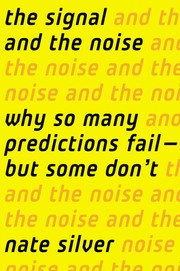
Nate Silver, the founder of the website FiveThirtyEight.
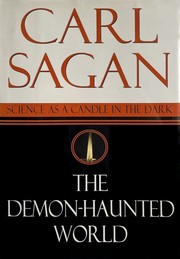
Carl Sagan’s classic work urges critical thinking, exposing the myths of pseudoscience—from witchcraft to UFOs—and arguing that scientific litera...
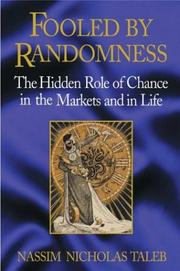
Nassim Taleb’s book challenges conventional Wall Street wisdom by exposing how luck, not skill, often shapes success in finance and business, urg...

Rolf Dobelli presents 99 concise chapters that explain everyday cognitive biases, showing how awareness can sharpen decision‑making at work and i...

Maria Konnikova dissects the mind of con artists, uncovering motives, tactics, and the patterns that keep them successful—and how these tactics e...
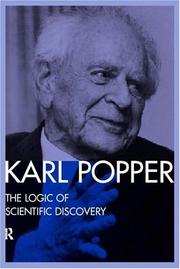
When first published in 1959, this book revolutionized contemporary thinking about science and knowledge.

Influence, Philosophy, Mathematics, Mathematical statistics, Probabilities
Community ratings describe each book independently. Similarity votes measure whether readers consider a recommendation a good match for this particular title; results can change as more visitors share feedback.
Suggest another book below, or vote Yes or No on any existing recommendation.
Share your suggestion →Readers make discovery better
Share a recommendation and help other readers discover their next great read.