Books like Balanced and barefoot by Angela J. Hanscom


"In this important book, a pediatric occupational therapist and founder of TimberNook shows how outdoor play and unstructured freedom of movement are vital for children's cognitive development and growth, and offers tons of fun, engaging ways to help ensure that kids grow into healthy, balanced, and resilient adults. Today's kids have adopted sedentary lifestyles filled with television, video games, and computer screens. But more and more, studies show that children need "rough and tumble" outdoor play in order to develop their sensory, motor, and executive functions. Disturbingly, a lack of movement has been shown to lead to a number of health and cognitive difficulties, such as attention deficit/hyperactivity disorder (ADHD), emotion regulation and sensory processing issues, and aggressiveness at school recess break. So, how can you ensure your child is fully engaging their body, mind, and all of their senses? Using the same philosophy that lies at the heart of her popular TimberNook program--that nature is the ultimate sensory experience, and that psychological and physical health improves for children when they spend time outside on a regular basis--author Angela Hanscom offers several strategies to help your child thrive, even if you live in an urban environment. Today it is rare to find children rolling down hills, climbing trees, or spinning in circles just for fun. We've taken away merry-go-rounds, shortened the length of swings, and done away with teeter-totters to keep children safe. Children have fewer opportunities for unstructured outdoor play than ever before, and recess times at school are shrinking due to demanding educational environments. With this book, you'll discover little things you can do anytime, anywhere to help your kids achieve the movement they need to be happy and healthy in mind, body, and spirit."-- "Today's kids have adopted sedentary lifestyles filled with television, video games, and computer screens. But more and more, studies show that children need "rough and tumble" outdoor play in order to develop their sensory, motor, and executive functions. In this important book, a pediatric occupational therapist explains why unrestrained movement and outdoor play are vital for children's cognitive development, and offers fun, engaging activities to help ensure that kids grow into healthy, balanced, and resilient adults"--
First publish date: 2016
Authors: Angela J. Hanscom
★ ★ ★ ★ ★ 0.0 (0 community ratings)

Balanced and barefoot by Angela J. Hanscom

How are these books recommended?

The books recommended for Balanced and barefoot by Angela J. Hanscom are shaped by reader interaction. Votes on how closely books relate, user ratings, and community comments all help refine these recommendations and highlight books readers genuinely find similar in theme, ideas, and overall reading experience.


Have you read any of these books?
Your votes, ratings, and comments help improve recommendations and make it easier for other readers to discover books they’ll enjoy.

Books similar to Balanced and barefoot (8 similar books)

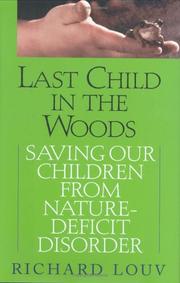
Last Child in the Woods by 6910629|Richard Louv book cover

πŸ“˜ Last Child in the Woods

Richard Louv’s updated *Last Child in the Woods* explains how modern children suffer from nature‑deficit disorder, offers 101 practical actions, and documents the growth of Leave No Child Inside movements across the U.S., Canada, and abroad.

β˜…β˜…β˜…β˜…β˜…β˜…β˜…β˜…β˜…β˜… 3.0 (1 rating)
Similar? ✓ Yes 0 ✗ No 0
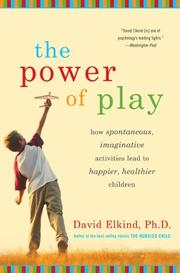
The power of play by 7279889|David Elkind book cover

πŸ“˜ The power of play


β˜…β˜…β˜…β˜…β˜…β˜…β˜…β˜…β˜…β˜… 5.0 (1 rating)
Similar? ✓ Yes 0 ✗ No 0
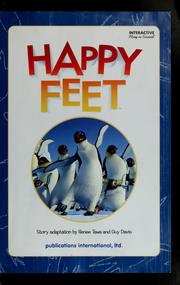
Happy feet by 8049003|Renee Tawa book cover

πŸ“˜ Happy feet
 by Renee Tawa


β˜…β˜…β˜…β˜…β˜…β˜…β˜…β˜…β˜…β˜… 0.0 (0 ratings)
Similar? ✓ Yes 0 ✗ No 0
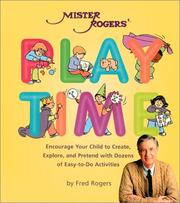
Mister Rogers' playtime by 9437224|Fred Rogers book cover

πŸ“˜ Mister Rogers' playtime


β˜…β˜…β˜…β˜…β˜…β˜…β˜…β˜…β˜…β˜… 0.0 (0 ratings)
Similar? ✓ Yes 0 ✗ No 0
The importance of being little by 11884224|Erika Christakis book cover

πŸ“˜ The importance of being little

""Teach your children well. It's easier to sing than do. Erika Christakis wants to foment a revolution in early childhood education, and with this deeply insightful, scientifically grounded, and utterly original book, she may just get her way." --Dan Gilbert, author of Stumbling on Happiness A bold challenge to the conventional wisdom about early childhood, with a pragmatic program to encourage parents and teachers to rethink how and where young children learn best by taking the child's eye view of the learning environment To a four-year-old watching bulldozers at a construction site or chasing butterflies in flight, the world is awash with promise. Little children come into the world hardwired to learn in virtually any setting and about any matter. Yet in today's preschool and kindergarten classrooms, learning has been reduced to scripted lessons and suspect metrics that too often undervalue a child's intelligence while overtaxing the child's growing brain. These mismatched expectations wreak havoc on the family: parents fear that if they choose the "wrong" program, their child won't get into the "right" college. But Yale early childhood expert Erika Christakis says our fears are wildly misplaced. Our anxiety about preparing and safeguarding our children's future seems to have reached a fever pitch at a time when, ironically, science gives us more certainty than ever before that young children are exceptionally strong thinkers. In her pathbreaking book, Christakis explains what it's like to be a young child in America today, in a world designed by and for adults, where we have confused schooling with learning. She offers real-life solutions to real-life issues, with nuance and direction that takes us far beyond the usual prescriptions for fewer tests, more play. She looks at children's use of language, their artistic expressions, the way their imaginations grow, and how they build deep emotional bonds to stretch the boundaries of their small worlds. Rather than clutter their worlds with more and more stuff, sometimes the wisest course for us is to learn how to get out of their way. Christakis's message is energizing and reassuring: young children are inherently powerful, and they (and their parents) will flourish when we learn new ways of restoring the vital early learning environment to one that is best suited to the littlest learners. This bold and pragmatic challenge to the conventional wisdom peels back the mystery of childhood, revealing a place that's rich with possibility"-- "A bold challenge to the conventional wisdom about early childhood, with a pragmatic program to encourage parents to rethink how and where young children learn best Parents of young children today are in crisis: Pick the "wrong" preschool and your child won't get into the "right" college. But our fears are misplaced, according to Yale early childhood expert Erika Christakis. Children are hardwired to learn in any setting, but they punch below their weight when "learning" is defined by strict lessons and dodgy metrics that devalue a child's intelligence while placing unfit requirements on the developing brain; we have confused schooling with learning. The race for good outcomes has blinded us to how young children actually process the world, acquire skills, and grow, says Christakis, who powerfully defends the preschool years as a life stage of inherent value and not merely as preparation for a demanding or uncertain future. This grounded, sensible book offers a ray of light in a dim and frantic world--with the message that before we can teach our youngest children, we must better understand them. In The Importance of Being Little, Christakis explores what it's like to be a young child in America today, in a world designed by and for adults. With school-testing mandates run amok, playfulness squeezed, and young children increasingly pathologized for old-fashioned behaviors like daydreaming and clumsiness, it's easy to miss the essential importance

β˜…β˜…β˜…β˜…β˜…β˜…β˜…β˜…β˜…β˜… 0.0 (0 ratings)
Similar? ✓ Yes 0 ✗ No 0
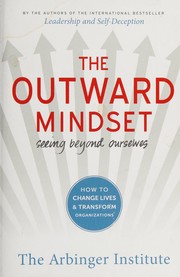
The outward mindset by 7384019|The Arbinger Institute book cover

πŸ“˜ The outward mindset

When personal ineffectiveness or organizational lag keeps us stuck, this book shows that shifting to an outward mindsetβ€”seeing others as people rather than obstaclesβ€”can dramatically improve performance, spark collaboration and drive innovation.

β˜…β˜…β˜…β˜…β˜…β˜…β˜…β˜…β˜…β˜… 0.0 (0 ratings)
Similar? ✓ Yes 0 ✗ No 0
Learning through play by 7134793|Tina Bruce book cover

πŸ“˜ Learning through play
 by Tina Bruce


β˜…β˜…β˜…β˜…β˜…β˜…β˜…β˜…β˜…β˜… 0.0 (0 ratings)
Similar? ✓ Yes 0 ✗ No 0
Einstein never used flash cards by 8841001|Kathy Hirsh-Pasek book cover

πŸ“˜ Einstein never used flash cards


β˜…β˜…β˜…β˜…β˜…β˜…β˜…β˜…β˜…β˜… 0.0 (0 ratings)
Similar? ✓ Yes 0 ✗ No 0
Some Other Similar Books

Move Your Body, Save Your Brain by Adrienne M. Freman
Spark: The Revolutionary New Science of Exercise and the Brain by John J. Ratey
Naturally Fun: How to Help Kids Develop a Love for the Outdoors by Pam Lobley
Last Child in the Woods: Saving Our Children from Nature-Deficit Disorder by Richard Louv

Have a similar book in mind? Let others know!

Please login to submit books!