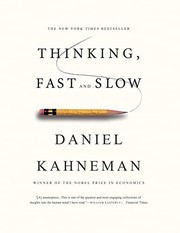
Thinking, fast and slow
Daniel Kahneman's "Thinking, Fast and Slow" explains how two distinct mental systems shape our judgments and decisions, offering insights into th...
Is this book similar?

Books like this one
Addressing general readers as well as software practitioners, *Software and Mind* discusses the fallacies of the mechanistic ideology and the degradation of minds caused by these fallacies. Mechanism holds that every aspect of the world can be represented as a simple hierarchical structure of entities. But, while useful in fields like mathematics and manufacturing, this idea is generally worthless, because most aspects of the world are too complex to be reduced to simple structures. Our software-related affairs, in particular, cannot be represented in this fashion. And yet, all programming theories and development systems, and all software applications, attempt to reduce real-world problems to neat hierarchical structures of data, operations, and features. Using Karl Popper's famous principles of demarcation between science and pseudoscience, the book shows that the mechanistic ideology has turned most of our software-related activities into pseudoscientific pursuits. Using mechanism as warrant, the software elites are promoting invalid, even fraudulent, software notions. They force us to depend on generic, inferior systems, instead of allowing us to develop software skills and to create our own systems. Software mechanism emulates the methods of manufacturing, and thereby restricts us to high levels of abstraction and simple, isolated structures. The benefits of software, however, can be attained only if we start with low-level elements and learn to create complex, interacting structures. Software, the book argues, is a non-mechanistic phenomenon. So it is akin to language, not to manufactured objects. Like language, it permits us to mirror the world in our minds and to communicate with it. Moreover, we increasingly depend on software in everything we do, in the same way that we depend on language. Thus, being restricted to mechanistic software is like thinking and communicating while being restricted to some ready-made sentences supplied by an elite. Ultimately, by impoverishing software, our elites are achieving what the totalitarian elite described by George Orwell in *Nineteen Eighty-Four* achieves by impoverishing language: they are degrading our minds.
Discover your next read
Compare books other readers have recommended. Vote to help improve these suggestions.
Looking for more books like Software and Mind by Andrei Sorin? This list brings together suggested alternatives and feedback from SimilarBooks readers. Ratings reflect what readers think of each individual book, while the Yes and No votes show whether visitors consider it a good match for this title. Compare the recommendations below and suggest another book to help fellow readers discover their next read.
Daniel Kahneman's "Thinking, Fast and Slow" explains how two distinct mental systems shape our judgments and decisions, offering insights into th...

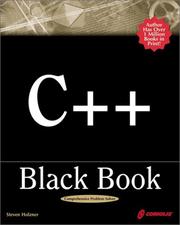
The definitive guide to C++ programming for developers whose core language is C++.



"Igor Aleksander heads a major British team that has applied engineering principles to the understanding of the human brain and has built several...
Science, Totalitarianism, Software engineering, Computer science, Programming
Community ratings describe each book independently. Similarity votes measure whether readers consider a recommendation a good match for this particular title; results can change as more visitors share feedback.
Suggest another book below, or vote Yes or No on any existing recommendation.
Share your suggestion →Readers make discovery better
Share a recommendation and help other readers discover their next great read.