Books like Lazare by André Malraux


First publish date: 1974
Authors: André Malraux
★ ★ ★ ★ ★ 0.0 (0 community ratings)

Lazare by André Malraux

How are these books recommended?

The books recommended for Lazare by André Malraux are shaped by reader interaction. Votes on how closely books relate, user ratings, and community comments all help refine these recommendations and highlight books readers genuinely find similar in theme, ideas, and overall reading experience.


Have you read any of these books?
Your votes, ratings, and comments help improve recommendations and make it easier for other readers to discover books they’ll enjoy.

Books similar to Lazare (8 similar books)

The Human Condition by 4577438|Hannah Arendt book cover

📘 The Human Condition

Hannah Arendt’s classic examination of human activity—labor, work, and action—shows how everyday practice shapes the human condition and serves as a foundation for political freedom.

★★★★★★★★★★ 4.9 (8 ratings)
Similar? ✓ Yes 0 ✗ No 0
Therapeutic metaphors by 6107462|David Cole Gordon book cover

📘 Therapeutic metaphors


★★★★★★★★★★ 0.0 (0 ratings)
Similar? ✓ Yes 0 ✗ No 0
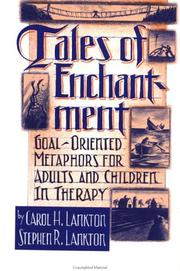
Tales of enchantment by 18601|Carol H. Lankton book cover

📘 Tales of enchantment


★★★★★★★★★★ 0.0 (0 ratings)
Similar? ✓ Yes 0 ✗ No 0
Antimémoires by 9362438|André Malraux book cover

📘 Antimémoires


★★★★★★★★★★ 0.0 (0 ratings)
Similar? ✓ Yes 0 ✗ No 0
International Library of Psychology by 6984093|Routledge book cover

📘 International Library of Psychology
 by Routledge


★★★★★★★★★★ 0.0 (0 ratings)
Similar? ✓ Yes 0 ✗ No 0
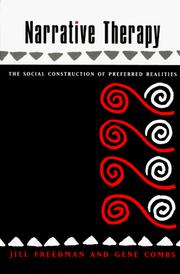
Narrative therapy by 8874479|Freedman, Jill, M.S.W. book cover

📘 Narrative therapy

This book describes the clinical application of the growing body of ideas and practices that has come to be known as narrative therapy. The primary focus is on the ways of working that have arisen among therapists who, inspired by the pioneering efforts of Michael White and David Epston, have organized their thinking around two metaphors: narrative and social construction. The authors are as concerned with attitude as with technique. Believing that a solid grounding in the worldview from which narrative practices spring is essential, they begin with an overview of the historical, philosophical, and ideological aspects of the narrative/social constructionist perspective. This involves also telling the story of their own development as particular therapists in a particular part of the world during a particular historical period. The heart of the book is devoted to specific clinical practices: locating problems in their sociocultural context, opening space for alternative stories, developing stories, questioning, reflecting, thickening plots, and spreading the news. Each practice is described, located in relation to the ideas and attitudes that support it, and illustrated with clinical examples. In addition to conversations with people illustrating particular practices, three transcripts are included to show the subtle use of questions to develop alternative, preferred realities. Drawing upon the thinking of White and Epston, Karl Tomm, and others, the final chapter looks at the ethics of relationship that guide narrative therapists in the use of specific practices.

★★★★★★★★★★ 0.0 (0 ratings)
Similar? ✓ Yes 0 ✗ No 0
Symbol, story, and ceremony by 13217232|Gene Combs book cover

📘 Symbol, story, and ceremony
 by Gene Combs


★★★★★★★★★★ 0.0 (0 ratings)
Similar? ✓ Yes 0 ✗ No 0
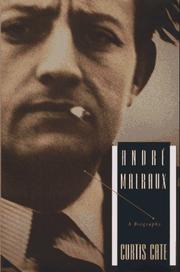
André Malraux by 7658741|Curtis Cate book cover

📘 André Malraux

Often hailed as a "Renaissance man" for the astounding diversity of his activities, Andre Malraux was a living legend long before his death in 1976. Few French writers of this century have aroused such heated controversy and none, during a stormy lifetime, ever achieved greater international renown as a "hero" in deed as well as word. At the age of seventeen he shocked his parents by abandoning his high-school studies, going on in just three years to become a prosperous rare-book publisher, a keen literary critic, and an author of fantastic fiction. He then turned himself into a self-taught archaeologist and staged a bold statue-lifting raid on an abandoned Cambodian temple - an exploit which catapulted him to notoriety when he was only twenty-three. Four years later he dumbfounded the skeptics with a remarkable first novel (The Conquerors), later winning the coveted Goncourt Prize with La Condition humaine (Man's Fate). After Hitler's rise to power, he transformed himself into a spell-binding orator at anti-fascist rallies, and when the Spanish Civil War broke out in 1936 he organized a volunteer bomber squadron for the hard-pressed Republicans, even though he had never piloted an airplane. Taken prisoner by the Germans in June 1940, he escaped to the French "free zone" and later teamed up with a British-trained SOE captain to form a brigade of resistance fighters, which he led all the way to Strasbourg in 1944. Impressed by his quick-witted intelligence and erudition, General de Gaulle made him Minister of Information in 1945 and later, in 1959, France's first Minister of Culture: two appointments which caused him later to be vilified by leftists as a "traitor" to his revolutionary past.

★★★★★★★★★★ 0.0 (0 ratings)
Similar? ✓ Yes 0 ✗ No 0

Some Other Similar Books

The Temptation of Death by André Malraux
Vertiges by André Malraux
Antoine Bloyé by André Malraux
The Stranger by Albert Camus
Nausea by Jean-Paul Sartre

Have a similar book in mind? Let others know!

Please login to submit books!